Authentic Thai Beef Salad
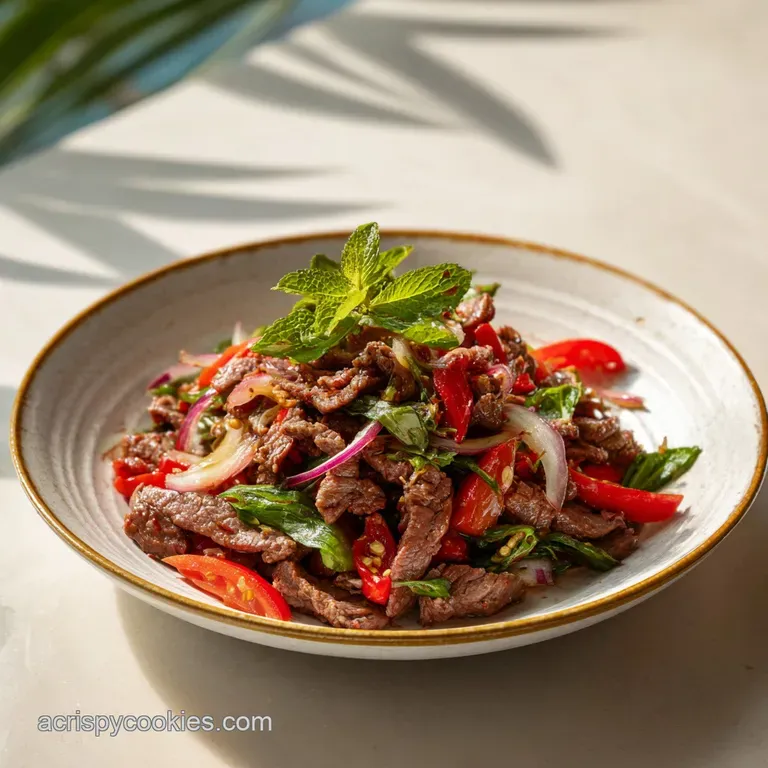
- Time: Active 15 minutes, Passive 10 minutes, Total 25 minutes
- Flavor/Texture Hook: Searing hot steak meets ice cold, crunchy cucumbers
- Perfect for: High protein weeknight dinners or impressive summer hosting
- Cracking the Code: The Thai Beef Salad
- Why This Specific Flavor Harmony Works
- Essential Elements for Depth and Balance
- Tools for Success in the Kitchen
- Step-by-Step Guide to Perfect Assembly
- Fixing Common Kitchen Errors and Mistakes
- Creative Ways to Modify Your Salad
- Keeping Your Leftovers Fresh and Safe
- Best Ways to Present Your Dish
- Debunking Popular Myths About Searing Meat
- Recipe FAQs
- 📝 Recipe Card
Cracking the Code: The Thai Beef Salad
The first time I tried a truly authentic Yum Nua, the aroma hit me before the plate even touched the table. It was that sharp, funky tang of fish sauce clashing with the bright, floral scent of fresh lime and bruised bird's eye chilies.
I watched the chef sear a thick slab of beef until the edges were charred and smoky, then toss it still warm into a bowl of ice cold herbs and vegetables. That contrast of temperatures is what makes this dish legendary.
I spent months trying to replicate that specific "zing" at home, but my early versions were always too salty or sadly muted. The secret, I eventually discovered, isn't just in the ingredients; it's in the aggressive bruising of the aromatics.
You want those cilantro stems and chilies to actually surrender their oils into the dressing. Once you master that balance of sweet, sour, salty, and spicy, you'll never settle for a watered down restaurant version again.
Why This Specific Flavor Harmony Works
The Science of the Nam Jim
The dressing, or Nam Jim, relies on a chemical reaction where the citric acid in the lime juice partially denatures the proteins in the fish sauce, mellowing its pungent "fishy" aroma while highlighting its savory glutamates.
This creates a balanced liquid that acts as both a sauce and a light "cook" for the raw vegetables.
- Osmotic Pressure: The salt in the fish sauce draws a tiny amount of moisture out of the cucumbers, making them slightly more flexible while letting them soak up the spicy dressing.
- Maillard Reaction: Searing the steak at high heat creates hundreds of new flavor compounds that stand up to the intense acidity of the lime.
- Capsaicin Solubilization: Grating the garlic and finely slicing chilies releases capsaicin, which dissolves into the lime juice for a more uniform heat.
| Cooking Method | Time | Texture | Best For |
|---|---|---|---|
| Cast Iron Stovetop | 6-8 mins | Deep mahogany crust | Maximum smoky flavor |
| Oven Broiler | 8-10 mins | Even browning | Hands off preparation |
| Outdoor Grill | 5-7 mins | Charred edges | Summer gatherings |
Choosing the right method depends on your kitchen setup, but the stovetop method gives you the best control over that vital crust. If you're looking for other ways to use high-quality beef in a fast format, the technique is very similar to what I use in my Loaded Burger Bowl recipe.
Essential Elements for Depth and Balance
| Ingredient | Science Role | Pro Secret |
|---|---|---|
| Fish Sauce | Primary Umami Source | Use "First Press" for a cleaner, less fermented smell. |
| Palm Sugar | PH Balancer | Grate it fine so it dissolves instantly in cold lime juice. |
| Bird's Eye Chilies | Heat Source | Slit them lengthwise to release seeds for extra fire. |
- 1.5 lbs sirloin or ribeye steak: Why this? Marbling ensures the beef stays velvety even when sliced thin.
- Substitute: Flank steak (Note: Slice against the grain or it will be chewy).
- 1 tbsp neutral oil (grape seed or avocado): Why this? High smoke points prevent the oil from burning during the sear.
- Substitute: Refined coconut oil.
- 3 tbsp fresh lime juice: Why this? Provides the essential sharp acidity to cut through beef fat.
- Substitute: Rice vinegar (Note: Lacks the floral notes of fresh lime).
- 2 tbsp fish sauce: Why this? The backbone of Thai seasoning; provides salt and depth.
- Substitute: Soy sauce mixed with a pinch of salt.
- 1 tbsp palm sugar, finely grated: Why this? A rounded sweetness that buffers the lime's sharpness.
- Substitute: Brown sugar (Note: Adds more molasses like flavor).
- 3 bird's eye chilies, thinly sliced: Why this? Intense, clean heat that doesn't linger too long.
- Substitute: 1 serrano pepper.
- 2 garlic cloves, grated: Why this? Grating turns it into a paste that emulsifies the dressing.
- Substitute: Finely minced shallots.
- 1 cup cucumber, sliced into thin half moons: Why this? Provides a cooling, watery crunch against the spicy beef.
- Substitute: Sliced radishes.
- 0.5 red onion, thinly sliced: Why this? Adds a sharp, pungent bite and bright purple color.
- Substitute: Shallots.
- 1 cup cherry tomatoes, halved: Why this? Their sweetness adds another layer of contrast.
- Substitute: Diced red bell pepper.
- 1 cup fresh mint leaves & 1 cup fresh cilantro leaves: Why this? These aren't garnishes; they are the "salad" base.
- Substitute: Thai basil.
Tools for Success in the Kitchen
To get that restaurant quality finish, you'll need a heavy bottomed pan. A cast iron skillet is my top choice because it retains heat like a beast, ensuring the steak sears rather than steams.
You also want a very sharp chef's knife; since we’re slicing the beef into paper thin strips, a dull blade will just tear the meat fibers and ruin the texture.
Chef's Tip: Freeze your steak for 15 minutes before slicing. This firms up the fat and muscle, allowing you to get those professional, translucent slices without the meat sliding around.
Finally,, grab a large stainless steel or glass mixing bowl. Avoid plastic if you can, as it can sometimes hold onto the pungent smell of the fish sauce long after you've finished your Thai Beef Salad.
step-by-step Guide to Perfect Assembly
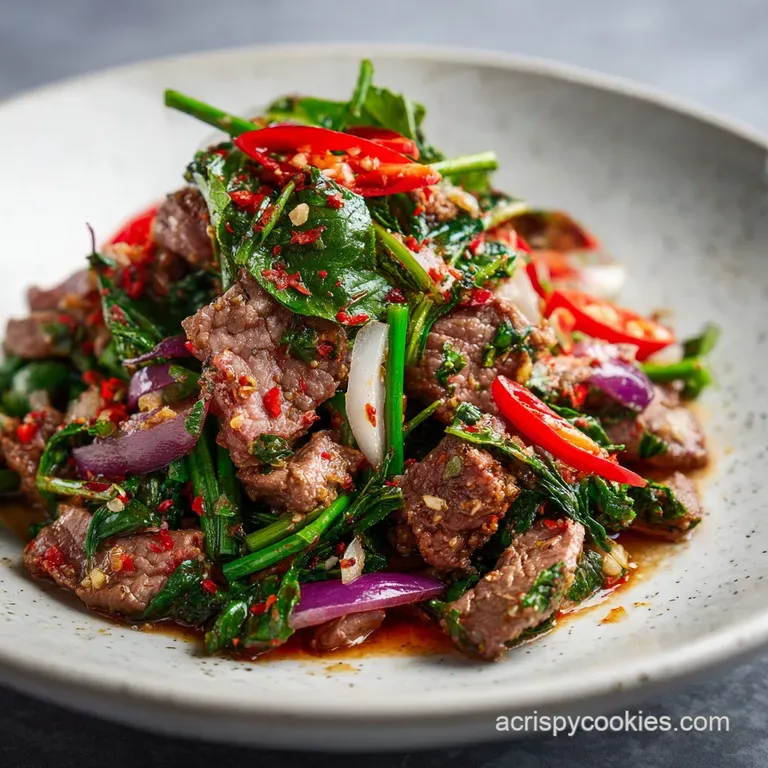
Phase 1: The over High heat Sear
- Pat the steak dry. Use paper towels to remove every bit of surface moisture from your 1.5 lbs of steak. Note: Moisture is the enemy of a good crust.
- Season aggressively. Rub the beef with 0.5 tsp sea salt and 0.5 tsp cracked black pepper.
- Heat the pan. Add 1 tbsp neutral oil to your skillet over high heat until the oil ripples and just starts to smoke.
- Sear the beef. Place the steak in the pan and cook for 3-4 minutes per side. until a dark, mahogany crust forms.
- Rest the meat. Remove the steak to a plate and let it rest for a full 10 minutes. Note: This prevents the juices from leaking out and making the salad soggy.
Phase 2: Mastering the Nam Jim
- Whisk the liquids. In a large bowl, combine 3 tbsp lime juice, 2 tbsp fish sauce, and 1 tbsp grated palm sugar.
- Infuse the aromatics. Stir in 3 sliced bird's eye chilies, 2 grated garlic cloves, and 1 tbsp chopped cilantro stems. until the sugar is completely dissolved.
Phase 3: The Assembly and Finish
- Slice the beef. Cut the rested steak against the grain into very thin strips.
- Toss the base. Add the sliced beef, 1 cup cucumber, 0.5 sliced red onion, 1 cup cherry tomatoes, and the juices from the resting plate into the dressing.
- Fold in herbs. Gently fold in 1 cup mint and 1 cup cilantro leaves until the herbs are just coated but not bruised. Serve immediately.
Fixing Common Kitchen Errors and Mistakes
Why Your Salad Is Watery
If your salad looks more like a soup, it’s usually because the vegetables were wet or the steak wasn’t rested long enough. When you slice hot steak, the internal pressure forces juice out. If that happens in the salad bowl, it dilutes the Nam Jim.
Always pat your herbs dry with a spinner or towel before adding them.
Why the Beef Is Tough
If the beef feels like rubber, you likely sliced with the grain. Look for the long lines of muscle fiber and cut across them. This shortens the fibers, making every bite tender. Also, ensure your pan is screaming hot; a slow cooking steak loses more moisture and becomes dry.
| Problem | Root Cause | Solution |
|---|---|---|
| Dressing is too salty | Too much fish sauce | Add 1 tsp extra sugar and a squeeze of lime. |
| Herbs turned black | Added to hot meat | Ensure steak is room temp before tossing with herbs. |
| Muted flavor | Cold ingredients | Let the dressing sit for 5 mins at room temp to bloom. |
Common Mistakes Checklist
- ✓ Skipping the steak rest time (leads to a soggy salad).
- ✓ Using bottled lime juice instead of fresh (lacks the essential oils).
- ✓ Crowding the pan during the sear (steams the meat instead of browning).
- ✓ Adding the herbs too early (they will wilt and lose their brightness).
- ✓ Not slicing the red onions thin enough (large chunks overpower the beef).
Creative Ways to Modify Your Salad
Adjusting this recipe for a crowd or a specific diet is incredibly easy. If you're looking for a heartier meal, this Thai Beef Salad works beautifully when served over a bed of chilled rice noodles. The noodles soak up the extra dressing, turning it into a complete pasta style dish. For a similar vibe with a different protein, you might enjoy my OnePot Ground Beef recipe.
Scaling for Groups
- Scaling Down (1-2 People): Use a smaller steak but keep the dressing amounts nearly the same. You want that extra liquid to coat the vegetables thoroughly.
- Scaling Up (8+ People): Sear the steaks in batches. If you crowd the pan with 3 lbs of meat, the temperature will drop, and you'll lose that "shatter" crispness on the edges.
- Keto Variation: This recipe is naturally low carb. Simply swap the palm sugar for a monk fruit sweetener or omit it entirely if you prefer a sharper, more acidic profile.
| Feature | Classic Version | Noodle Variation | Low Carb Twist |
|---|---|---|---|
| Carbs | 9.1 g | 45 g+ | 4 g |
| Texture | Crunchy/Light | Soft/Filling | Extra Crunchy |
| Best For | Lunch | Dinner | Weight Loss |
Keeping Your Leftovers Fresh and Safe
This is one of those rare dishes where the leftovers are a bit tricky. The acid in the lime juice will eventually "cook" the vegetables, making the cucumbers soft and the herbs dark.
- Fridge: Store the seared steak and the dressing in separate airtight containers for up to 2 days. Toss with fresh herbs and vegetables only when you are ready to eat.
- Freezer: You can freeze the cooked steak for up to 2 months. However, never freeze the assembled salad or the dressing, as the textures will be ruined upon thawing.
- Zero Waste: Don't throw away those cilantro stems! They hold more flavor than the leaves. Chop them finely and add them to the dressing base as directed in the recipe.
Best Ways to Present Your Dish
Presentation is everything with a vibrant Thai Beef Salad. Use a wide, shallow platter rather than a deep bowl. This prevents the heavy steak from sinking to the bottom and allows the bright red tomatoes and purple onions to pop against the green herbs.
Top the dish with a handful of crushed toasted rice (Khao Khiao) for an authentic nutty crunch. If you don't have rice, toasted sesame seeds work in a pinch. Serve it with a side of sticky rice or even some crisp lettuce cups for a fun, hand held appetizer style.
Debunking Popular Myths About Searing Meat
Many people still believe that searing meat "seals in the juices." This is a complete myth. Science shows that seared meat actually loses slightly more moisture than unseared meat due to the high heat. However, we sear for the Maillard reaction the browning that creates that savory, velvety crust.
The "juiciness" actually comes from letting the meat rest properly so the fibers can reabsorb the internal moisture.
Another misconception is that fish sauce should be cooked to "mellow it out." While cooking does change it, in a Thai Beef Salad, the raw application is intentional. The fermentation provides a "funk" that is traditional and necessary for the dish's identity.
When balanced with enough lime and sugar, it transforms from smelling "fishy" to tasting purely savory.
Recipe FAQs
What goes in a Thai beef salad?
Seared steak, lime juice, fish sauce, palm sugar, chilies, garlic, mint, cilantro, cucumber, and red onion. This combination creates the classic sweet, sour, salty, and spicy flavor profile essential to Yum Nua.
What is the famous Thai salad?
The most famous version featuring beef is Yum Nua (Spicy Beef Salad). It is renowned for the dramatic temperature contrast between the warm, charred meat and the cold, crisp herbs.
What is the traditional name for Thai beef salad?
The traditional name is Yum Nua (or Yam Nua). "Yum" translates to "mix" or "toss," and "Nua" means beef, perfectly describing the dish's assembly.
How do you tenderize beef for Thai salad?
Freeze the steak for 15 minutes before slicing against the grain. This firms the muscle structure, allowing you to cut it paper thin, which maximizes tenderness during the brief high heat sear.
Is it true that you must use sirloin for authentic Thai beef salad?
No, ribeye is an excellent alternative if you prefer more marbling. While sirloin is traditional for its leanness, ribeye offers richer flavor; if you choose flank steak, ensure you slice it against the grain to avoid chewiness.
Why does my dressing taste too sharp and unbalanced?
You likely need more sugar to balance the lime acid and fish sauce salt. Whisk in palm sugar until it fully dissolves; this sweet component is crucial for softening the punch of the raw chilies and lime.
Can I substitute soy sauce for fish sauce in the dressing?
No, you should avoid a direct 1:1 substitution. Soy sauce lacks the funky umami and fermentation depth; if you must substitute, mix soy sauce with a small pinch of salt, but the resulting flavor will be less authentic. If you're looking for other bold flavor profiles, you might enjoy seeing how high acid dressings are managed in our Skillet Chicken Thighs recipe for a different protein.
Authentic Thai Beef Salad Recipe
Ingredients:
Instructions:
Nutrition Facts:
| Calories | 338 kcal |
|---|---|
| Protein | 35.2 g |
| Fat | 17.4 g |
| Carbs | 9.1 g |
| Fiber | 1.4 g |
| Sugar | 4.2 g |
| Sodium | 645 mg |
