Bone-In Beef Short Ribs: Slow Cooked
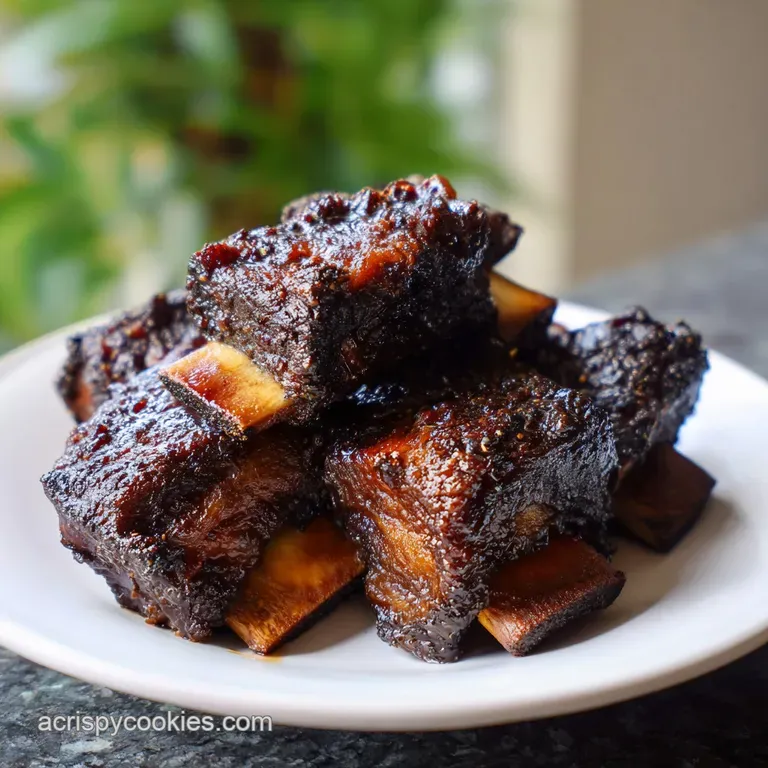
- Time: Active 20 minutes, Passive 8 hours, Total 8 hours 20 mins
- Flavor/Texture Hook: Velvety, melt in-your mouth beef with a tangy, concentrated balsamic reduction.
- Perfect for: Sunday family dinners, impressive date nights, or hands off winter meal prep.
- How to Make the Best Beef Short Ribs
- The Science Behind Falling Off The Bone Texture
- The Component Analysis for Maximum Flavor
- The Essential Elements and Smart Substitutions
- Necessary Tools for the Home Kitchen
- Step By Step Guide to Perfection
- Solving the Most Common Slow Cooker Beef Problems
- Flavor Swaps and Ingredient Substitutions for Your Ribs
- Adjusting the Recipe Size for Different Crowds
- Kitchen Myths Debunked
- How to Store and Reuse Your Leftover Beef
- The Best Side Dishes for a Rich Beef Dinner
- Recipe FAQs
- 📝 Recipe Card
How to Make the Best Beef Short Ribs
The first time I tried to cook beef short ribs, I treated them like a steak. Big mistake. I tossed them in a hot pan, seared them to a medium rare, and served them up. They were like chewing on a rubber tire.
I was devastated because those ribs aren't exactly cheap, and I felt like I’d just thrown money into a volcano. It was a humbling moment that sent me straight to my cookbooks to figure out what I’d missed.
Now, picture this instead: it’s a rainy Tuesday, and the house smells like a cozy French bistro. You walk into the kitchen, lift the lid of your slow cooker, and the steam that hits your face carries the scent of sweet balsamic, earthy rosemary, and rich, rendered beef fat.
You touch a rib with a fork, and it doesn't just fall off the bone the bone practically slides out like it’s been waiting for this moment all day. That’s the magic we’re chasing today.
I’ve spent years "cracking the code" on how to get that glossy, thick sauce and the specific shred able texture you usually only find at high end steakhouses. We aren't just tossing things in a pot and hoping for the best.
We are building layers of flavor, starting with a hard sear that creates a dark crust, followed by a slow bath in an acidic braise that breaks down every stubborn fiber. Trust me, once you see that first rib flake apart, you’ll never go back to any other method.
The Science Behind Falling Off The Bone Texture
- Collagen Transformation: Beef Short Ribs are packed with connective tissue that stays tough unless heated slowly; the "low and slow" method converts this collagen into silky gelatin.
- The Maillard Reaction: Searing the meat at high heat before braising creates hundreds of new flavor compounds that a slow cooker alone cannot produce.
- Acidic Denaturation: The acetic acid in balsamic vinegar helps weaken the protein structures, allowing the liquid to penetrate deeper into the muscle fibers.
- Osmotic Balance: Salting the meat early draws out moisture but then re absorbs it as the salt dissolves, seasoning the beef all the way to the bone.
- Fat Emulsification: As the fat renders into the balsamic and broth, it creates a velvety mouthfeel that coats the tongue and carries the herbal notes of thyme and rosemary.
| Rib Thickness | Internal Temp | Rest Time | Visual Cue |
|---|---|---|---|
| 1.5 inches | 203°F (95°C) | 10 minutes | Meat shrinks back from the bone significantly |
| 2 inches | 205°F (96°C) | 15 minutes | Bone slides out with zero resistance |
| 2.5 inches | 208°F (98°C) | 20 minutes | Meat is easily shredded with a spoon |
Cooking meat to a specific internal temperature is usually for steaks, but with ribs, we shoot high. We need to hit at least 200°F (93°C) to ensure that the internal structure has completely collapsed into that sought after texture.
If you pull them too early, they will be "cooked" but still incredibly tough to chew.
The Component Analysis for Maximum Flavor
| Ingredient | Science Role | Pro Secret |
|---|---|---|
| Beef Short Ribs | Provides fat and gelatin | Always choose "English Cut" for more uniform cooking and better plate presentation. |
| Balsamic Vinegar | Breaks down fibers and adds sugar | The sugars in the vinegar caramelize during the long cook, naturally thickening the final sauce. |
| Tomato Paste | Adds glutamates for "umami" | Sauté the paste until it turns a rusty brick red to remove the raw, metallic tinned taste. |
| Bone Broth | Solvent for flavor extraction | Use low sodium versions so you can reduce the sauce later without it becoming a salt bomb. |
Every single one of these components serves a purpose in my flavor detective approach. We aren't just adding liquid; we are creating a chemical environment where the beef can thrive. If you're looking for a slightly different flavor profile, you might want to try this Short Ribs Crock recipe which uses a different blend of herbs and a slightly different cooking window.
The Essential Elements and Smart Substitutions
To get this right, you'll need the following quantities. I've included a few swaps because I know what it’s like to realize you’re out of balsamic halfway through prep.
- 3 lbs bone in beef short ribs (English Cut): These are the stars. Look for heavy marbling.
- Substitute: Beef chuck roast cut into large chunks. Why this? Similar fat content and connective tissue for a budget friendly swap.
- 1 tsp coarse sea salt & 1 tsp cracked black pepper: Essential for the crust.
- Substitute: Kosher salt. Why this? Larger grains stick better to the meat than table salt.
- 1 tbsp avocado oil: For the over high heat sear.
- Substitute: Grapeseed oil or light olive oil. Why this? Needs a high smoke point so it doesn't burn during searing.
- 1 large yellow onion, 3 large carrots, 2 celery stalks: The "Mirepoix" base.
- Substitute: Shallots or leeks for the onion. Why this? Adds a sweeter, more delicate aromatic profile.
- 4 cloves garlic, smashed: For that pungent back note.
- Substitute: 1 tsp garlic powder in a pinch. Why this? Fresh is always better for the long haul braise.
- 2 tbsp tomato paste: For depth and color.
- Substitute: Sun dried tomato pesto. Why this? Adds a massive umami punch with extra herb notes.
- 1/2 cup balsamic vinegar: The acidic backbone.
- Substitute: Red wine vinegar + 1 tbsp brown sugar. Why this? Mimics the tang and sweetness of balsamic.
- 1.5 cups low sodium beef bone broth: The braising liquid.
- Substitute: Dry red wine like Cabernet. Why this? Adds tannins and a sophisticated, darker flavor profile.
- Fresh rosemary, thyme, and bay leaves: The aromatic bouquet.
- Substitute: 1 tbsp dried Italian seasoning. Why this? Use 1/3 the amount if using dried herbs.
Chef's Tip: Pat your meat bone dry with paper towels before seasoning. If the surface is wet, the beef will steam rather than sear, and you'll miss out on that crispy, flavorful crust.
Necessary Tools for the Home Kitchen
While the crockpot does the heavy lifting, the preparation requires a few key pieces of gear to ensure we don't lose any flavor along the way. I always use a heavy bottomed skillet for the initial sear because it holds heat much better than a thin pan.
- Large Skillet: Preferably cast iron or stainless steel for the best browning.
- 6 Quart Slow Cooker: Such as a Crock Pot or Hamilton Beach model.
- Tongs: To flip the ribs without piercing the meat and losing juices.
- Fine Mesh Strainer: Essential for getting that silky, restaurant style sauce at the end.
- Small Bowl: For making your cornstarch slurry.
If you are scaling this up for a party, check out my Slow Cooker Beef recipe which has specific tips on managing larger volumes in different types of equipment.
step-by-step Guide to Perfection
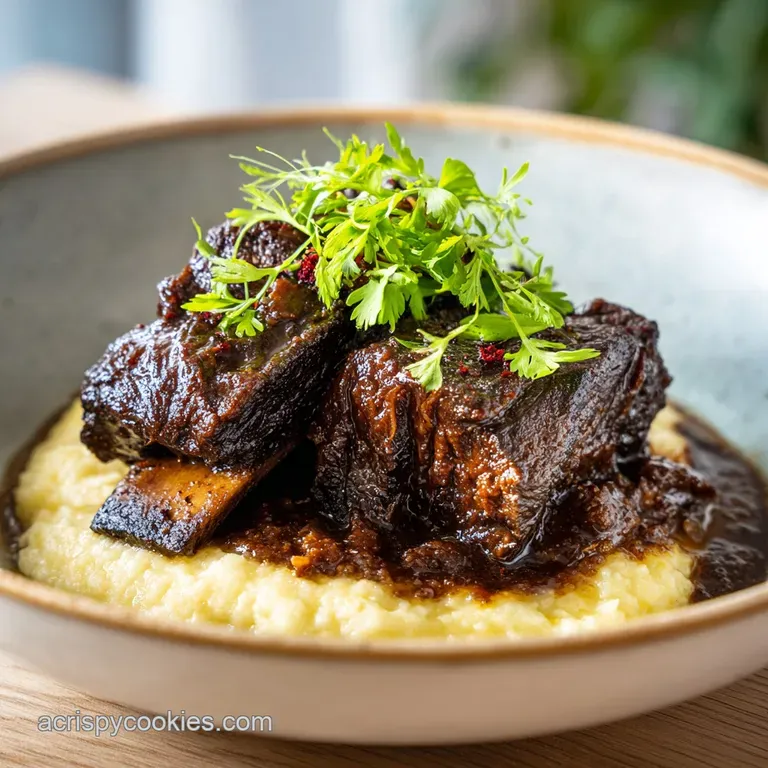
- Season the beef. Sprinkle the 3 lbs of ribs generously with sea salt and pepper on all sides. Note: Salt helps draw out proteins that form a better crust.
- Sear the ribs. Heat avocado oil in your skillet over medium high heat. Brown the ribs for 3 minutes per side until a deep, mahogany crust forms.
- Transfer to slow cooker. Place the browned ribs into the crockpot, keeping them in a single layer if possible.
- Sauté the aromatics. In the same skillet, add the onion, carrots, and celery. Cook for 5 minutes until the onions are translucent and fragrant.
- Wake up the garlic. Add the smashed garlic and tomato paste to the skillet. Stir constantly for 2 minutes until the paste smells sweet and looks dark.
- Deglaze the pan. Pour in the balsamic vinegar and scrape the bottom of the pan with a wooden spoon. Note: This lifts the "fond" (the brown bits), which is pure flavor.
- Combine liquids. Add the beef bone broth to the skillet and bring to a simmer. Pour this entire mixture over the ribs in the slow cooker.
- Add herbs. Tuck the rosemary, thyme, and bay leaves around the meat.
- The long simmer. Cover and cook on LOW for 8 hours until the meat is tender and pulling away from the bone.
- Thicken the sauce. Remove the ribs and strain the liquid into a saucepan. Mix cornstarch and water, whisk into the simmering liquid for 2 minutes until the sauce is glossy and coats a spoon.
Solving the Most Common Slow Cooker Beef Problems
One of the biggest issues people face is a "greasy" sauce. Since short ribs are naturally fatty, that fat renders out into the braising liquid. If you don't address it, your dinner will feel heavy and oily. I always recommend using a fat separator or chilling the liquid so you can snap the solid fat off the top.
Why Your Meat Stays Tough
If your ribs aren't tender after 8 hours, it's usually because the temperature didn't stay consistent or the ribs were exceptionally thick. Don't panic. Simply add another hour of cook time. In a slow cooker, you almost cannot overcook these, but you can certainly undercook them.
| Problem | Root Cause | Solution |
|---|---|---|
| Sauce is too thin | Not enough reduction or thickener | Whisk in a cornstarch slurry and simmer on the stovetop for 3-5 mins. |
| Meat is dry/stringy | Cooked on "HIGH" for too long | Always use the "LOW" setting for 8 hours to keep the moisture locked in. |
| Flavor is flat | Lack of acidity or salt | Add a final splash of balsamic or a pinch of salt just before serving. |
Common Mistakes Checklist
- ✓ Skipping the sear: You’ll lose about 40% of the potential flavor depth.
- ✓ Adding too much liquid: The ribs should only be half submerged; they shouldn't be swimming.
- ✓ Opening the lid: Every time you peek, you lose 15-20 minutes of heat.
- ✓ Using "boneless": Bone in beef short ribs provide way more flavor and gelatin.
- ✓ Forgetting to strain: Leaving the soggy veggies in the sauce makes for a messy presentation.
Flavor Swaps and Ingredient Substitutions for Your Ribs
If you want to move away from the balsamic profile, you can easily pivot this recipe. For a more traditional vibe, swap the vinegar for a dry red wine like a Malbec. This will give you a darker, more tannic sauce that feels very "Old World."
For those who want a bit of heat, adding a tablespoon of chipotle in adobo to the tomato paste step creates a smoky, spicy version that is incredible when shredded into tacos. The base technique remains the same: sear, aromatics, slow braise.
| Original Ingredient | Substitute | Why It Works |
|---|---|---|
| Balsamic Vinegar (1/2 cup) | Red Wine (1 cup) | Adds tannins and complexity. Note: Reduce the broth slightly to compensate for extra liquid. |
| Fresh Rosemary | Dried Thyme (1 tsp) | Provides a similar earthy note if fresh herbs aren't available. |
| Avocado Oil | Ghee | Same high smoke point but adds a nutty, buttery richness to the sear. |
Adjusting the Recipe Size for Different Crowds
When scaling down for two people, you can halve the recipe, but keep the aromatics (onion/carrot/celery) at about 75% of the original volume. Use a smaller 3 quart slow cooker to ensure the liquid level is high enough to braise the meat properly.
When scaling up for a big dinner party (2x the recipe), do not double the salt and spices immediately. Use about 1.5 times the original amount, then taste the final sauce. You also don't need to double the liquid; 1.5 times the broth is usually plenty, as the meat will release its own juices during the 8 hour cook.
Kitchen Myths Debunked
One of the oldest myths is that searing meat "seals in the juices." This has been scientifically disproven. Moisture loss happens regardless of searing. The real reason we sear is for the Maillard reaction a chemical reaction between amino acids and reducing sugars that gives browned food its distinctive flavor.
Another myth is that you can't overcook meat in a slow cooker. While it's hard to do with ribs, if you leave them for 12 or 14 hours, the muscle fibers eventually give up all their moisture and become "mushy" rather than "tender." Aim for that 8 hour sweet spot on the low setting.
How to Store and Reuse Your Leftover Beef
Storage: These ribs stay incredible in the fridge for up to 4 days. In fact, they are often better on day two because the flavors have had more time to meld. Store them directly in the sauce to keep the meat from drying out.
Freezing: You can freeze the cooked meat and sauce for up to 3 months. Let it thaw overnight in the fridge before reheating.
Zero Waste Tip: Don't throw away the bones or the strained veggie scraps. The bones can be simmered again with water to make a "remouillage" (a second stock), and the veggie scraps can be blended into a soup base for a hit of concentrated beef flavor.
Reheating: Avoid the microwave if possible. It can make the meat rubbery. Instead, place the ribs and sauce in a covered dish in a 300°F (150°C) oven for 20 minutes until warmed through.
The Best Side Dishes for a Rich Beef Dinner
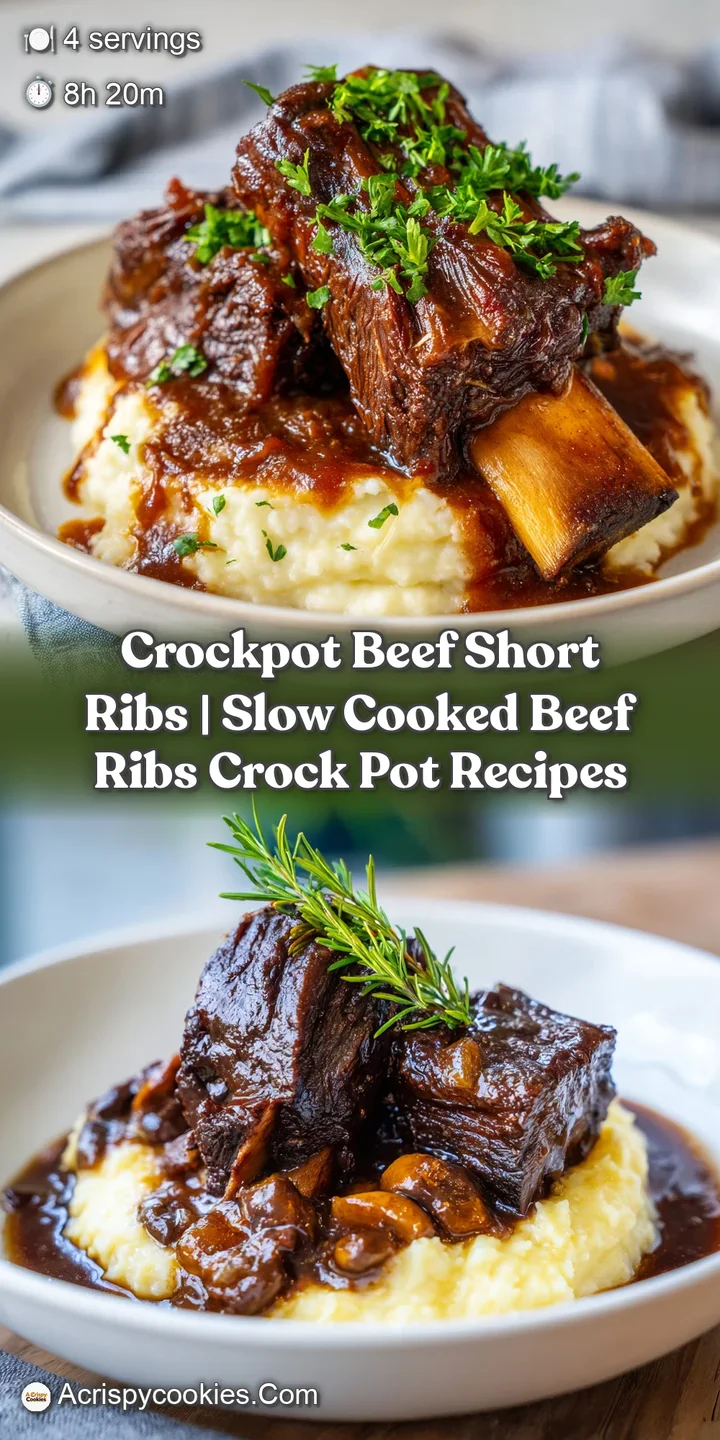
Because this dish is so rich and savory, you need sides that can either soak up the sauce or cut through the fat. My absolute favorite is a mountain of garlic mashed potatoes. The velvety sauce from the ribs acts like the world's best gravy.
If you want something lighter, a simple polenta or even some crusty sourdough bread is great for mopping up every last drop of that balsamic reduction. For a vegetable side, try something with a bit of "snap" like roasted Brussels sprouts or steamed green beans with lemon zest to provide a bright contrast to the heavy beef. For another take on this classic comfort dish, take a look at my Beef Short Ribs recipe which pairs beautifully with creamy grits.
Recipe FAQs
How do you cook beef short ribs in a slow cooker?
Sear the ribs first, then braise on LOW for 8 hours. Sear the ribs in a hot skillet until well browned on all sides to develop flavor; then, place them in the slow cooker, cover with braising liquid (broth and balsamic), and cook on LOW until fork tender.
How long to cook short ribs on the bone?
Aim for 8 hours on LOW in a slow cooker. For complete collagen breakdown leading to that melt-in-your mouth texture, you need a minimum of 8 hours at a low, steady temperature, ensuring the internal temperature hits at least 200°F.
Can you overcook short ribs in a slow cooker?
Yes, if you cook them significantly past 10 hours on LOW. While they are very forgiving, leaving them for 12 or 14 hours can cause the meat fibers to break down completely and become mushy rather than tenderly shreddable.
Why are my short ribs not tender in the crockpot?
They likely need more time or your cooker ran too cool. The primary goal is converting tough collagen into soft gelatin, which requires reaching an internal temperature above 200°F; check the temperature or add 1-2 more hours on LOW.
Is it true that searing beef short ribs only adds color and not flavor?
No, this is a common misconception. Searing creates hundreds of new flavor compounds through the Maillard reaction, which are essential for deep, rich taste that the slow braise alone cannot replicate.
What is the best side dish to pair with rich, braised beef short ribs?
Creamy starches are ideal for soaking up the rich sauce. Potatoes or polenta pair wonderfully because they absorb the flavorful braising liquid. Consider serving them with my recipe for Classic Mashed Potatoes recipe for the perfect complement.
Should I use bone-in or boneless short ribs for braising?
Use bone-in ribs for the best flavor and texture. The bones release marrow and connective tissue during the long cook, which dissolves into gelatin, resulting in a significantly richer, silkier sauce.
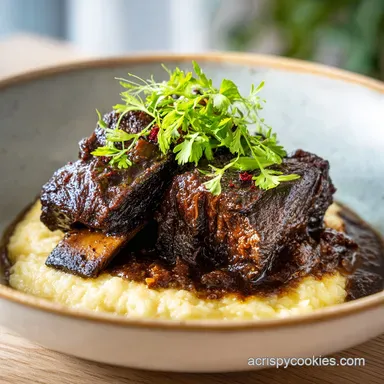
Bone In Beef Short Ribs
Ingredients:
Instructions:
Nutrition Facts:
| Calories | 592 kcal |
|---|---|
| Protein | 44g |
| Fat | 37g |
| Carbs | 16g |
| Fiber | 3g |
| Sugar | 9g |
| Sodium | 695mg |
