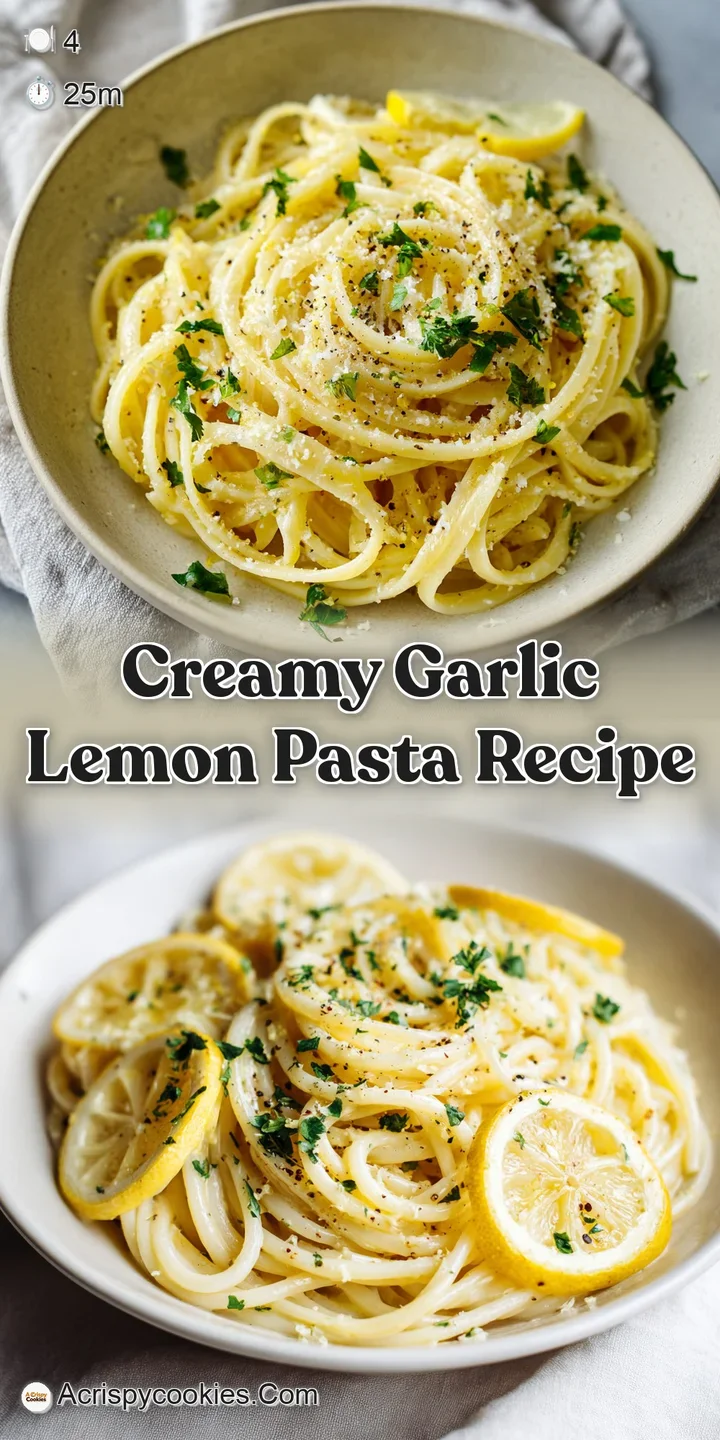
Creamy Garlic Lemon Pasta Recipe
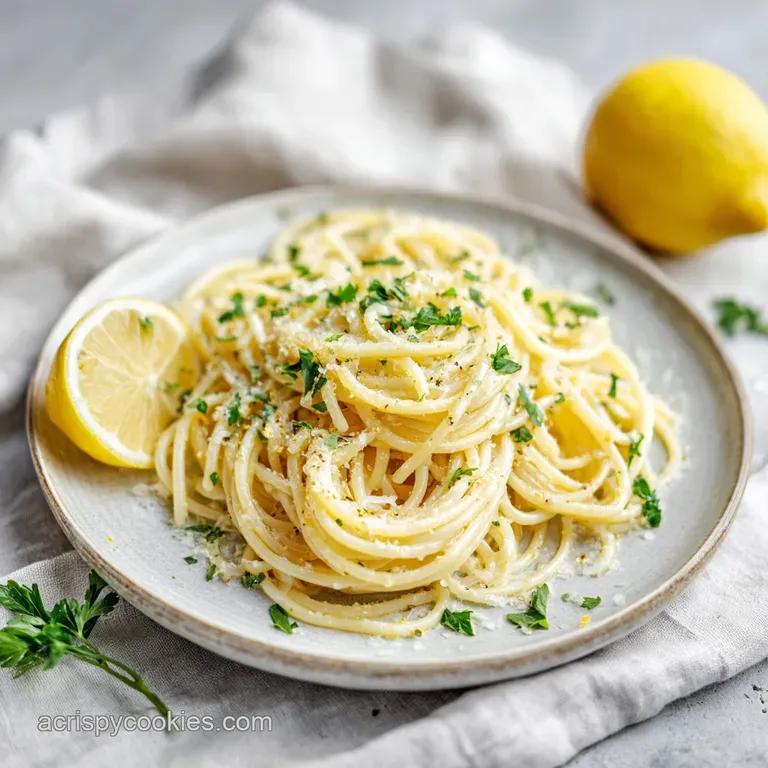
- Time: Active 10 minutes, Passive 15 minutes, Total 25 minutes
- Flavor/Texture Hook: Velvety, zesty, and sharp
- Perfect for: Impressive weeknight dinners or a quick date night fix
- Crack the Code for a Perfect Creamy Garlic Lemon Pasta Recipe
- Key Success Metrics for Your Garlic Lemon Pasta Dish
- The Essential Ingredients for a Silky Citrus Emulsion
- Tools You Will Need to Achieve Restaurant Quality Texture
- Step by Step Guide from Preparation to Final Plating
- Professional Techniques to Avoid Bitter Garlic or Broken Sauce
- Scaling This Recipe for Crowds or Couples
- Creative Ways to Customize Your Zesty Garlic Pasta Meal
- Debunking Pasta Myths
- Best Practices for Storing and Reviving Leftover Creamy Pasta
- Perfect Side Dishes to Complement These Bright Italian Flavors
- Recipe FAQs
- 📝 Recipe Card
Crack the Code for a Perfect Creamy Garlic Lemon Pasta Recipe
I remember sitting in a tiny bistro in the hills of Tuscany, watching the chef toss a pan of pasta so fast it looked like a blur of gold and white. The aroma hitting my table was a sharp, punchy mix of sizzling garlic and fresh citrus that literally made my mouth water before the plate even landed.
When I finally took a bite, it wasn't heavy or cloying; it was bright, velvety, and had this incredible "zing" that made me want to finish the whole bowl in three minutes flat.
Back in my own kitchen, I spent weeks trying to recreate that exact balance. My first few attempts were... let's just say, disappointing. The cream would curdle because I added the lemon too early, or the garlic would burn and turn the whole thing bitter.
It took a lot of trial and error (and some very questionable batches of noodles) to realize that this dish is all about the timing of the "layers." You aren't just making a sauce; you're building a flavor profile that relies on the harmony between the fat of the butter and the acid of the fruit.
Key Success Metrics for Your Garlic Lemon Pasta Dish
Starch Suspension: Pasta water contains released starches that act as a natural bridge, binding the fat of the heavy cream to the water based lemon juice.
Acid Management: Adding lemon juice at the final stage prevents the citric acid from denaturing the proteins in the cream too aggressively, which stops the sauce from "breaking" or curdling.
Allium Infusion: Thinly slicing the garlic instead of mincing it allows for a slower release of oils, flavoring the butter without the high risk of burning that comes with tiny pieces.
| Cook Method | Total Time | Texture | Best For |
|---|---|---|---|
| Standard Stovetop | 25 minutes | Silky and light | Maximum flavor control |
| One Pot Method | 20 minutes | Extra starchy/thick | Busy weeknights |
| Cold Soak & Sear | 30 minutes | Very "al dente" | Prep ahead meals |
Using the right method makes a world of difference when you're aiming for that restaurant style finish. The stovetop method remains my favorite because it lets you monitor the emulsion as it happens, ensuring the sauce never gets too thick or too thin.
The Essential Ingredients for a Silky Citrus Emulsion
To get that specific restaurant quality "sheen" on your noodles, every component has a job to do. We aren't just tossing things in a pan; we're performing a little bit of kitchen chemistry to make sure the fat and acid play nice together.
| Component | Science Role | Pro Secret |
|---|---|---|
| Heavy Cream | Lipid base for mouthfeel | Room temp cream prevents thermal shock and curdling |
| Lemon Zest | Essential oil carrier | Grate directly over the pan to catch every drop of spray |
| Starchy Water | Emulsification agent | It’s liquid gold; never drain the pot completely |
| Thinly Sliced Garlic | Flavor foundation | Use a mandoline for paper thin slices that melt into the sauce |
If you're out of a specific item, don't panic. This recipe is quite forgiving as long as you maintain the ratio of fat to acid. Here are the swaps I've tested in my own kitchen when the pantry was looking a bit bare.
- Linguine: Spaghetti or Fettuccine. Why this? Long strands provide more surface area for the velvety sauce to cling.
- Heavy Cream: Full fat coconut milk. Why this? Similar fat content but adds a very subtle nutty undertone.
- Sea Salt: Kosher salt. Why this? Essential for seasoning the pasta from the inside out during the boil.
- Unsalted Butter: Extra virgin olive oil. Why this? Lacks the dairy richness but provides a fruitier, lighter finish.
- Parmesan Cheese: Pecorino Romano. Why this? Adds a saltier, funkier punch than the mellow parmesan.
- Fresh Parsley: Fresh basil. Why this? Swaps the peppery bite for a sweeter, floral aroma.
Tools You Will Need to Achieve Restaurant Quality Texture
You don't need a professional kitchen, but a few specific tools make this "flavor detective" work much easier. A microplane is non negotiable for the lemon zest; you want those tiny ribbons that disappear into the sauce rather than large chunks of peel.
I also highly recommend using a large stainless steel skillet rather than a deep pot for the sauce. The wider surface area allows the cream to reduce evenly and gives you plenty of room to toss the pasta vigorously, which is key for building that emulsion.
For the pasta itself, a large stockpot is a must. You want the noodles to have enough room to dance around so they don't stick together. If you find yourself making pasta often, investing in a good pair of silicone tipped tongs will save your life and your non stick pans.
They allow you to pull the pasta directly from the water into the sauce, bringing along that precious starchy water without the need for a colander.
step-by-step Guide from Preparation to Final Plating
Phase 1: Preparing the Pasta Al Dente
- Fill a large pot with water and add the 2 tbsp sea salt. Wait until it reaches a rolling boil.
- Drop 1 lb linguine into the water. Stir immediately to prevent sticking.
- Cook the pasta for about 2 minutes less than the package directions until it has a firm bite in the center. Note: It will finish cooking in the sauce later.
- Before draining, scoop out at least 1 cup of the cloudy pasta water and set it aside.
Phase 2: Infusing the Garlic Butter
- While the pasta boils, melt 4 tbsp unsalted butter in a large skillet over medium low heat until it begins to foam and sizzle gently.
- Add the 4 thinly sliced garlic cloves and 0.5 tsp red pepper flakes. Cook for 2-3 minutes until the garlic is translucent and fragrant.Note: Do not let the garlic brown, or it will taste bitter.
- Pour in 1 cup heavy cream and the zest of 2 lemons. Simmer for 3-4 minutes until the sauce slightly thickens.
Phase 3: Creating the Velvety Emulsion
- Turn the heat to low and whisk in the 1/4 cup lemon juice. The sauce should look glossy and smooth.
- Add the undercooked linguine directly into the skillet. Toss vigorously with tongs.
- Add the 0.5 cup parmesan cheese and a splash of the reserved pasta water. Continue tossing until the cheese melts and the sauce coats every strand.
- Stir in the 0.5 cup fresh parsley and black pepper to taste. Serve immediately while the sauce is still fluid and shimmering.
Professional Techniques to Avoid Bitter Garlic or Broken Sauce
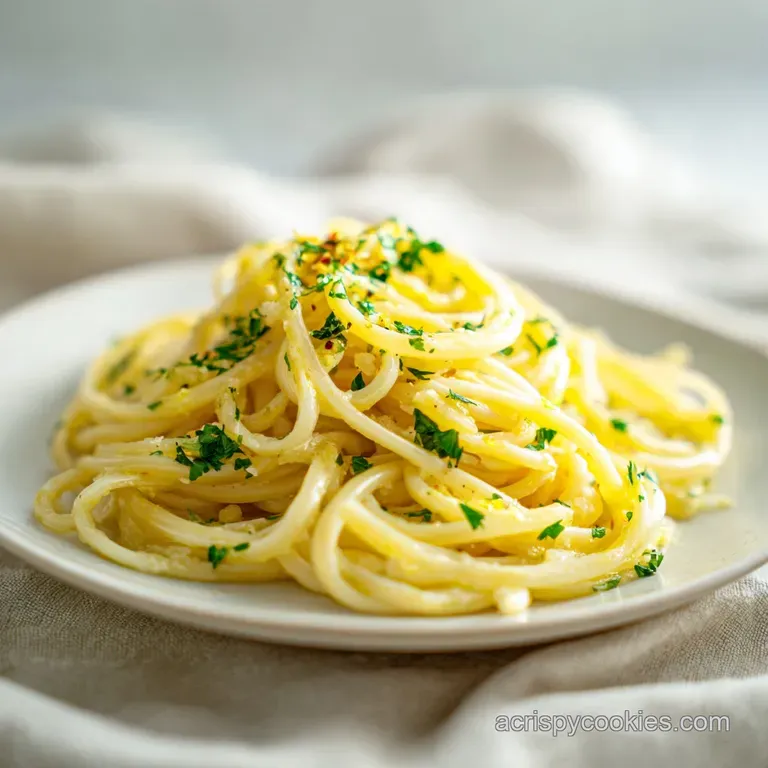
The most common mistake people make with a Creamy Garlic Lemon Pasta Recipe is letting the sauce get too hot once the lemon and cheese are added. High heat causes the dairy proteins to tighten and clump, resulting in a grainy texture instead of a silky one.
If you notice the sauce starting to look "dry" or sticking to the bottom of the pan, don't add more cream add more pasta water. That starch is what keeps everything integrated and slippery.
Why Your Sauce Separated
If your sauce looks oily or broken, it usually means the fat to water ratio is off. This often happens if the pan is too hot when you add the cheese. The cheese proteins "seize" instead of melting.
| Problem | Root Cause | Solution |
|---|---|---|
| Gritty Texture | Cheese added to boiling liquid | Remove from heat before stirring in the parmesan |
| Thin/Watery Sauce | Not enough pasta water reduction | Increase heat for 1 minute while tossing vigorously |
| Overpowering Acid | Too much lemon juice too early | Balance with a pinch of sugar or more butter |
Similar to the technique used in our Pan Seared Halibut recipe, the secret lies in the gentle "mounting" of the sauce with fat at the very end to ensure stability.
Common Mistakes Checklist
- ✓ Never rinse your pasta after cooking; you need that surface starch for the sauce to stick.
- ✓ Don't use the pre shredded cheese in a green can; it contains cellulose that prevents smooth melting.
- ✓ Ensure your lemons are at room temperature before juicing to get the maximum yield.
- ✓ Keep your garlic slices uniform so they all soften at the same rate.
- ✓ Always save more pasta water than you think you'll need.
Scaling This Recipe for Crowds or Couples
Scaling this dish is fairly straightforward, but you have to be careful with the seasonings. When doubling the recipe for 8 people, do not simply double the red pepper flakes or salt immediately. Spices can become overwhelming when scaled linearly. Start with 1.5 times the amount and adjust at the very end.
You'll also need a much larger pan a high sided sauté pan or a Dutch oven works best to ensure you can toss the noodles without them flying across the kitchen.
If you're cutting this down for two, the math is easy, but keep an eye on the sauce reduction. A smaller amount of cream will reduce much faster in a large pan, so you might need to add your pasta water sooner than the recipe suggests.
When I'm cooking for just myself, I often use a smaller 8 inch skillet to keep the sauce from evaporating too quickly.
Creative Ways to Customize Your Zesty Garlic Pasta Meal
While this dish is a superstar on its own, it also acts as a fantastic canvas for other flavors. If you're looking to add some protein, a Garlic Lemon Pasta with Chicken is the most natural evolution.
Simply sear some chicken breast strips with salt and pepper before starting the sauce, then toss them back in at the final stage. It adds a hearty element that turns this into a very filling main course.
Adding Garlic Lemon Pasta with Chicken
To do this right, I recommend using the same skillet you'll use for the sauce. Searing the chicken first leaves behind "fond" those little brown bits of flavor on the bottom of the pan which will then get picked up by the butter and cream, adding a deep, savory layer to your Lemon Pasta Recipe.
Boosting the Veggie Profile
- Roasted Asparagus
- Fold in blanched or roasted tips at the end.
- Baby Spinach
- Toss in a handful of raw leaves during the final toss; the heat of the pasta will wilt them perfectly.
- Frozen Peas
- Add them to the boiling pasta water during the last 2 minutes of cooking.
| Feature | Fresh Lemon | Bottled Juice | Impact |
|---|---|---|---|
| Aroma | Bright and floral | Dull and flat | Fresh zest is essential for the scent |
| Flavor | Complex acidity | Purely sour | Bottled often has preservatives that change the taste |
| Cost | $0.50 - $1.00 | $0.10 per serving | Negligible savings for a major quality drop |
Debunking Pasta Myths
There is a common myth that you should add oil to your pasta water to keep the noodles from sticking. This is actually a terrible idea for this Pasta Recipe because the oil coats the noodles and prevents that velvety sauce from clinging to them.
The only thing that stops sticking is a large volume of water and an occasional stir during the first two minutes of boiling.
Another misconception is that "Al Dente" means the pasta should be crunchy. It shouldn't. It should have a firm "tooth" or resistance in the center but be fully cooked through. This is vital because the pasta will continue to hydrate and soften as it sits in the warm cream sauce.
Best Practices for Storing and Reviving Leftover Creamy Pasta
Storage: This pasta will stay good in the fridge for up to 3 days in an airtight container. However, be warned: the noodles will soak up the sauce like a sponge as they sit, so it won't be nearly as "saucy" the next day.
I do not recommend freezing this dish, as the cream and lemon emulsion will likely separate and become grainy upon thawing.
Reheating: To bring that silkiness back, do not just throw it in the microwave. Put the leftovers in a skillet over low heat and add a splash of milk or a tiny bit of water. Use a fork to gently break up the noodles as the liquid heats up. This recreates the emulsion and thins out the sauce so it coats the pasta again. If you're a fan of this flavor profile, it's very similar to how you'd handle the leftovers of a Marry Me Chicken recipe.
Zero Waste Tip: If you have leftover lemon halves after juicing, don't toss them! Toss them into a pot of water and simmer them to make your kitchen smell incredible, or use the rinds to scrub your wooden cutting boards (after adding a bit of coarse salt) to naturally disinfect and deodorize them.
Perfect Side Dishes to Complement These Bright Italian Flavors
Since this Creamy Garlic Lemon Pasta Recipe is quite rich, you want to pair it with something that offers a crisp, fresh contrast. A simple arugula salad with a light vinaigrette is my go to. The peppery bite of the arugula cuts right through the heavy cream and butter.
If you want something a bit more substantial, a side of roasted broccolini with a sprinkle of red pepper flakes works beautifully.
For a real "show stopper" meal, I love serving this alongside a Pan Seared Halibut recipe. The citrus notes in the fish mirror the lemon in the pasta, creating a cohesive, high end dining experience right at your kitchen table. Don't forget a piece of crusty sourdough bread to swipe up any remaining sauce trust me, you won't want to leave a single drop of that garlic infused liquid behind.
Recipe FAQs
How to make a garlic creamy pasta?
Infuse butter with thinly sliced garlic over low heat, then stir in heavy cream and simmer until slightly thickened. Reserve starchy pasta water is crucial for emulsifying the fat and preventing the sauce from breaking when you toss the cooked noodles in.
What can I add to pasta to make it creamy?
Heavy cream paired with starchy pasta water and grated Parmesan cheese creates the best creamy base. The starches in the water bind the fat of the cream and cheese together, forming a smooth, cohesive sauce that clings to the pasta.
What is the secret to a good creamy sauce?
The secret is managing the acid and adding pasta water slowly off the heat. Add the lemon juice last, whisking gently, and use that starchy water to thin the sauce and achieve a velvety, glossy texture rather than a heavy, broken one.
What does adding lemon juice to pasta sauce do?
Lemon juice adds necessary bright acidity to cut through the richness of the cream and butter. It prevents the sauce from tasting heavy or flat by providing a sharp, clean finish, but it must be added at the end to avoid curdling the cream.
Can leftovers be reheated?
Yes, but reheating must be done gently on the stovetop. Place the pasta in a skillet over low heat with a splash of milk or water; do not microwave aggressively, as the sauce proteins can separate and become grainy if overheated quickly.
How do I prevent my sauce from curdling when adding the lemon?
Remove the skillet from the direct heat source before incorporating the lemon juice and cheese. High heat causes the citric acid to denature the cream proteins too fast; keep the temperature low and whisk vigorously to encourage a stable emulsion.
Is it true that I should not rinse pasta before adding it to the sauce?
Yes, absolutely do not rinse the pasta after draining. The surface starch clinging to the noodles is the binding agent necessary to help the fats and liquids emulsify into a cohesive sauce that sticks to the strands.
Creamy Garlic Lemon Pasta
Ingredients:
Instructions:
Nutrition Facts:
| Calories | 768 kcal |
|---|---|
| Protein | 21.6 g |
| Fat | 38.2 g |
| Carbs | 86.4 g |
| Fiber | 3.8 g |
| Sugar | 2.4 g |
| Sodium | 785 mg |
