Short Ribs Crock Pot Recipe: Velvety Braised Beef
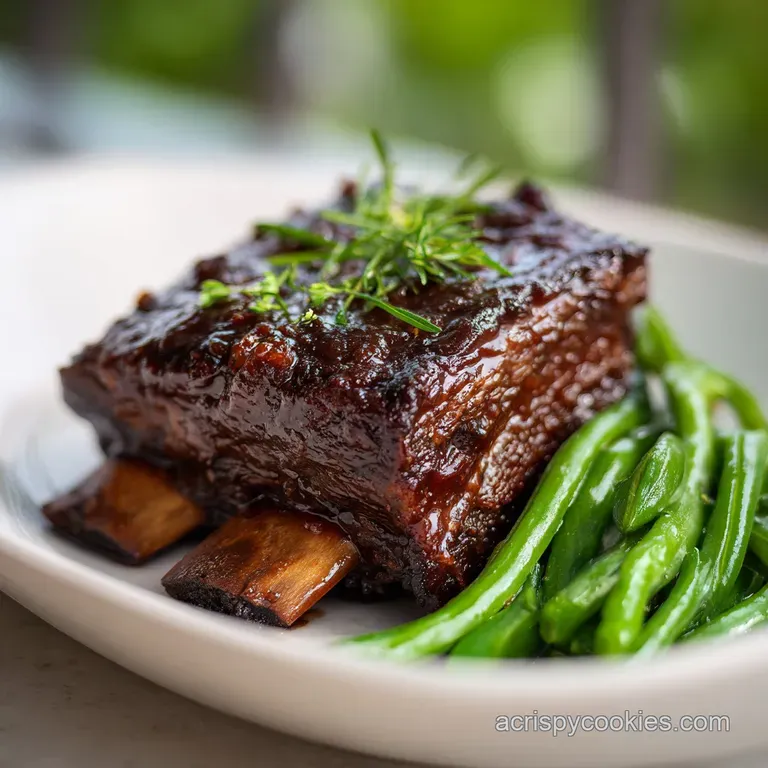
- Time: Active 20 minutes, Passive 8 hours, Total 8 hours 20 mins
- Flavor/Texture Hook: Velvety, melt in-your mouth beef with a concentrated, umami rich reduction
- Perfect for: Stress free Sunday dinners or impressive meal prep that tastes even better on day two
- Mastering This Flavorful Short Ribs Crock Pot Recipe
- The Science of Collagen Breakdown
- Key Metrics for Recipe Success
- The Elements of Deep Flavor
- Tools for the Best Braise
- Steps to Liquid Gold Short Ribs
- Fixing Common Braising Mistakes
- Smart Swaps for Every Kitchen
- Debunking Braising Folklore
- Storing and Reheating Your Leftovers
- What to Serve With Ribs
- High in Sodium
- Recipe FAQs
- 📝 Recipe Card
Mastering This Flavorful Short Ribs Crock Pot Recipe
The first time I tried to crack the code on restaurant quality beef, I failed miserably. I threw everything into the pot raw, pressed "start," and ended up with gray, boiled looking meat that felt like chewing on a rubber band. It was a total heartbreak after waiting eight hours.
But that failure sent me on a mission to understand how those tiny bits of fat and connective tissue actually behave when trapped in a ceramic crock for a whole day.
Now, when I start this short ribs crock pot recipe, the kitchen transforms. It begins with the aggressive sizzle of beef hitting hot avocado oil. That aroma deep, caramelized, and slightly nutty is the first layer of flavor we're building.
By the time the red wine hits the hot pan to deglaze those browned bits, the scent is so intoxicating I usually have to remind myself that we’re still hours away from dinner.
We aren't just making a stew; we are engineering a braise. This recipe is for my fellow flavor detectives who want to understand why a certain step matters. We’re going to look at the chemistry of the sear and why the "low" setting is your best friend.
If you've ever wondered why your slow cooker meals taste flat, it’s usually because they lack the acid fat balance we’re about to perfect here.
The Science of Collagen Breakdown
- Connective Tissue Conversion: At temperatures between 70°C and 82°C, tough collagen fibers in the bone in English cut melt into gelatin. This process requires a minimum of six hours to ensure the meat fibers are lubricated and "shatter" at the touch of a fork.
- Maillard Reaction Synergy: Searing the beef at high heat creates melanoidins on the surface. These compounds dissolve into the braising liquid over 8 hours, providing a savory depth that raw beef simply cannot produce.
- Acidic Tenderization: The tannins and acidity in the dry red wine act as a gentle denaturant. This breaks down surface proteins early in the cook, allowing the bone broth and aromatics to penetrate deeper into the muscle fibers.
| Rib Thickness | Target Internal Temp | Rest Time | Visual Finished Cue |
|---|---|---|---|
| 5 cm (approx 2 inch) | 96°C (205°F) | 15 minutes | Meat pulls 1 cm away from bone |
| 7 cm (approx 3 inch) | 98°C (208°F) | 20 minutes | Bone slides out with zero resistance |
| 4 cm (Thin cut) | 94°C (201°F) | 10 minutes | Fibers separate with a dull spoon |
Choosing the right cut is the first step in our investigation. I always look for "English cut" ribs, which are sliced parallel to the bone. They provide a sturdy structure that won't disintegrate into a pile of mush after the long haul. Similar to how we select cuts for a Short Ribs in recipe, the ratio of bone to meat is crucial for the final body of the sauce.
Key Metrics for Recipe Success
To get that velvety finish, we have to talk about the liquid to solid ratio. A common mistake is drowning the ribs. We want a braise, not a soup. The meat should be submerged about halfway to two thirds; the steam trapped under the lid handles the rest.
This creates a concentrated "jus" that doesn't require hours of reduction at the end.
| Component | Science Role | Pro Secret |
|---|---|---|
| Tomato Paste | Umami Amplification | Fry it until it turns rust colored to remove the raw metallic tang. |
| Avocado Oil | High Smoke Point | Allows for a violent sear without the oil breaking down or smoking out your house. |
| Bone Broth | Gelatin Density | Use bone broth over standard stock for a richer, lip smacking mouthfeel. |
| Bone In Ribs | Thermal Regulation | The bone acts as a heat conductor, cooking the meat evenly from the inside out. |
When we look at the fresh versus shortcut approach, the differences are stark. A shortcut might involve using a packet of onion soup mix or pre diced frozen onions. While these save time, they introduce high levels of sodium and lack the structural integrity of fresh mirepoix (onion, carrots, celery).
| Element | Fresh Method | Shortcut Version | Impact on Result |
|---|---|---|---|
| Aromatics | Hand diced mirepoix | Frozen onion/carrot mix | Fresh provides better texture and subtle sweetness. |
| Liquid Base | Red wine + Bone broth | Water + Bouillon cube | Wine adds necessary acidity to cut through the heavy beef fat. |
| Herbs | Fresh Thyme/Rosemary | Dried "Italian" seasoning | Fresh herbs release oils slowly, staying vibrant over 8 hours. |
The Elements of Deep Flavor
For this short ribs crock pot recipe, we need high-quality components. I’ve found that using a dry wine you’d actually drink makes a massive difference. Avoid "cooking wines" which are loaded with salt and can ruin the balance of your reduction.
- 4.5 lb beef short ribs: Bone in English cut is non negotiable for the best flavor. Why this? The marrow and connective tissue in the bone enrich the sauce's texture.
- 2 tsp kosher salt: Use a coarse salt like Diamond Crystal for better control. Why this? Coarse grains draw out moisture more effectively during the initial sear.
- 1 tsp coarse black pepper: Freshly cracked is best for a spicy bite.
- 2 tbsp avocado oil: A over high heat hero. Why this? It won't burn during the aggressive browning phase.
- 1 large yellow onion: Diced small to melt into the sauce.
- 3 large carrots: Peeled and cut into 1 inch (2.5 cm) chunks. Why this? Large chunks survive the 8 hour cook without turning into puree.
- 2 stalks celery: Sliced thin for savory depth.
- 4 cloves garlic: Smashed, not minced. Why this? Smashed garlic infuses the oil without burning as easily as minced.
- 2 tbsp tomato paste: The secret to a "brick red" sauce.
- 1 cup dry red wine: Cabernet Sauvignon or Merlot works beautifully.
- 1 cup beef bone broth: For a silky, high protein finish.
- 2 sprigs fresh thyme: Earthy and floral.
- 2 sprigs fresh rosemary: Adds a piney, sophisticated top note.
- 1 dried bay leaf: The unsung hero of slow cooked stews.
| Original Ingredient | Substitute | Why It Works |
|---|---|---|
| Avocado Oil | Ghee (Clarified Butter) | High smoke point with a rich, nutty flavor profile. |
| Red Wine | Pomegranate Juice + 1 tbsp Vinegar | Provides acidity and deep color without the alcohol content. |
| Beef Bone Broth | Mushroom Broth | Adds an earthy, savory "forest" flavor that complements beef perfectly. |
| Short Ribs | Beef Chuck Roast (large chunks) | Similar fat/connective tissue content but less expensive than ribs. |
Tools for the Best Braise
You don't need a thousand gadgets, but a few specific items will make your life much easier. First, a heavy bottomed skillet is essential for the sear. A cast iron pan is my go to because it holds heat like a champion, ensuring the meat doesn't just "steam" when it hits the surface.
A 6 quart (5.7 liter) slow cooker is the ideal size for 4.5 lbs of ribs. If your pot is too large, the liquid will evaporate too quickly; if it's too small, you won't get enough airflow for even cooking. Also, grab a pair of long tongs.
You’ll need them to flip the ribs during the sear without getting splattered by hot oil. Trust me, those oil pops are no joke when you're working with high fat beef.
Finally,, a fat separator is a nice to have but very helpful. Short ribs release a lot of rendered fat. If you don't want your sauce to have a 1 inch oil slick on top, being able to pour off the cooking liquid and separate the fat is a game changer.
If you don't have one, a simple ladle and a steady hand will do the trick once the liquid has settled for a few minutes.
Steps to Liquid Gold Short Ribs
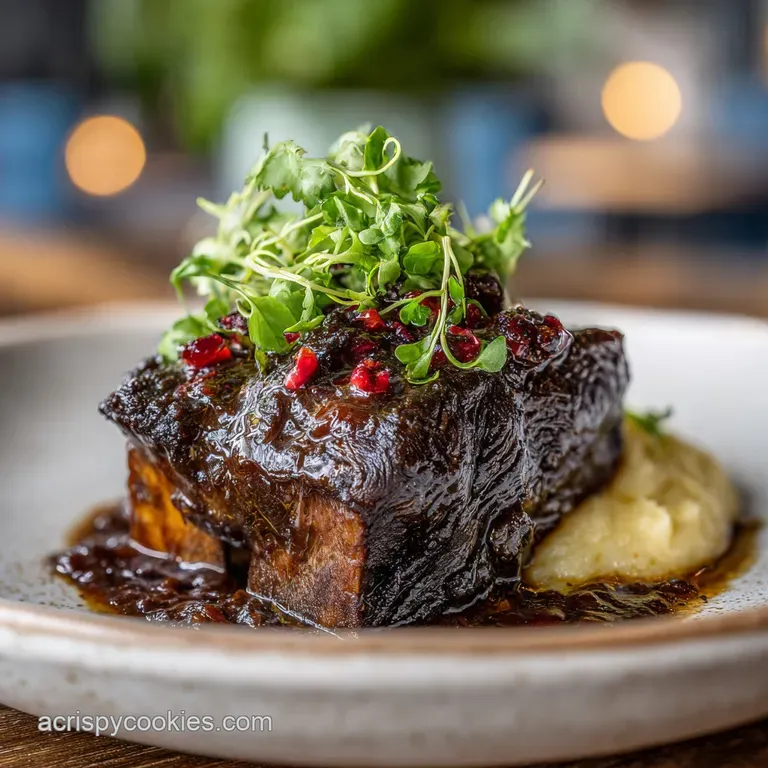
- Prep the meat. Pat the 4.5 lb of short ribs completely dry with paper towels. Note: Moisture is the enemy of a good crust; wet meat steams instead of searing.
- Season aggressively. Coat all sides of the ribs with the 2 tsp kosher salt and 1 tsp black pepper.
- Sear the beef. Heat the 2 tbsp avocado oil in a heavy skillet over medium high heat until it shimmers. Brown the ribs in batches for 3 minutes per side until a dark, mahogany crust forms.
- Transfer to crock. Place the seared ribs into your slow cooker, bone side down if possible.
- Sauté aromatics. In the same skillet (don't wash it!), add the diced onion, carrots, and celery. Cook for 5 minutes until the onions are translucent and picking up the brown bits.
- Bloom the paste. Stir in the 4 cloves of smashed garlic and 2 tbsp tomato paste. Cook for 2 minutes until the paste smells sweet and looks dark red.
- Deglaze the pan. Pour in the 1 cup of dry red wine. Use a wooden spoon to scrape the bottom of the pan vigorously. Let it simmer for 3 minutes until the liquid reduces by half.
- Combine and pour. Stir in the 1 cup of beef bone broth, then pour this entire mixture over the ribs in the slow cooker.
- Add the herbs. Nestled the thyme, rosemary, and bay leaf into the liquid.
- Slow cook. Cover and cook on "Low" for 8 hours until the meat is tender and starting to pull away from the bone.
Chef's Note: If you're in a rush, you can cook these on "High" for 4 to 5 hours, but the texture won't be as silky. The fat needs time to render slowly into the sauce. For a similar technique with different timing, you might enjoy our Beef Short Ribs recipe.
Fixing Common Braising Mistakes
Why is my meat tough?
If the meat feels like it’s resisting your fork, it simply hasn't cooked long enough. Beef short ribs follow a bell curve: they start tough, become tender as the collagen melts, and then eventually become dry and "stringy" if overcooked.
If you're at the 8 hour mark and they aren't yielding, give them another 30 to 60 minutes. Every slow cooker runs at a slightly different temperature.
The sauce is too greasy
Short ribs are incredibly fatty. As they cook, that fat renders out into the braising liquid. If the sauce looks broken or oily, don't panic. You can use a fat separator or simply chill the sauce overnight. The fat will solidify on top, making it easy to lift off in one solid disk.
If you need it right now, use a large spoon to skim the surface, or drag a clean paper towel across the top to soak up the excess oil.
| Problem | Root Cause | Solution |
|---|---|---|
| Meat is dry/stringy | Cooked too long or on "High" for too long | Shred the meat into the sauce to rehydrate the fibers. |
| Sauce is bland | Not enough salt or acidity | Stir in a teaspoon of balsamic vinegar or a pinch of salt before serving. |
| Vegetables are mush | Cut too small initially | Keep carrots in 1 inch chunks; add delicate veggies in the last hour. |
Common Mistakes Checklist
- ✓ Never skip the searing step; it’s where 50% of your flavor lives.
- ✓ Pat the meat bone dry before it hits the oil to ensure a "shatter crisp" exterior.
- ✓ Use a dry wine; sweet wines will make the sauce cloying after 8 hours of concentration.
- ✓ Keep the lid closed every time you peek, you lose 15-20 minutes of heat.
- ✓ Let the meat rest for 15 minutes after cooking so the juices can redistribute.
Smart Swaps for Every Kitchen
If you need to scale this recipe down for a smaller household, it's quite simple. For a half batch (2.25 lbs of ribs), you can use a smaller 3 quart slow cooker. Reduce the liquid by about 20%, but keep the aromatics the same for maximum flavor.
Cooking time usually remains the same because the thickness of the individual ribs doesn't change, even if you have fewer of them.
Scaling up for a party (9 lbs of ribs) requires a bit more care. You'll likely need two slow cookers. Do not double the salt or spices linearly; start with 1.5x the amount and adjust at the end.
Because of the sheer volume of meat, you might find that the liquid doesn't reduce as much, so you may need to simmer the sauce in a wide pan on the stove for 10 minutes before serving to reach that velvety consistency.
- If you want a thicker sauce, whisk 1 tbsp of cornstarch with 1 tbsp of cold water and stir it into the pot 30 minutes before the end.
- If you want a brighter flavor, stir in a handful of fresh chopped parsley and some lemon zest (gremolata) right before serving.
- If you want a smoky kick, add a teaspoon of smoked paprika or a chopped chipotle in adobo to the aromatics while sautéing.
| Servings | Rib Weight | Wine/Broth Total | Cook Time |
|---|---|---|---|
| 2-3 People | 2.25 lb (1 kg) | 1.5 cups total | 8 hours (Low) |
| 6 People | 4.5 lb (2 kg) | 2 cups total | 8 hours (Low) |
| 10-12 People | 9 lb (4 kg) | 3.5 cups total | 9 hours (Low) |
Debunking Braising Folklore
One major myth is that searing "seals in the juices." Science has proven this false; moisture loss happens regardless of the sear. However, the sear is vital for the Maillard reaction, which creates the complex flavor molecules that make the sauce taste like it came from a professional kitchen.
Without the sear, your short ribs crock pot recipe will taste "boiled."
Another misconception is that you can't overcook meat in a slow cooker because it's "sitting in liquid." Actually, once the internal temperature of the meat stays at a boil for too long, the muscle fibers squeeze out all their moisture and become dry and woody.
This is why the "Low" setting is superior for this specific cut it keeps the temperature just below a rolling boil, preserving the integrity of the meat while the collagen melts.
Storing and Reheating Your Leftovers
The best part of this recipe is that it's arguably better on day two. As the dish sits in the fridge, the flavors continue to meld and the sauce develops a more cohesive, rich profile. You can store the ribs in their liquid in an airtight container in the fridge for up to 4 days.
When you're ready to eat, simply reheat on the stove over medium low heat until the sauce is liquid and the meat is warmed through.
For long term storage, these ribs freeze beautifully. I recommend shredding the meat off the bone and freezing it directly in the sauce. It will stay fresh for up to 3 months. To reheat from frozen, thaw in the fridge overnight and then warm in a covered dish in the oven at 150°C (300°F) for about 20 minutes.
Don't throw away the leftover sauce! It makes an incredible base for a beef ragu over pappardelle or a rich gravy for mashed potatoes.
What to Serve With Ribs
Because this dish is so rich and unctuous, you need something to soak up that incredible sauce. Creamy polenta or a buttery mash are the classic choices. The starch provides a neutral background that lets the beef shine.
If you're looking for something lighter, a simple cauliflower puree works wonders for a keto friendly option.
To cut through the fat, I always serve a side of something bright or crunchy. A simple arugula salad with a lemon vinaigrette provides a sharp contrast to the deep, savory notes of the braise. Roasted root vegetables, like parsnips or extra carrots, also pair naturally since they share the same flavor profile as the aromatics in the pot. If you want to try a different take on slow cooked beef, check out our Short Ribs in recipe for more inspiration.
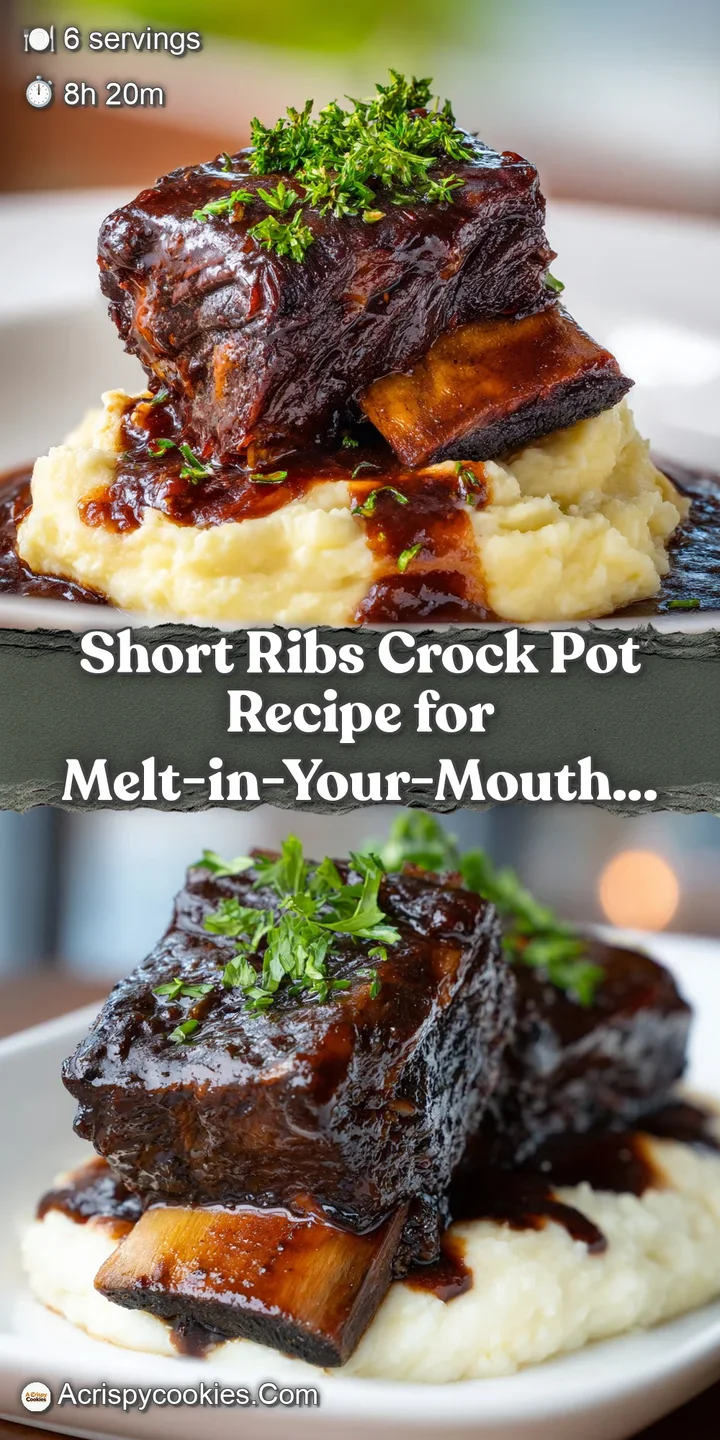
High in Sodium
845 mg mg of sodium per serving (37% % of daily value)
The American Heart Association recommends limiting sodium intake to about 2,300mg per day for overall cardiovascular health.
Simple Tips to Reduce Sodium in Your Short Ribs
-
Low-Sodium Broth-30%
Swap regular beef bone broth for a low-sodium or no-salt added version. This can significantly cut down on the sodium content without sacrificing flavor.
-
Reduce Added Salt-25%
Start by reducing the amount of kosher salt from 2 tsp to 1 tsp or 1.5 tsp. You can always add more at the end to taste, but it's harder to remove sodium once it's added.
-
Garlic Power-10%
Enhance the flavor profile by increasing the amount of fresh garlic. Add 6-8 cloves instead of 4 to boost taste and reduce reliance on salt.
-
Herb Boost
Maximize the use of fresh herbs like thyme and rosemary. Consider adding other herbs like oregano or parsley. These additions will enhance flavor without adding sodium.
Recipe FAQs
How do you cook short ribs in a slow cooker?
Sear the meat first, then cook low for 8 hours. Sear all sides in a hot, heavy skillet to develop a deep crust before transferring the ribs to the crock pot.
What are common mistakes when making crock pot short ribs?
Skipping the initial sear is the biggest error. Searing builds the foundational flavor through the Maillard reaction; without it, the meat will taste boiled or flat.
Should short ribs be covered in liquid in a crock pot?
No, they should be only half to two-thirds submerged in liquid. The slow cooker relies on trapped steam to cook the top portion of the meat, which concentrates the sauce naturally.
Are ribs better in the oven or the crock pot?
The crock pot is superior for hands off, melt-in-your mouth texture. While an oven braise achieves similar results, the consistent, low temperature of the slow cooker perfectly breaks down the tough collagen over 8 hours.
Is it true that searing the meat first is unnecessary for a slow cooker recipe?
No, this is a common misconception. Searing creates hundreds of flavor compounds (Maillard reaction); without it, the final dish will lack savory depth, resulting in a weaker flavor than a traditional Sunday Roast Recipe.
What liquid works best to achieve a velvety sauce base?
Use a combination of dry red wine and bone broth. The wine adds necessary acidity to cut the richness, while the bone broth provides gelatin for a naturally silky mouthfeel after slow cooking.
If I accidentally overcook my short ribs, how can I save the texture?
Shred the meat back into the sauce immediately. Once the fibers become dry and stringy, submerging them back into the hot liquid will rehydrate them slightly, making them easier to eat.
Crock Pot Short Ribs Recipe 2
Ingredients:
Instructions:
Nutrition Facts:
| Calories | 588 kcal |
|---|---|
| Protein | 33.5 g |
| Fat | 44.2 g |
| Carbs | 8.8 g |
| Fiber | 1.8 g |
| Sugar | 3.2 g |
| Sodium | 845 mg |
