French Onion Chicken Orzo Casserole Recipe
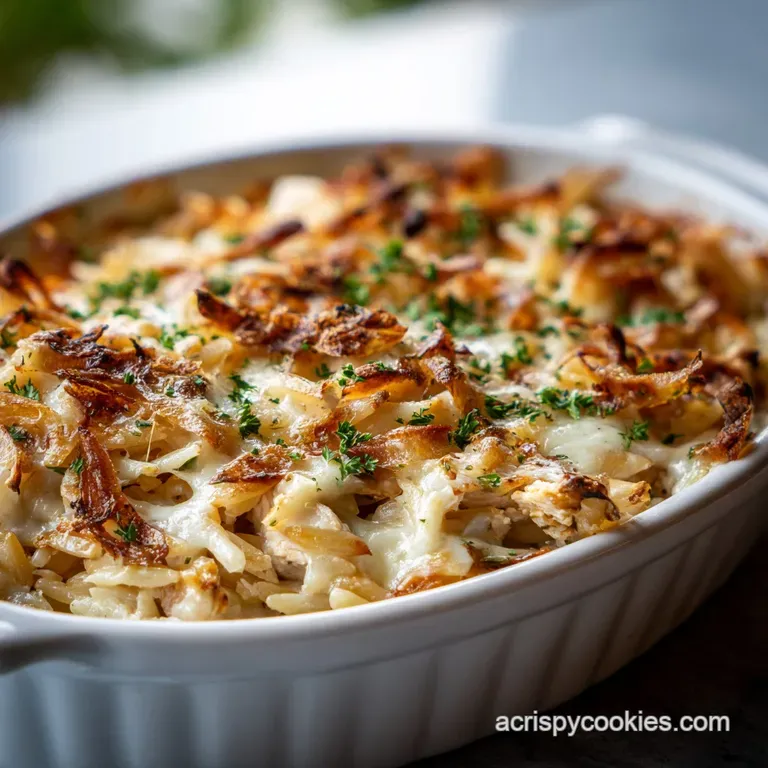
- Time: Active 25 minutes, Passive 35 minutes, Total 1 hour
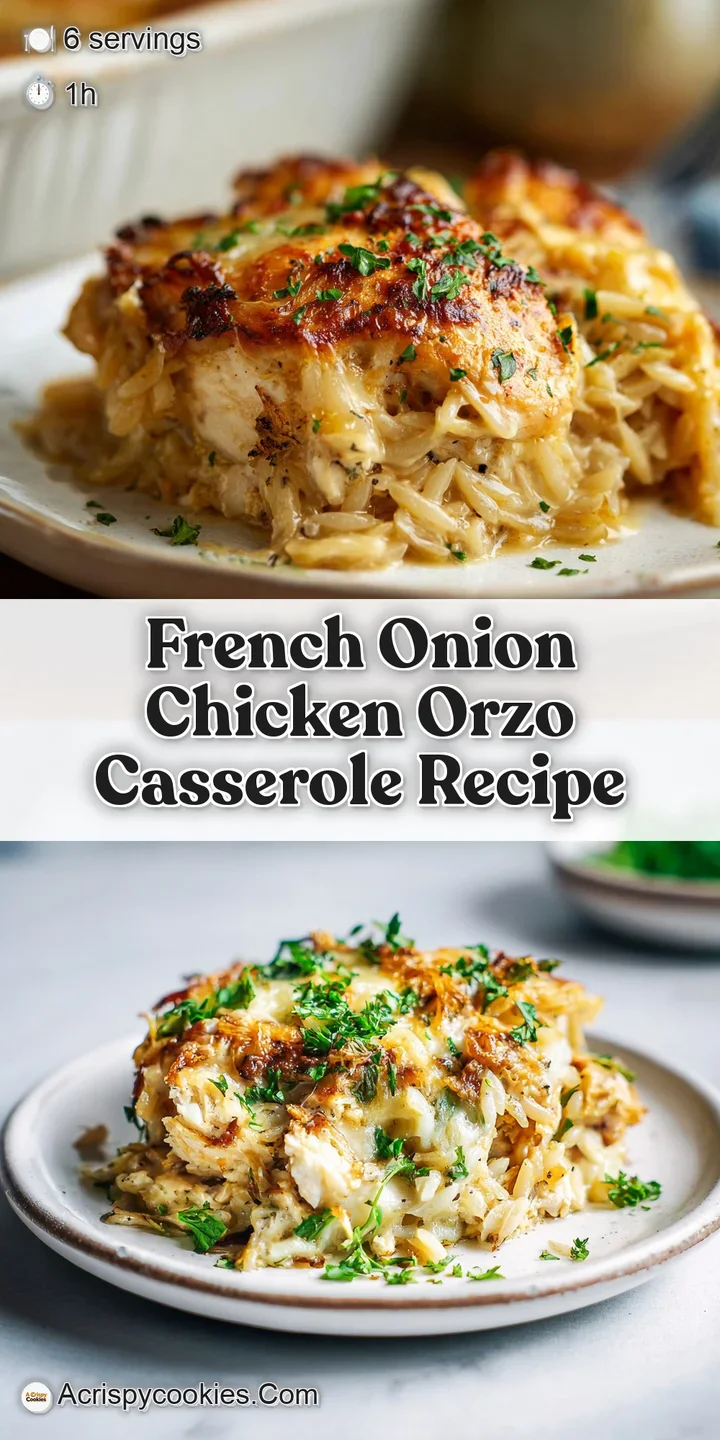
- Flavor/Texture Hook: Deeply caramelized sweetness meets a velvety, melted Gruyère crust.
- Perfect for: Impressive Sunday dinners or high end meal prep.
- Cracking the French Onion Chicken Orzo Casserole Recipe
- Understanding the Molecular Magic of Caramelized Onions
- Precise Measurements for Achieving Consistent Restaurant Quality
- Selecting High Quality Components for Deepest Umami
- Professional Grade Tools Required for This Bistro Classic
- Layering Flavors Through Strategic Cooking and Baking Phases
- Solving Common Kitchen Hiccups and Flavor Fails
- Creative Variations for Adjusting Textures and Dietary Needs
- Maximizing Shelf Life and Maintaining Velvet Sauce Quality
- Visual Finishing Moves for That Authentic French Bistro Look
- High in Sodium
- Recipe FAQs
- 📝 Recipe Card
Cracking the French Onion Chicken Orzo Casserole Recipe
The first time I tried to make a French Onion inspired bake, it was a total disaster. I rushed the onions, used too much water, and ended up with a grey, soggy mess that tasted like nothing. But then I realized I was treating it like a quick weeknight throw together rather than a slow burn flavor project.
When you get those onions right, the aroma that fills your kitchen isn't just "food" it's that sweet, buttery, intoxicating scent of a Parisian bistro at midnight.
We are going to be flavor detectives today and crack the code on how to get that shattering cheese crust and the velvety sauce that coats every single grain of orzo. This isn't just about throwing things in a pan; it is about the "how" and the "why" of layering heat.
Trust me, once you see that deep mahogany color in the pan, you'll know exactly why we don't skip the slow sauté.
We've all had those casseroles that feel like a chore to eat, but this one is a revelation. It takes the soul of a classic soup and transforms it into a hearty, fork tender meal. We're going to use beef broth for the orzo, even though there's chicken involved, because that’s the secret to that dark, savory "umami" punch we’re after.
Let’s get into the science of it all so you can nail it on the first try.
Understanding the Molecular Magic of Caramelized Onions
Maillard Reaction: This occurs when heat transforms the natural sugars and amino acids in the 900g of yellow onions into hundreds of new flavor compounds, creating that signature mahogany color.
Starch Gelatinization: As the orzo simmers in the 710ml of beef broth, it releases starches that thicken the 120ml of heavy cream into a velvety, self thickening sauce without needing a flour roux.
The Necessity of Long Onion Caramelization
Skipping the 20 minute mark on onions is the biggest mistake you can make. You need time for the water inside the cell walls to evaporate so the sugars can actually begin to brown. If you stop when they are just translucent, you lose the foundational sweetness that balances the salty Gruyère.
How Toasting the Orzo Changes Texture
Before adding any liquid, we toss the dry orzo in the residual butter and onion oils. This "toasting" creates a nutty outer shell that prevents the pasta from becoming a mushy clump, keeping each grain distinct and firm.
Strategic Broth Selection for Deep Umami
We use beef broth here instead of chicken broth despite the protein being chicken. Beef broth contains higher levels of glutamates, which mimic the traditional French Onion soup profile and provide a darker, more complex backdrop for the 150g of shredded Gruyère.
| Thickness | Internal Temp | Rest Time | Visual Cue |
|---|---|---|---|
| Bite sized | 165°F (74°C) | 5 mins | No pink in center |
| 1 inch cubes | 165°F (74°C) | 5 mins | Juices run clear |
| Shredded | 165°F (74°C) | 2 mins | Opaque and firm |
This temperature guide is your insurance policy against rubbery meat; since the chicken finishes in the oven, we aim for the sweet spot where it stays succulent. This technique of balancing moisture is very similar to what I use in my Chicken Broccoli Rice recipe to keep the protein tender while the grains finish.
Precise Measurements for Achieving Consistent Restaurant Quality
| Component | Science Role | Pro Secret |
|---|---|---|
| Yellow Onions | Sugar Source | Slice them vertically (root to stem) so they don't disintegrate during the long cook. |
| Orzo Pasta | Thickening Agent | Use high protein semolina orzo; it holds its shape better under the heavy weight of the cheese. |
| Gruyère | Emulsification | Aged Gruyère has a lower moisture content, which prevents the "oil pool" on top of your casserole. |
The interaction between the starches in the pasta and the fats in the heavy cream creates a stable emulsion that won't break in the high heat of the oven. This is why we don't need a separate thickener; the pasta does the heavy lifting for us.
Selecting high-quality Components for Deepest Umami
- 900g Yellow Onions: Why this? They have the highest sugar content for perfect, deep caramelization. (Substitute: Shallots for a milder, sweeter profile).
- 680g Chicken Thighs: Why this? Thighs stay juicy at high temperatures compared to lean breast meat. (Substitute: Chicken breast, but reduce oven time by 5 minutes).
- 300g Dry Orzo: Why this? Small shape allows for maximum surface area contact with the sauce. (Substitute: Acini di pepe or pearl couscous).
- 710ml Beef Broth: Why this? Provides the dark, savory "French Onion" backbone. (Substitute: Mushroom broth for a vegetarian base flavor).
- 150g Gruyère: Why this? Classic Swiss cheese that melts smoothly with a nutty finish. (Substitute: Sharp Provolone or Emmental).
- 120ml Heavy Cream: Why this? Adds the necessary fat to create a velvety mouthfeel. (Substitute: Full fat coconut milk for a dairy-free swap).
- 42g Unsalted Butter: Why this? Controls salt levels while providing a rich browning medium. (Substitute: Ghee for a higher smoke point).
| Fresh Ingredient | Shortcut Alternative | Flavor Impact |
|---|---|---|
| Hand sliced onions | Pre cut frozen onions | Less structure; can become slightly watery |
| Block grated Gruyère | Pre shredded cheese | Pre shredded has starch coating; won't melt as silkily |
| Fresh garlic | Garlic paste | Slightly more metallic/acidic than fresh cloves |
Using fresh grated cheese is a non negotiable for me because the anti caking agents in bagged cheese prevent that beautiful, cohesive melt we need for the crust to shatter properly.
Professional Grade Tools Required for This Bistro Classic
You really want a heavy bottomed pot for this, like a cast iron Dutch oven. Thinner pots create "hot spots" that will burn your onions before they have a chance to caramelize. If you've ever wondered why your onions are black on the edges but raw in the middle, it's usually the pan's fault.
A sharp mandoline or a very steady chef's knife is also essential for getting those 900g of onions into uniform slices. If the slices vary in thickness, the thin ones will turn to carbon while the thick ones are still crunchy.
Finally, a microplane or fine grater for the 50g of Parmesan ensures it disappears into the sauce rather than clumping.
Layering Flavors Through Strategic Cooking and Baking Phases
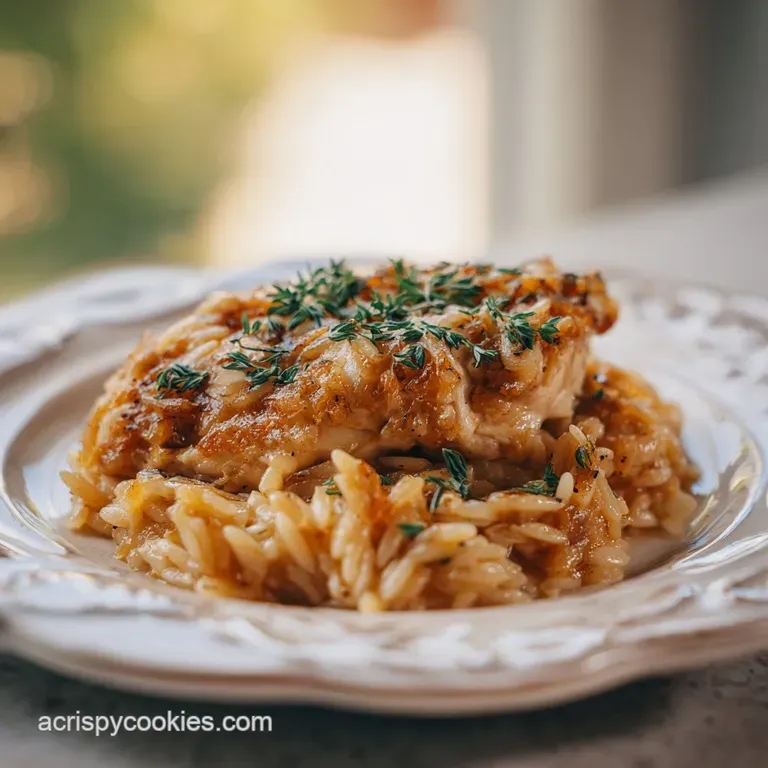
- Caramelize onions. Melt 42g butter with 15ml oil in a large pot over medium heat. Add 900g sliced onions, 1 tsp sugar, and 0.5 tsp salt. Note: Sugar speeds up the browning process through osmosis.
- Develop mahogany color. Cook 20-25 minutes, stirring occasionally, until the onions are deep brown and jammy.
- Sear chicken. Push onions to the side and add 680g chicken pieces. Note: Don't crowd the pan so the meat sears rather than steams.
- Aromatize the base. Stir in 3 cloves minced garlic and 1 tsp dried thyme for 1 minute until fragrant and pungent.
- Toast the orzo. Pour in 300g dry orzo. Stir for 2 minutes until the pasta edges look translucent.
- Deglaze the pan. Pour in 1 tbsp Worcestershire sauce and 710ml beef broth, scraping the bottom to release the "fond" (brown bits).
- Simmer for creaminess. Stir in 120ml heavy cream. Bring to a simmer for 5 minutes until the liquid slightly thickens.
- Top with cheese. Transfer to a 9x13 baking dish (if not using an oven safe pot). Cover with 150g Gruyère and 50g Parmesan.
- Bake the casserole. Place in a 180°C oven for 20 minutes until the cheese is bubbling and golden brown.
- Final rest. Let the dish sit for 5 minutes before serving. Note: This allows the starches to set so the sauce isn't runny.
Chef's Tip: If your onions aren't browning fast enough, add a splash of water to the pan. This "deglazes" the sugars back onto the onions and prevents burning while accelerating the color.
Solving Common Kitchen Hiccups and Flavor Fails
The Casserole Liquid is Too Runny
This usually happens if the orzo wasn't simmered long enough before going into the oven. The pasta needs a head start to begin releasing its starches. If it's already out of the oven, let it rest for a full 10 minutes; the orzo will continue to soak up the liquid as it cools.
The Onions Tasted Bitter Instead of Sweet
Bitterness comes from "scorching" rather than caramelizing. If you see black bits instead of brown, the heat was too high. You can sometimes save this by adding an extra splash of beef broth and a teaspoon of balsamic vinegar to mask the acridity, but low and slow is the only real cure.
Why Your Orzo Is Still Crunchy
Crunchy orzo means there wasn't enough liquid or the pan wasn't covered tightly if you used a lid. Orzo is a thirsty pasta. Ensure you are using the full 710ml of broth. If it's still hard, add 1/4 cup of hot broth and pop it back in the oven for 5 minutes.
| Problem | Root Cause | Solution |
|---|---|---|
| Oily surface | Heat too high for Gruyère | Lower oven to 180°C and use aged cheese. |
| Bland flavor | Under salted onions | Add salt at the start of caramelization to draw out moisture. |
| Dry chicken | Overcooked in Phase 2 | Only sear the outside of the chicken; let the oven finish the job. |
Common Mistakes Checklist
- ✓ Never use "low-fat" cream; the sauce will break and become grainy.
- ✓ Don't skip the sugar in the onions; it's the catalyst for the Maillard reaction.
- ✓ Grate your own Gruyère; pre shredded cheese contains potato starch that ruins the melt.
- ✓ Use a heavy bottomed pan to prevent the onions from catching and burning.
- ✓ Allow a 5 minute rest; cutting in too early makes the sauce look watery.
Creative Variations for Adjusting Textures and Dietary Needs
If you want to try something even more decadent, you can treat this like a Marry Me Chicken recipe by adding sun dried tomatoes into the mix during the garlic phase. The acidity of the tomatoes cuts through the heavy fat of the Gruyère beautifully.
- For a Lighter Version: Use 2% milk instead of heavy cream and increase the onions by 200g to maintain the body of the sauce.
- For a Crunchier Topping: Mix 1/2 cup of Panko breadcrumbs with the Parmesan before sprinkling it over the top for a "shattering" texture.
- For a Vegetarian Twist: Swap the chicken for 400g of thick sliced cremini mushrooms and use a rich vegetable bouillon.
Scaling Guidelines
- To Double (12 servings): Use two separate 9x13 pans. Do not try to double the onions in one pot unless it is very wide; crowding the onions will cause them to boil rather than brown. Increase the cook time by 10 minutes.
- To Halve (3 servings): Use a smaller 8x8 baking dish. Reduce the oven time to 15 minutes as the smaller thermal mass will heat up faster.
| Servings | Orzo Amount | Pan Size | Bake Time |
|---|---|---|---|
| 3 people | 150g | 8x8 inch | 15 minutes |
| 6 people | 300g | 9x13 inch | 20 minutes |
| 12 people | 600g | Two 9x13s | 30 minutes |
Maximizing Shelf Life and Maintaining Velvet Sauce Quality
Fridge: Store in an airtight container for up to 3 days. The orzo will continue to absorb liquid, so it may be thicker the next day.
Freezer: I don't recommend freezing this specific dish. The heavy cream and pasta texture often become "mealy" or "mushy" once thawed and reheated. If you must, freeze it before the final bake, then bake from frozen adding 15 minutes to the timer.
Zero Waste Tip: Don't throw away those onion skins! Toss them into a freezer bag. When the bag is full, boil them with water and some salt to make a quick, golden vegetable stock for your next soup.
Reheating: To maintain the velvety texture, add a splash of milk or broth before microwaving or reheating in the oven. This "reactivates" the sauce so it isn't dry.
Visual Finishing Moves for That Authentic French Bistro Look
Presentation is everything with a dish this rustic. I like to hit it with the broiler for the last 2 minutes of cooking. This creates those dark, toasted cheese "bubbles" that look like they came straight out of a professional kitchen.
It gives that visual signal of "deep flavor" before anyone even takes a bite.
Fresh herbs are your friend here. A sprinkle of fresh thyme or even some chives right before serving adds a pop of green that breaks up the brown and beige palette of the dish. Serve it right in the Dutch oven or the white ceramic baking dish to lean into that "homestyle bistro" aesthetic.
Honestly, don't even bother with a fancy platter the bubbling cheese is the star of the show.
High in Sodium
845 mg 845 mg of sodium per serving (37% 37% of daily value)
The American Heart Association recommends limiting sodium intake to about 2,300mg per day for overall cardiovascular health.
Tips to Reduce Sodium in Your Orzo Recipe
-
Low-Sodium Broth-30%
Swap regular beef broth for a low-sodium or no-salt added variety. This single change can significantly reduce the overall sodium content of the dish.
-
Reduce Cheese Sodium-15%
Gruyère and Parmesan are naturally high in sodium. Use smaller amounts or replace half with a lower sodium cheese, such as Swiss.
-
Cut Back on Salt-25%
Reduce the added salt by at least half or eliminate it entirely. Taste the dish before adding any additional salt.
-
Low Sodium Worcestershire-20%
Worcestershire sauce contributes to sodium levels. Use low sodium Worcestershire sauce to reduce the sodium levels of the sauce.
-
Spice It Up!
Enhance the flavor with fresh herbs and spices like pepper, garlic powder, or onion powder to compensate for the reduced salt without adding sodium.
Recipe FAQs
Can I use chicken breast instead of thighs in this casserole?
Yes, but reduce the oven time. Thighs retain moisture better under high heat, so if you substitute breast meat, pull the casserole out about 5 minutes sooner to prevent drying.
What is the biggest mistake people make when preparing the onions?
Stopping the caramelization process too early. You must cook them for a full 20 25 minutes until they are a deep mahogany brown to develop the necessary foundational sweetness.
How to ensure the orzo cooks fully without becoming mushy?
Toast the dry orzo in the butter first. This brief sauté creates a protective outer shell that resists overcooking, keeping each grain distinct; this same principle of surface sealing improves texture in many pasta dishes.
Is it true that using beef broth instead of chicken broth makes the flavor less "chicken-y"?
No, it intentionally deepens the savory profile. We use beef broth because it has higher glutamate levels, mimicking the complex base notes of traditional French Onion Soup, balancing the dairy.
How to substitute the Gruyère cheese for a dairy-free version?
Use a high-quality, vegan smoked Gouda alternative. Ensure the vegan cheese melts well, as achieving a smooth emulsion without dairy fat is challenging; if you enjoyed the slow cook flavor balancing here, you might also like our [Dad Bod Cookie recipe Copycat] for complex flavor profiles.
What is the best technique to prevent the top cheese layer from becoming oily during baking?
Use aged Gruyère and bake at the correct temperature. Aged cheese releases less moisture and fat, and keeping the oven temperature consistent helps the proteins in the cheese set around the fat, preventing separation.
How to make the final dish look professional and bistro ready?
Finish the bake under the broiler for 2 minutes. This achieves those desirable dark, blistered cheese peaks, providing visual contrast against the creamy interior.
French Onion Chicken Orzo
Ingredients:
Instructions:
Nutrition Facts:
| Calories | 762 kcal |
|---|---|
| Protein | 39.8 g |
| Fat | 40.7 g |
| Carbs | 50.2 g |
| Fiber | 3.4 g |
| Sugar | 6.8 g |
| Sodium | 845 mg |
