Italian Chicken Pasta with Sun-Dried Tomato Oil
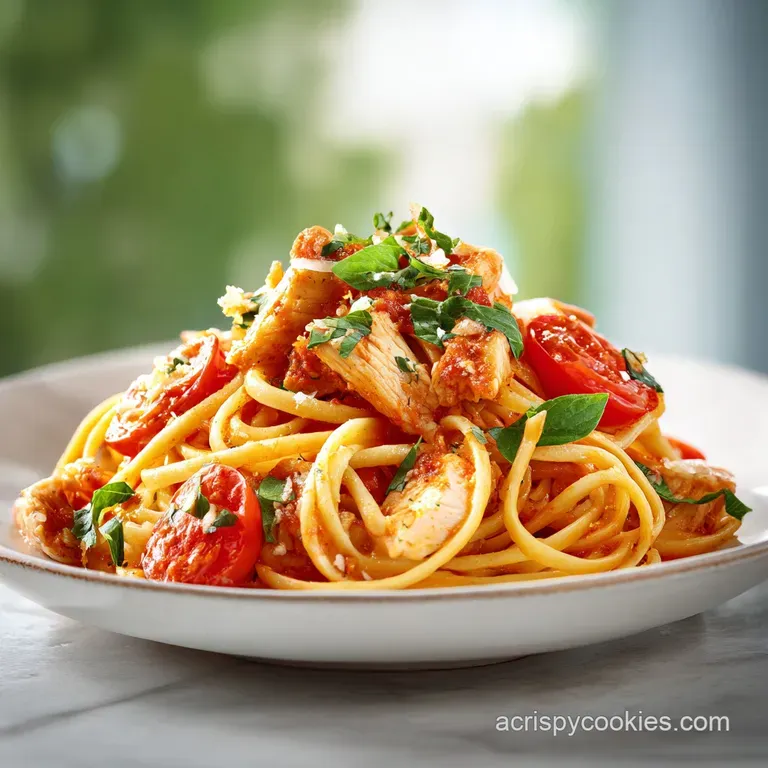
- Time: Active 10 minutes, Passive 20 minutes, Total 30 minutes
- Flavor/Texture Hook: Velvety creaminess with zesty, sun kissed brightness
- Perfect for: High end weeknight dinners or impressing a date
- Cracking the Code for Restaurant Quality Italian Chicken Pasta
- The Culinary Logic of Layering Flavor
- Precision Metrics for the Flavor Detective
- The Elements of a Zesty Flavor Profile
- Essential Tools for Achieving High Heat
- Forging the Foundation through Layered Cooking
- Identifying and Resolving Common Culinary Hurdles
- Adapting the Dish for Diverse Palates
- Guidelines for Scaling and Adjusting
- Dispelling Common Kitchen Rumors
- Guidelines for Optimal Storage and Freshness
- Presentation Strategies for a Polished Finish
- Recipe FAQs
- 📝 Recipe Card
Cracking the Code for Restaurant Quality Italian Chicken Pasta
You know that specific moment when you walk into a high end trattoria and the air smells like toasted garlic and searing poultry? That is exactly what we are going for here. I spent weeks trying to figure out why my home versions always felt a bit flat compared to the professionals.
It turns out, I was just dumping ingredients into a pot rather than building them up. This Italian Chicken Pasta is the result of that investigation, and trust me, the difference is in the sizzle.
The first time I really nailed this, the chicken had this beautiful, tawny crust that shattered slightly when I bit into it, while the inside stayed completely juicy. I had finally realized that the secret wasn't more heavy cream or butter.
It was actually the way the starch in the pasta water interacted with the fats already in the pan. We are going to treat this less like a "one pot meal" and more like a tactical operation to ensure every bite has that velvety, clinging sauce we all crave.
We are moving away from the "soupy" pasta common in home kitchens and toward a structured, glossy finish. You will see how the spinach wilts just enough to add a fresh snap without becoming a soggy mess. It is all about timing and heat control.
If you follow these steps, you will never go back to the jarred stuff again. Let's get into the mechanics of how we make this happen.
The Culinary Logic of Layering Flavor
The magic of this Italian Chicken Pasta lies in how we treat the pan as a canvas, building flavor in distinct stages rather than all at once. If you are a fan of these deep, developed flavors, you might also find my Marry Me Chicken recipe interesting, as it uses a similar flavor profile but focuses more on a slow simmered sauce technique.
- Maillard Synergy: By coating the 1.5 lbs of chicken in smoked paprika and Italian seasoning before it hits the oil, we create a complex crust that provides the base "brown bits" for our sauce.
- Starch Emulsification: The 1/2 cup of reserved pasta water contains loose starch that acts as a bridge, allowing the low-fat milk and oils to bind into a thick, glossy coating.
- Fat Saturation: Using the oil from the sun dried tomatoes adds a concentrated burst of concentrated tomato essence that permeates the entire dish.
- Thermal Carryover: We pull the chicken out early so it doesn't turn into rubber, then let the residual heat of the pasta finish it at the very end.
| Cut of Protein | Thickness | Visual Done Cue | Rest Time |
|---|---|---|---|
| Chicken Breast Strips | 1 inch | Opaque center, golden exterior | 2 minutes |
| Chicken Breast Cubes | 3/4 inch | Springy to the touch | 1 minute |
| Sliced Thigh Meat | 1 inch | Deep brown edges, no pink | 3 minutes |
The Physics of the Velvety Emulsion
The sauce doesn't rely on heavy fats to feel rich; instead, it uses the mechanical bond of starch and liquid. When you toss the hot pasta with the reserved water and Parmigiano Reggiano, the cheese protein wraps around the starch molecules to create a stable, non greasy coating.
Precision Metrics for the Flavor Detective
To get this right, we have to look at our ingredients as functional components. This isn't just about what tastes good; it's about what performs under heat. For instance, the 12 oz of pasta isn't just bulk; it's our starch factory.
| Ingredient | Science Role | Pro Secret |
|---|---|---|
| 1/2 cup Pasta Water | Primary Emulsifier | Scoop this out in the last 2 minutes of boiling for maximum starch density. |
| 4 cloves Garlic | Aromatic Volatiles | Mince fresh and add late to prevent the sulfur compounds from turning bitter. |
| 1/2 cup Parmigiano | Protein Binder | Use the "sand" side of a grater for the finest melt without clumping. |
Chef's Tip: Freeze your block of Parmigiano Reggiano for 10 minutes before grating. This makes it easier to get those tiny, airy shards that melt instantly into the sauce.
Also, try to rub the 1 tbsp of Italian seasoning and 1/2 tsp of salt into the chicken and let it sit at room temperature for about 10 minutes. This allows the salt to penetrate the protein fibers, which helps the chicken retain its juices even when subjected to the high heat needed for a good sear.
The Elements of a Zesty Flavor Profile
Gathering the right components is half the battle. We need high-quality fats and fresh greens to balance the density of the pasta. If you find yourself missing an ingredient, don't panic. There is almost always a way to pivot without losing the soul of the dish.
- 1.5 lbs chicken breast: Sliced into 1 inch strips for fast, even cooking.
- Substitute: 1.5 lbs chicken thighs for a richer, more forgiving meat.
- Why this? Breast meat provides a clean canvas for the zesty seasonings.
- 12 oz penne or fusilli: These shapes have ridges that act as "sauce traps."
- Substitute: Rigatoni or any pasta with a hollow center.
- 1/2 cup sun dried tomatoes: Packed in oil is non negotiable for the flavor depth.
- Substitute: Roasted red peppers (adds sweetness but less acidity).
- Why this? The oil in the jar is liquid gold for sautéing the garlic.
- 1/2 cup low-fat milk: Keeps the dish lighter than heavy cream versions.
- Substitute: Coconut milk (Full fat). Note: Adds tropical notes best if you increase the smoked paprika.
- 2 cups fresh baby spinach: Provides a necessary earthy bitterness.
- Substitute: Baby kale (will need 2 extra minutes of sautéing).
- 1 tbsp Italian seasoning: The herbaceous backbone.
- Substitute: Fresh basil and oregano (use 3x the volume).
Essential Tools for Achieving High Heat
You don't need a professional kitchen, but a few specific tools will make this process much smoother. I recommend a heavy bottomed skillet, preferably stainless steel or cast iron, to get that necessary sizzle on the chicken.
A non stick pan often fails to develop the "fond" (those little brown bits) that we need to build the sauce.
You will also want a sturdy set of tongs to flip the chicken strips individually. Using a spatula often just moves them around, but tongs allow you to ensure every side hits the hot metal. Finally,, a fine mesh grater for your cheese is a must.
If the cheese is too chunky, it won't emulsify; it will just sit on top of the pasta like a greasy blanket.
Forging the Foundation through Layered Cooking
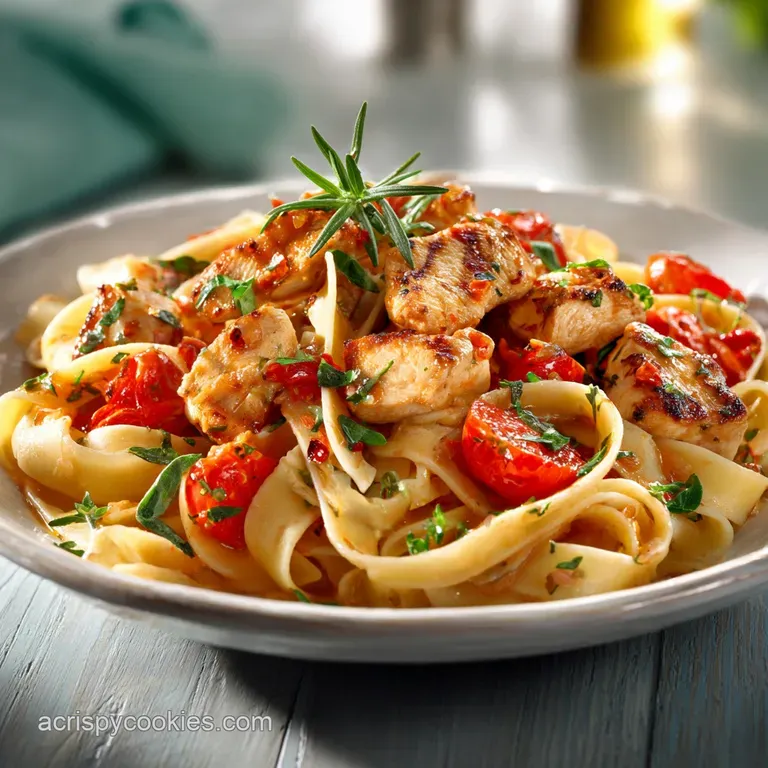
- Prep the chicken. Toss the 1.5 lbs of sliced chicken with 1 tbsp Italian seasoning, 1 tsp garlic powder, 1/2 tsp smoked paprika, and 1/2 tsp sea salt. Note: Coating the meat thoroughly ensures every bite is seasoned.
- Boil the pasta. Cook 12 oz of penne in salted water until just shy of al dente. Reserve 1/2 cup of the cloudy pasta water before draining.
- Achieve the sear. Heat 2 tbsp extra virgin olive oil in a large skillet over medium high heat. Add the chicken and cook for about 3 minutes per side until golden and slightly charred.
- Rest the meat. Remove the chicken from the pan and set it aside on a plate. Note: This prevents the chicken from drying out while you build the sauce.
- Sauté aromatics. In the same pan, add 4 minced cloves of garlic and 1/2 cup julienned sun dried tomatoes. Cook for 1 minute until the garlic is fragrant and the tomatoes sizzle.
- Deglaze and simmer. Pour in 1/2 cup low-fat milk, scraping the bottom of the pan to release the brown bits. Bring to a gentle simmer.
- Integrate the starch. Add the 12 oz of cooked pasta and the 1/2 cup of reserved pasta water to the skillet. Toss vigorously.
- Meltdown the cheese. Sprinkle in 1/2 cup of Parmigiano Reggiano while stirring constantly until the sauce becomes velvety and clings to the pasta.
- Wilt the greens. Fold in 2 cups of baby spinach. Note: The residual heat will wilt the spinach in about 30 seconds.
- Final marriage. Add the chicken (and any juices from the plate) back into the pan. Give it one last toss and serve immediately.
Identifying and Resolving Common Culinary Hurdles
The most common issue I see with Italian Chicken Pasta is the sauce breaking or "splitting." This usually happens if the heat is too high when the cheese is added, or if the milk is cold. If your sauce looks oily rather than creamy, you've lost the emulsion.
Why Your Sauce is Grainy
This is almost always due to pre shredded cheese. Those bags of cheese are coated in potato starch or cellulose to prevent clumping in the bag, but that same coating prevents them from melting smoothly into a sauce. Always grate from a block.
| Problem | Root Cause | Solution |
|---|---|---|
| Rubberous Chicken | Overcooked during the initial sear | Pull chicken when it reaches 160°F; it will hit 165°F during the rest. |
| Dry Pasta | Not enough reserved water | Add a splash of warm milk or more water to loosen the starch bond. |
| Bland Flavor | Lack of acidity | Add a squeeze of fresh lemon juice right before serving to wake up the spices. |
For those times when you are cooking for a larger group, you might consider an Italian Beef Sandwich recipe instead, as it is much easier to scale up for 8 or more people than a pan seared pasta.
Common Mistakes Checklist:
- ✓ Pat the chicken strips completely dry with a paper towel before seasoning to ensure a crisp sear.
- ✓ Never rinse your pasta after draining; you need that surface starch for the sauce to stick.
- ✓ Use the oil from the sun dried tomato jar for an extra layer of flavor in the pan.
- ✓ Ensure the milk is at room temperature to prevent the sauce from curdling when hitting the hot skillet.
Adapting the Dish for Diverse Palates
If you want to turn this into an Italian Chicken Pasta Bake, simply follow the steps until the final toss, then transfer everything to a 9x13 dish. Top with a cup of shredded mozzarella and bake at 350°F (180°C) for 15 minutes until the cheese is bubbling and spotted brown.
For a lighter version, swap the pasta for zoodles or spaghetti squash. You will need to reduce the amount of pasta water significantly, as the vegetables release their own moisture.
If you go the low carb route, increase the Parmigiano Reggiano slightly to help thicken the sauce without the help of pasta starch.
Decision Shortcut: If you want a spicier kick, add 1 tsp of red pepper flakes with the garlic. If you want maximum crunch, top the finished dish with toasted panko breadcrumbs.
If you want a richer finish, use heavy cream instead of low-fat milk (no trade off needed here, just pure decadence).
Guidelines for Scaling and Adjusting
When you are cutting this recipe in half, the main thing to watch is the pan size. If you use a giant skillet for a half portion, the liquid will evaporate too quickly, and you will end up with dry noodles. Use a smaller 8 inch pan and reduce the simmering time by about 20%.
Scaling up is a bit more of a project. If you are doubling this to serve 8 people, do not try to sear 3 lbs of chicken at once. You will overcrowd the pan, the temperature will drop, and the chicken will steam rather than sear. Work in two or three batches for the meat to maintain that over high heat shatter.
Also, when doubling the spices, only use 1.5x the amount of salt to start; you can always add more later, but you can't take it out.
Dispelling Common Kitchen Rumors
One of the biggest myths is that adding oil to the pasta water prevents sticking. In reality, all it does is make the pasta greasy, which prevents the sauce from clinging to the noodles. The only way to prevent sticking is to use a large enough pot and stir during the first 2 minutes of boiling.
Another myth is that you must "seal" the meat to keep it juicy. Searing is actually for the Maillard reaction a chemical reaction between amino acids and reducing sugars that gives browned food its distinctive flavor.
The juiciness of your chicken comes from not overcooking it, not from any magical "seal" created by the crust.
Guidelines for Optimal Storage and Freshness
This Italian Chicken Pasta keeps surprisingly well in the fridge for up to 3 days. However, the pasta will continue to absorb the sauce as it sits. When you go to reheat it, add a tablespoon of water or milk to the bowl before microwaving.
This recreates the steam needed to loosen the starch and bring the velvety texture back to life.
For zero waste cooking, don't throw away the stems from your baby spinach. They can be finely chopped and added to the pan at the same time as the garlic for extra fiber and crunch.
If you have leftover sun dried tomato oil, use it the next morning to fry an egg it is a total game changer for your breakfast routine. Freezing is possible for up to 2 months, but be aware that the dairy in the sauce might slightly change texture upon thawing.
Presentation Strategies for a Polished Finish
When you are ready to plate, don't just dump the pasta into a bowl. Use a large carving fork to twirl the pasta into a high mound in the center of the plate. Place the chicken strips on top, fanning them out so that beautiful golden crust is visible.
Finish with a heavy handed dusting of fresh Parmigiano Reggiano and a few torn basil leaves. The contrast between the bright green spinach and the deep red of the tomatoes makes this dish look as vibrant as it tastes. Serve it with a crisp piece of garlic bread to soak up any leftover sauce at the bottom of the bowl.
It is a simple, effective way to turn a 30 minute meal into something that feels like a real event. Enjoy your cooking!
Recipe FAQs
Is there pasta with chicken in Italy?
No, not typically in the way the term is used commercially. Traditional Italian cuisine rarely combines poultry and pasta in the main course; pasta dishes usually feature seafood, vegetables, or cured meats. Chicken is generally served separately as a secondo.
What are the 4 traditional Italian pastas?
There isn't a definitive four, but the most universally essential shapes are Spaghetti, Penne, Lasagna, and Rigatoni. These represent long, short, sheet, and tube categories, making them foundational for various regional sauces.
What is a traditional Italian chicken dish?
A truly traditional dish would be Pollo alla Cacciatora (Hunter's style chicken). This involves braising chicken pieces with tomatoes, herbs, onions, and often bell peppers or wine, but it is almost never served over pasta.
What is a Tuscan chicken pasta?
Tuscan chicken pasta is an Italian American creation, not a strictly traditional dish from Tuscany. It usually involves chicken breasts simmered in a creamy sauce featuring sun dried tomatoes, spinach, and garlic, which mimics the flavor profile often associated with the region's rustic flavors.
How do I prevent the sauce from splitting when I add the cheese?
Remove the pan from the heat before adding the Parmigiano Reggiano. Adding cheese to a boiling temperature causes the proteins to seize and separate from the fat, leading to graininess. If you enjoyed controlling texture here, see how the same temperature precision works in our Baked Lemon Pepper recipe for perfectly juicy meat.
Should I use heavy cream or milk for the sauce base?
Use low-fat milk, relying on the reserved pasta water starch to create thickness. Heavy cream creates a heavy, fatty mouthfeel, whereas the starch emulsion provides a lighter, glossier cling that is more common in authentic Italian pasta finishing techniques.
Can I make this recipe ahead of time for meal prep?
Yes, but sauce separation is likely upon reheating. For best results, cook the chicken and pasta separately, store them apart, and combine them with fresh sauce ingredients just before serving. If you prefer a fully prepped dish, try our Taco Casserole With recipe, which handles reheating much better due to its baked structure.
Italian Chicken Pasta In 30 Min
Ingredients:
Instructions:
Nutrition Facts:
| Calories | 678 kcal |
|---|---|
| Protein | 56.8 g |
| Fat | 18.4 g |
| Carbs | 68.2 g |
| Fiber | 4.1 g |
| Sugar | 5.2 g |
| Sodium | 632 mg |
