Classic Mashed Potatoes for Steak
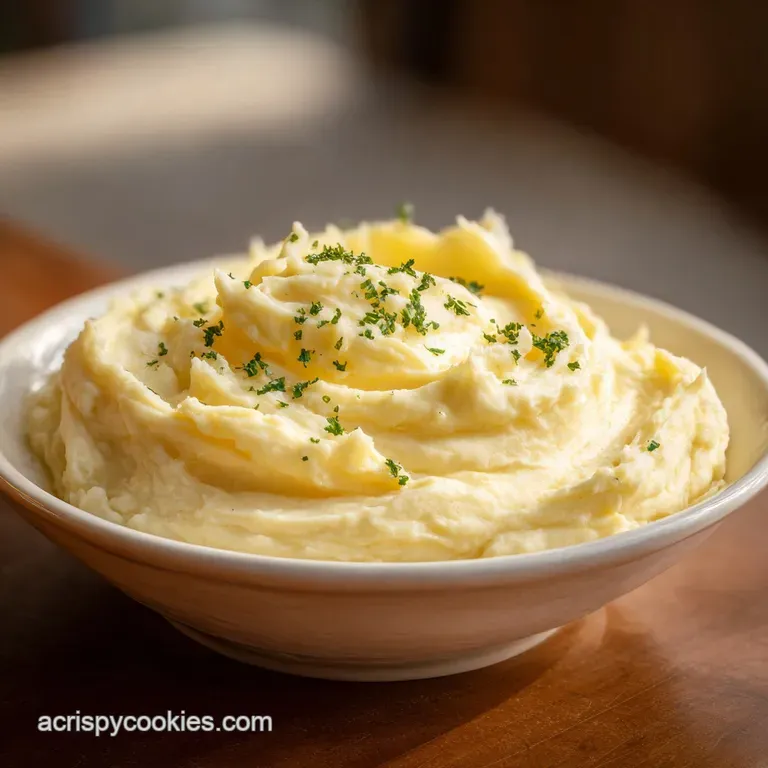
- Time: Active 15 minutes, Passive 25 minutes, Total 40 minutes
- Flavor/Texture Hook: Silky, buttery, and intensely savory
- Perfect for: Holiday feasts, Sunday roasts, or a high end date night at home
- Cracking the Code for Velvety Mashed Potatoes
- The Architecture of the Perfect Mash
- Precise Kitchen Recipe Specifications
- Analyzing Our Core Flavor Components
- Essential Tools for Smooth Textures
- Step by Step Preparation Guide
- Solving Common Texture and Taste Issues
- Scaling for Different Crowds
- Creative Variations and Ingredient Swaps
- Practical Storage and Waste Tips
- Professional Plating and Serving Suggestions
- Recipe FAQs
- 📝 Recipe Card
Cracking the Code for Velvety Mashed Potatoes
I remember the first time I tried to make a "fancy" mashed potato for steak at a dinner party. I thought I was doing everything right boiling them until soft, throwing in a stick of butter, and mashing away with a hand mixer. What I ended up with wasn't a side dish; it was edible glue.
It was heavy, sticky, and honestly, a bit of an insult to the beautiful ribeye I’d spent forty dollars on. It was a total kitchen disaster that sent me on a mission to become a flavor detective.
Since that day, I’ve tested every variable you can imagine. I’ve tried cold butter versus melted, milk versus cream, and even baked the potatoes instead of boiling them. What I discovered is that the secret isn't just one ingredient; it’s a series of layers.
We’re looking for that specific mouthfeel where the potato for steak almost melts before you even chew it. It’s about being a bit obsessive over the details, but trust me, once you taste the results, you’ll never go back to the "good enough" version.
We are going to use a blend of Russets and Yukon Golds to get the best of both worlds the fluffy structure of the former and the buttery, waxier depth of the latter. This isn't just a recipe; it's an investigation into how we can manipulate simple tubers into something truly world class.
Right then, grab your peeler and let’s get into the nitty gritty of how we make this happen.
The Architecture of the Perfect Mash
Starch Management: When potato cells rupture, they release amylose, which turns sticky when mixed with water. By using a ricer instead of a mixer, we keep the cells intact, ensuring a light, non gummy texture.
Evaporative Drying: Returning the drained potatoes to the hot pot for a minute removes excess surface water. This creates "room" within the potato cells to absorb the flavored fats we'll add later.
Fat Emulsification: Adding cold butter to hot potatoes creates a stable emulsion. The fat coats the starch molecules before the liquid cream hits, which prevents a gluey mess.
| Method | Time | Texture | Best For |
|---|---|---|---|
| Traditional Boil | 25 minutes | Classic, fluffy | Every day meals |
| Steam & Bake | 45 minutes | Dense, earthy | Ultimate flavor depth |
| Pressure Cook | 12 minutes | Soft, watery | Quick weeknight fixes |
Deciding on the right path depends on your patience. If you're looking for the ultimate companion, this side pairs beautifully with a Slow Cooker Beef recipe. The richness of the beef demands a mash that can hold its own without being overwhelming.
Precise Kitchen Recipe Specifications
When you're trying to replicate restaurant quality, "eyeballing it" is your enemy. I’ve found that the ratio of salt in the water is just as important as the fat content in your cream. If the water isn't salty enough, the potato for steak stays bland from the inside out.
We use 2 tbsp (30g) of Kosher salt for the boiling water alone. It sounds like a lot, but most of it goes down the drain, leaving behind perfectly seasoned tubers.
The temperature checkpoints are equally vital. You want your potatoes at a simmering point of 95°C to 98°C. If you boil them too violently, the outsides disintegrate while the insides remain crunchy. It’s about a steady, gentle heat that tenderizes the starch without shattering the structure. For those who want a heartier meal, try serving these alongside a Crock Pot Short recipe.
| Component | Science Role | Pro Secret |
|---|---|---|
| Russet Potato | High starch for fluff | Peel deeply to remove all eyes |
| Yukon Gold | Sugars for butteriness | Keep chunks uniform for even cooking |
| European Butter | High fat, low water | Use cold cubes for better emulsification |
| Heavy Cream | Liquid silkiness | Infuse with garlic for aromatic layers |
Getting the liquid to solid ratio right is what separates a mediocre mash from a masterpiece. We are aiming for a consistency that holds a peak on a spoon but feels like velvet on the tongue.
Analyzing Our Core Flavor Components
To build these layers, we need specific tools. If you use a hand mixer, you’re basically making a smoothie out of your dinner. It’s too aggressive. We need a way to break down the solids without shearing the molecules.
- 1 lb (450g) Russet potatoes: These provide the "lift" and volume.
- 1 lb (450g) Yukon Gold potatoes: These add the color and the rich, nutty flavor. Why this? The hybrid mix ensures the mash is neither too dry nor too waxy.
- 1/2 cup (115g) Unsalted European style butter: Cold and cubed. Why this? Higher butterfat content (82%+) means less water and more creamy flavor.
- 1 cup (240ml) Heavy cream: This provides the moisture.
- 3 cloves Garlic: Smashed to release oils.
- 2 tbsp Kosher salt: For the boiling water only.
- 1 tsp Fine sea salt: For final seasoning adjustments.
- 1/2 tsp Freshly cracked white pepper: Gives a floral heat without black speckles.
- 1 tbsp Fresh chives: For a bright, oniony finish.
- 1 tsp Extra virgin olive oil: A tiny drizzle at the end for shine.
Chef's Tip: To take the flavor even deeper, try a trick I learned from a French bistro: dry heat your boiled potato chunks in the empty pot for 60 seconds. You’ll hear a slight hiss that’s the steam leaving, making the potato a thirsty sponge for that butter.
Essential Tools for Smooth Textures
You don't need a million gadgets, but a couple of specific items will make your life significantly easier. First, a potato ricer or a food mill. This is the single most important tool in this recipe.
It forces the potato through tiny holes, creating small, uniform strands that incorporate fat instantly.
Second, a heavy bottomed saucepan for the cream infusion. You want something that distributes heat evenly so the milk solids don't scorch at the bottom while you're simmering the garlic. A whisk and a silicone spatula are also handy for folding in the liquids gently.
| Original Ingredient | Substitute | Why It Works |
|---|---|---|
| Heavy Cream | Full fat Greek Yogurt | Adds a sharp tang. Note: Will result in a much thicker, heavier mash. |
| European Butter | Ghee (Clarified Butter) | Nutty, toasted flavor. Note: No water content, so mash may feel "oilier." |
| White Pepper | Black Pepper | Same heat level. Note: Will leave visible dark specks throughout the dish. |
Once you have your gear ready, the process moves quickly. The goal is to keep everything warm; cold equipment is the enemy of a smooth emulsion.
step-by-step Preparation Guide
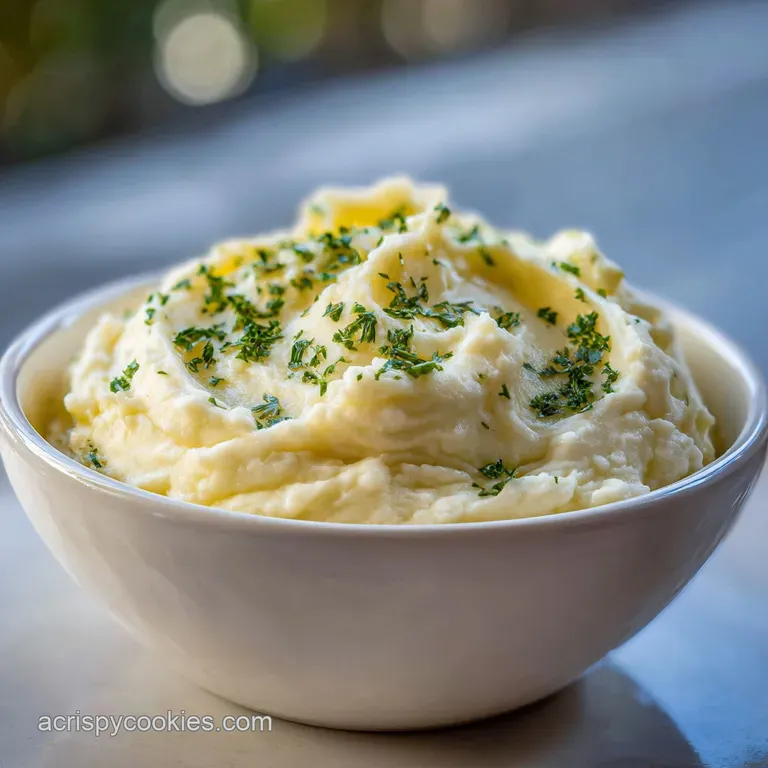
- Prep the spuds. Peel 1 lb Russet and 1 lb Yukon Gold potatoes, then cut them into uniform 2 inch chunks. Note: Uniformity ensures every piece finishes cooking at the exact same time.
- Start with cold water. Place potatoes in a large pot and cover with cold water by at least an inch. Add 2 tbsp Kosher salt. Note: Starting in cold water allows the starch to cook evenly from the center out.
- Simmer gently. Bring to a boil, then reduce heat. Cook 20-25 minutes until a knife slides in with zero resistance.
- Infuse the dairy. While potatoes boil, combine 1 cup heavy cream and 3 smashed garlic cloves in a small pan. Simmer over low heat for 10 minutes, then discard garlic.
- Dry the potatoes. Drain the potatoes and return them to the warm, empty pot for 1 minute over low heat, shaking occasionally until the surface looks matte and floury.
- Rice them up. Pass the hot potatoes through a ricer or food mill into a large bowl. Work quickly while they are steaming.
- Emulsify the fat. Fold in 1/2 cup cold, cubed butter one piece at a time. Note: This coats the starch granules in fat before the liquid hits.
- Add the liquid. Slowly pour in the warm, garlic infused cream, folding gently with a spatula until the mixture is silky and light.
- Season to taste. Add 1 tsp fine sea salt and 1/2 tsp white pepper. Taste and adjust if needed.
- Final garnish. Top with 1 tbsp minced chives and a 1 tsp drizzle of extra virgin olive oil before serving.
Solving Common Texture and Taste Issues
Even with the best intentions, things can go sideways. The most common complaint I hear is that the potatoes are too thin or, conversely, too dry. Usually, this comes down to how much liquid was added or how long the potatoes were drained.
Why Your Mash is Gummy
This is almost always caused by mechanical overworking. If you used a food processor or a high speed mixer, the starch cells were obliterated, releasing all their gluey amylose. It’s hard to fix once it happens, but folding in a little extra melted butter can sometimes help soften the "sticky" feel.
Balancing Excess Salt
If you got a bit heavy handed with the salt at the end, don't panic. You can fold in a bit more cream or even a spoonful of unsweetened sour cream. The acidity and fat will help mask the saltiness. Alternatively, if you have another potato, boil it without salt, rice it, and mix it in to dilute the batch.
| Problem | Root Cause | Solution |
|---|---|---|
| Lumpy Texture | Underdone potatoes | Ensure a knife slides in with no resistance before draining. |
| Soupy Consistency | Too much liquid added | Heat on low while stirring to evaporate excess moisture. |
| Bland Flavor | Lack of internal salt | Season the boiling water heavily; it's the only chance to salt the core. |
Common Mistakes Checklist
- ✓ Never skip the "drying" step after draining - excess water ruins the texture.
- ✓ Don't use a blender or food processor - it will turn into paste instantly.
- ✓ Always warm your cream - cold liquid will "shock" the starch and cause lumps.
- ✓ Don't over mix once the cream is added - stop as soon as it's incorporated.
- ✓ Salt the water like the sea - it’s the foundation of the entire flavor profile.
Scaling for Different Crowds
If you’re cooking for a massive holiday gathering or just a quiet night for two, the ratios need to shift slightly to keep the consistency right.
Downscaling (1-2 People): Use 1/2 lb of each potato. Reduce the butter to 4 tbsp and cream to 1/3 cup. Because there is less volume, the potatoes will cool down much faster, so you have to rice them immediately. Use a smaller pot for the cream so it doesn't evaporate too quickly.
Upscaling (10-12 People): Double the potato quantities (2 lbs each). For salt and spices, only increase to 1.5x (3 tbsp Kosher salt for the water) to avoid over seasoning. You will likely need to work in batches with the ricer.
Keep the first batch in a warm oven (65°C) covered with foil while you finish the rest.
Baking/Keeping Warm: If you need to hold these for a while, put them in a slow cooker on the "warm" setting. Stir in a splash of warm milk every hour to keep them from drying out around the edges.
Creative Variations and Ingredient Swaps
Once you’ve mastered the classic mashed potatoes recipe, you can start playing with the "layers" of flavor. This is where the detective work gets fun. You can swap the garlic infusion for other aromatics or change the fat profile entirely.
- Garlic Mashed Potatoes with Steak: Instead of discarding the simmered garlic, mash the softened cloves into a paste and fold them back into the potatoes for a more intense punch.
- Brown Butter & Sage: Brown the butter in a pan until it smells like toasted hazelnuts and has little brown flecks. Use this instead of the cold butter for an earthy, savory twist.
- Horseradish Kick: Add 1 tbsp of prepared horseradish to the cream infusion. This creates a "steakhouse style" mash that cuts through the fat of a ribeye beautifully.
- Herbed Olive Oil: If you want a lighter feel, replace half the butter with a high-quality extra virgin olive oil infused with rosemary.
Practical Storage and Waste Tips
Mashed potatoes are notorious for turning into a brick in the fridge. To store them properly, place them in an airtight container and press a piece of plastic wrap directly onto the surface of the potatoes before sealing the lid. This prevents a skin from forming. They will stay fresh in the fridge for up to 3 days.
Zero Waste Tip: Never throw away the potato peels! Toss them with a little oil, salt, and paprika, then roast them at 200°C for 15 minutes. They become incredibly crispy "potato skins" that you can use as a garnish or a snack.
To reheat, avoid the microwave if possible. Instead, put them in a saucepan over low heat with a splash of milk and a pat of butter. Whisk gently as they warm up to restore that velvety texture.
If you have leftovers that are too dry to reheat well, use them as a base for shepherd's pie or fry them up into potato cakes for breakfast.
Professional Plating and Serving Suggestions
The "Gordon Ramsay mashed potatoes for steak" look is all about the finish. Don't just scoop them onto the plate in a pile. Use the back of a large spoon to create a deep "well" or "swirl" in the center of the mash.
This isn't just for looks it’s a vessel for your steak juices or extra melted butter to pool in.
Finish with a scatter of fresh chives. I like to cut mine very thin with sharp kitchen shears for a clean look. A final light dusting of white pepper adds that professional touch. These are best served immediately while the steam is still rising, providing that classic mashed potatoes recipe experience that everyone craves.
If you are serving this as part of a larger spread, it provides the perfect neutral but luxurious base for anything from roasted chicken to a hearty stew. The silky texture provides a contrast to the "crunch" of roasted vegetables or the "shatter" of a well seared steak crust.
Trust your senses, watch for that matte finish during the drying stage, and enjoy the best bowl of potatoes you've ever made.
Frequently Asked Questions
Why are my mashed potatoes gummy?
Mashed potatoes become gummy when the starch cells are overworked or broken. Using a blender, food processor, or over mixing with a hand mixer releases too much amylose (starch), creating a sticky, glue like texture. To avoid this, use a potato ricer or food mill and fold in your ingredients gently by hand.
Can I use only one type of potato?
You can, but the result will be different. Using only Russets will give you a very light and fluffy mash that might be a bit dry. Using only Yukon Golds will result in a rich, buttery, and slightly denser mash. A 50/50 blend is the "secret" to achieving a professional balance of both textures.
Should I peel the potatoes before or after boiling?
For the smoothest restaurant style results, peel and chop the potatoes before boiling. This allows the salt in the water to penetrate the potato pieces and ensures they cook evenly. If you prefer a more rustic "smashed" style, you can boil them with the skins on.
Can I make these ahead of time for a party?
Yes! You can make them up to 2 hours in advance and keep them warm in a slow cooker on the "warm" setting or in a heat proof bowl over a pot of simmering water (a bain marie). If they thicken too much, stir in a small amount of warm milk or cream before serving.
Is it better to use milk or heavy cream?
Heavy cream provides a much richer, silkier mouthfeel because of its higher fat content. If you prefer a lighter version, you can use whole milk, but avoid low-fat or skim milk as they can make the potatoes watery rather than creamy.
Why do you start the potatoes in cold water?
Starting potatoes in cold water ensures that the outside and inside of the potato cook at the same rate. If you drop them into boiling water, the outside will overcook and start to fall apart before the center is tender, leading to an uneven texture.
Recipe FAQs
How to make mashed potatoes for steak?
Use a potato ricer and a dairy/fat emulsion. Boil a blend of Russet and Yukon Gold potatoes until tender, drain completely, then pass them through a ricer before folding in cold cubes of butter followed by warm, garlic infused heavy cream.
What kind of potato is good with steak?
A 50/50 blend of Russet and Yukon Gold offers the best texture. Russets provide the necessary fluffiness to absorb the juices, while Yukon Golds add inherent butteriness and structural integrity.
Why are steakhouse mashed potatoes so good?
They achieve perfect starch suspension using high fat content and precise handling. Steakhouses use cold European butter and warm cream, often ricing the potatoes to prevent overworking the starch, resulting in a velvety, non-gummy texture.
How to eat steak with mashed potatoes?
Create a well in the center of the mash before plating the steak. Spoon the sliced steak next to the mound, allowing the rich steak juices to naturally pool into the well created in the mashed potatoes for an integrated flavor bite.
Is it true you should return potatoes to the hot pot after draining?
Yes, this step is essential for texture control. Place the drained potatoes back in the hot, empty pot over low heat for one minute to allow surface moisture to evaporate, creating thirsty starch cells ready to absorb the fat.
Should I use hot or cold dairy when adding liquid to the potatoes?
Always incorporate cold butter first, then add warm or hot cream. Adding cold butter cubes first emulsifies the fat around the starch granules, preventing stickiness before the liquid is introduced; the warm cream incorporates smoothly afterward.
How much salt should I use in the boiling water?
Salt the boiling water heavily; it should taste seasoned like the sea. Use about 2 tablespoons of Kosher salt per gallon of water, as this is the only opportunity to season the potato interior before the final adjustments.
Steakhouse Mashed Potatoes
Ingredients:
Instructions:
Nutrition Facts:
| Calories | 414 kcal |
|---|---|
| Protein | 3.7 g |
| Fat | 30.6 g |
| Carbs | 31.2 g |
| Fiber | 3.2 g |
| Sugar | 2.1 g |
| Sodium | 658 mg |
