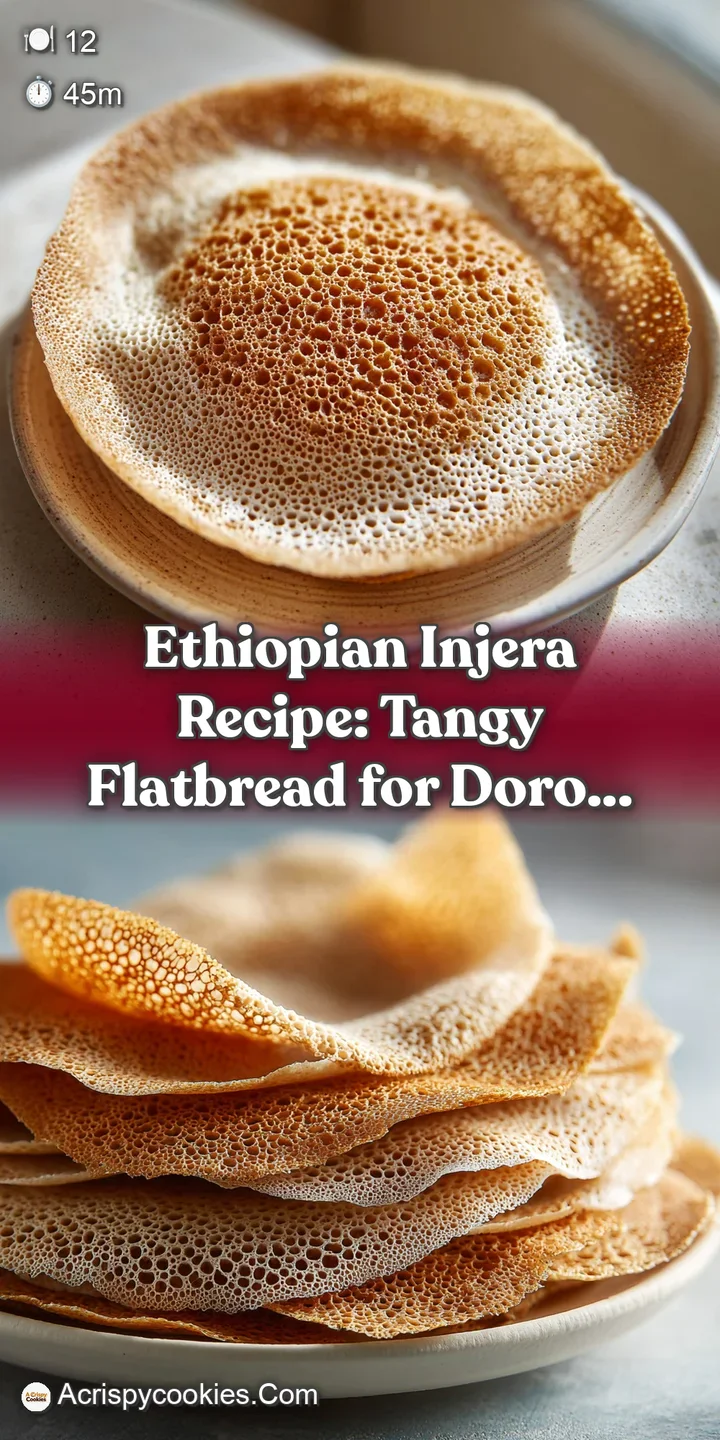
Ethiopian Injera Recipe: Tangy and Spongy
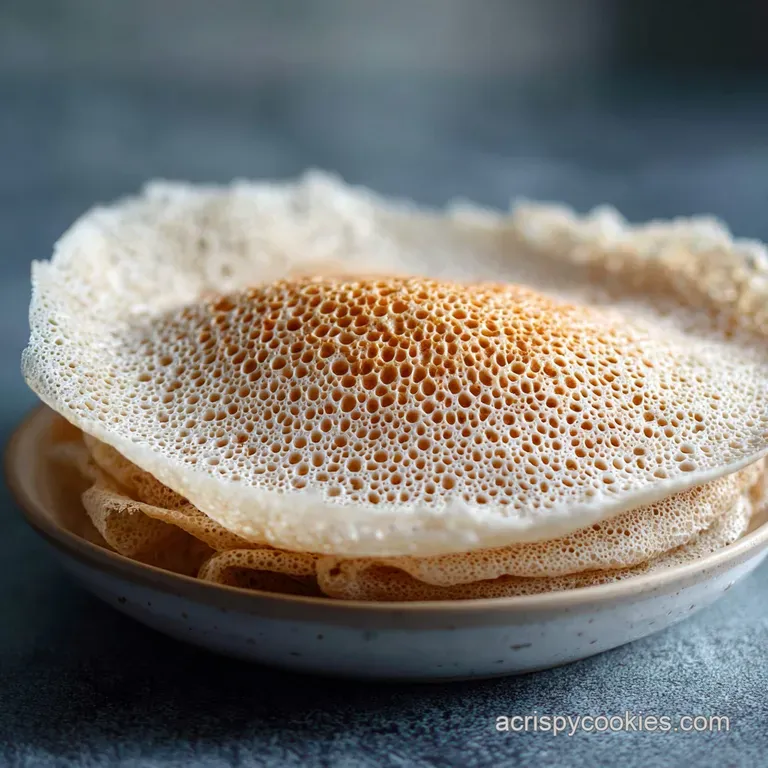
- Time: Active 20 minutes, Passive 3 days, Total 3 days 45 mins
- Flavor/Texture Hook: Tangy, spongy, and soft
- Perfect for: Authentic Ethiopian feasts and Gluten-free diets
- Mastering the Authentic Tangy Injera Recipe
- Why This Spongy Fermented Bread Rules
- Primary Components for Success
- Sourcing the Best Teff and Water
- Kitchen Tools for Perfect Flatbread
- Step-by-Step Guide to Perfect Bubbles
- Solving Common Texture and Eye Problems
- Flavorful Variations and Dietary Swaps
- Keeping Your Flatbread Fresh Longer
- Best Stews to Serve with Injera
- Injera Recipe FAQs
- 📝 Recipe Card
Mastering the Authentic Tangy Injera Recipe
The first time I tried making an injera recipe, my kitchen smelled like a science experiment gone wrong. There was this sharp, funky aroma that wafted from a bowl of grey sludge on my counter. I almost threw it out, thinking I’d grown a new life form.
But then, I remembered the smell from my favorite Ethiopian spot downtown that earthy, grassy, slightly sour scent that hits you the moment you walk in. It’s the smell of fermentation, and it’s the secret to that iconic tang.
I spent weeks trying to crack the code on getting those tiny bubbles, called "eyes," just right. I had flat, gummy pancakes for days until I realized I was rushing the ferment. This isn't a quick fix bread; it’s a slow burn labor of love.
We’re recreating a restaurant quality staple from scratch, and honestly, don't even bother with the "instant" versions if you want that true, flexible texture.
Once you nail the pour and see those bubbles pop across the surface like tiny craters, it's incredibly satisfying. It’s about the sizzle of the pan and the nutty steam that rises as the lid goes on.
We've made the mistakes so you don't have to, and we're going to get you that velvety, lace like finish every single time. Let’s get into how we actually make this work.
Why This Spongy Fermented Bread Rules
Wild Fermentation: The three day rest allows wild yeast to break down the teff, creating the signature sour flavor and making the minerals more bioavailable.
Starch Gelatinization: Using boiling water for the "absit" (cooked starter) pre gelatinizes the starch, which provides the structural elasticity needed to prevent the bread from cracking.
Thermal Shock: Pouring the cold fermented batter onto a hot surface causes rapid gas expansion, which creates the thousands of tiny "eyes" on the top surface.
Carbon Dioxide Trapping: The high hydration of the batter ensures bubbles can move to the surface easily before the protein structure sets.
| Method | Total Time | Texture | Best For |
|---|---|---|---|
| Traditional Ferment | 3 days | Spongy, flexible, very tangy | Authentic flavor and texture |
| Instant Yeast | 2 hours | Denser, less flexible | Quick weeknight cravings |
| Blender Shortcut | 30 minutes | More like a crepe | Beginners testing flavors |
The difference between a shortcut and the real deal is all in the flexibility. If you can’t roll your bread without it snapping, the starch hasn't been properly hydrated or fermented. If you love deep savory flavors, this fermented bread is just as satisfying as the rich profile found in a French Onion Chicken recipe.
Primary Components for Success
| Ingredient | Science Role | Pro Secret |
|---|---|---|
| Teff Flour | Provides protein and structure | Use ivory teff for a milder, sweeter aroma |
| Filtered Water | Medium for fermentation | Chlorine in tap water can kill the wild yeast |
| Boiling Water | Gelatinizes the "absit" | Must be rolling boil to properly thicken the flour |
Sourcing the Best Teff and Water
- 2 cups (300g) Ivory or Brown Teff Flour: This ancient grain is naturally gluten-free. Why this? Teff has the specific protein structure needed for fermentation.
- Substitute: Sorghum flour (slightly more bitter, less flexible).
- 2.5 cups (600ml) Filtered water: Use room temperature. Why this? Filtered water ensures no chemicals interfere with the sourdough culture.
- Substitute: Spring water.
- 1 cup (150g) Additional Teff Flour: For the secondary thickening. Why this? Adjusts the final viscosity after fermentation.
- Substitute: Buckwheat flour (adds an earthier, darker tone).
- 1/2 cup (120ml) Boiling water: For creating the absit. Why this? It acts as a binder for the gluten-free batter.
- Substitute: None (essential technique).
- 1/2 tsp Sea salt: Added at the very end. Why this? Seasons the bread without slowing down the initial fermentation.
- Substitute: Kosher salt.
Kitchen Tools for Perfect Flatbread
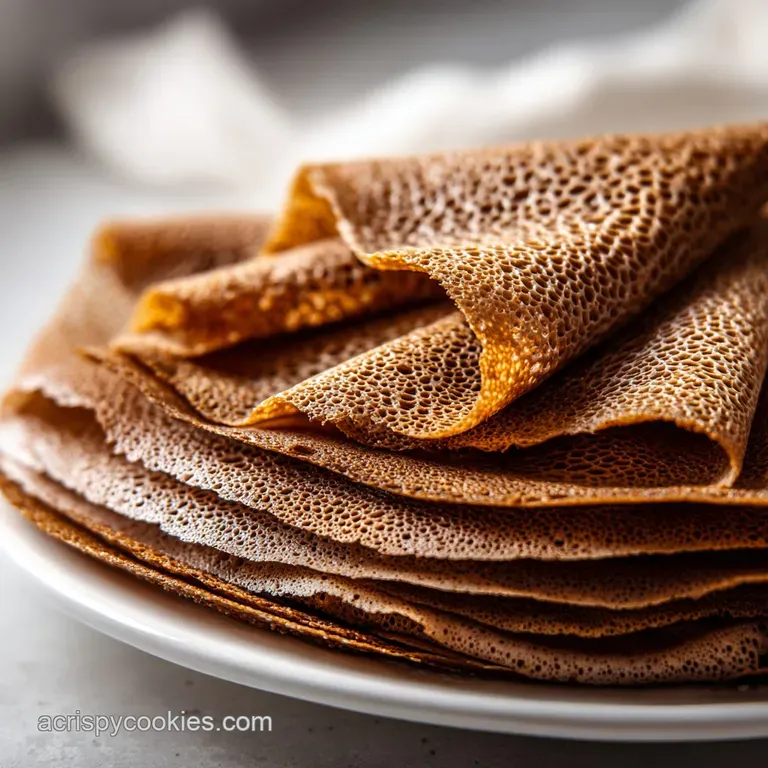
To get that restaurant quality finish, you really need a non stick surface. Traditionally, a clay plate called a "mitad" is used, but a large electric griddle works wonders because of the consistent heat. If you don't have one, a high-quality 12 inch non stick skillet is your best friend.
You'll also need a large glass or ceramic bowl for the fermentation avoid metal as the acid from the ferment can react with it over three days. A tight fitting lid for your pan is non negotiable; the steam is what actually cooks the top of the bread since we never flip it.
Chef's Tip: Use a squeeze bottle or a small pitcher to pour the batter. A circular, spiral motion from the outside in is the only way to get that even, round shape.
step-by-step Guide to Perfect Bubbles
- Mix the starter. Combine 2 cups teff flour with 2.5 cups filtered water in a large glass bowl until smooth.
- Ferment the batter. Cover the bowl and let it sit at room temperature for 3 days until a sharp, sour aroma develops and liquid rises to the top.
- Discard the liquid. Carefully pour off the dark water that has settled on the surface without disturbing the flour at the bottom.
- Create the absit. Take 1/2 cup of the fermented batter and whisk it with 1/2 cup boiling water in a small pot until it thickens into a glossy paste.
- Recombine the base. Add the thickened absit back into the main bowl and whisk in the additional 1 cup of teff flour.
- Final thinning. Gradually add small amounts of water until the batter is the consistency of heavy cream. Note: If it's too thick, the eyes won't form.
- Heat the pan. Set your non stick skillet over medium high heat until a drop of water dances and sizzles away instantly.
- The circular pour. Starting from the outer edge, pour the batter in a continuous spiral toward the center.
- Cover and steam. Once bubbles appear, cover with a lid and cook for 2 minutes until the edges lift and the surface is dry.
- Cool properly. Remove the bread and lay it on a clean cloth. Do not stack them while hot or they will turn into a gummy mess.
Solving Common Texture and Eye Problems
Why Your Bread Has No Eyes
If your flatbread comes out smooth like a pancake, the batter is likely too thick or the pan isn't hot enough. The "eyes" are formed by steam escaping; if the batter is like a heavy paste, the bubbles get trapped underneath.
Thin your batter with a tablespoon of water and check that your pan is truly hot before the next pour.
Why Your Bread Is Brittle
Cracking usually happens because of a lack of moisture or skipping the "absit" step. That cooked flour paste provides the stretch. Also, make sure you aren't overcooking it once the top is set and the edges curl, it’s done.
| Problem | Root Cause | Solution |
|---|---|---|
| Gummy texture | Underbaked or stacked hot | Cook until edges lift; cool on a cloth |
| Too sour | Fermented too long | Reduce ferment by 12 hours next time |
| Sticks to pan | Surface not non stick | Use a thin wipe of oil or a better pan |
Common Mistakes Checklist
- ✓ Never flip the bread; it only cooks on one side.
- ✓ Don't stir the batter once you start pouring the individual rounds.
- ✓ Ensure the lid fits tightly to trap the steam.
- ✓ Let the batter rest for 30 minutes after adding the absit before cooking.
- ✓ Use a dedicated non stick pan that hasn't been scratched.
Flavorful Variations and Dietary Swaps
If you find pure teff a bit too intense, you can try an Injera recipe without teff by using a blend of 50% barley flour and 50% all purpose flour. This version ferments faster (usually 24 hours) and has a milder, bread like flavor that kids often prefer.
Note that adding wheat flour means it is no longer gluten-free, but it creates a very sturdy bread that is easy for beginners to handle.
For a gluten-free injera recipe that’s a bit lighter, swap 1/2 cup of the teff for rice flour. This results in a paler bread with a very soft, velvety mouthfeel.
If you’re in a rush, you can add a teaspoon of baking powder to the final batter, though you'll lose that deep, complex fermentation flavor we’re after.
If you are doubling the recipe for a large party, increase the salt to 1.5x only, rather than doubling it, to keep the flavor balanced. When scaling down, keep the fermentation time the same the chemistry doesn't speed up just because there's less flour!
Keeping Your Flatbread Fresh Longer
Store your cooled injera by stacking them with pieces of parchment paper or wax paper in between to prevent sticking. Place the stack in a large airtight bag. It stays fresh in the fridge for up to 5 days.
For long term storage, you can freeze it for up to 3 months, though the texture becomes slightly more fragile once thawed.
To reuse scraps or "failed" pieces, don't toss them! In Ethiopian kitchens, leftover bits are torn up and tossed with berbere spice and oil to make "Injera Fit Fit," a delicious breakfast dish. It’s a great way to ensure zero waste.
When reheating, a quick 15 second zap in the microwave under a damp paper towel will restore that soft, spongy flexibility.
Best Stews to Serve with Injera
The whole point of this bread is to act as your spoon. It pairs perfectly with Doro Wat (spicy chicken stew) or Misir Wat (spicy red lentils). The acidity of the bread cuts through the richness of the butter and spices used in these dishes.
Pair this with a hearty stew, much like the savory broth found in my Authentic Albondigas Soup recipe. If you’re looking for a breakfast vibe, it's also fantastic alongside Breakfast Enchiladas with recipe, where the tang of the bread complements a creamy sauce beautifully.
For a Fast Track Version
If you can't wait three days, you can use 1 teaspoon of active dry yeast. Mix it with the flour and water and let it sit for only 1 hour. You will need to add a tablespoon of lemon juice or apple cider vinegar to the batter to mimic that sour ferment, but it’s a solid "I need this now" substitute.
For Restaurant Quality Tang
To get that deep, investigative flavor profile of a pro kitchen, keep a small amount of your fermented batter (about 1/4 cup) in the fridge. This is your "ersho" or starter. Use it to kickstart your next batch, and the flavor will get better and more complex with every single bake.
It’s how the best spots in Addis Ababa do it!
Injera Recipe FAQs
What are the main ingredients used to make traditional injera?
Teff flour, water, and salt. Traditional injera relies on wild fermentation of teff flour, an ancient grain, which creates the signature spongy texture and sour flavor profile.
Is injera healthier than traditional wheat bread?
Yes, generally it is nutritionally superior. Teff flour is naturally gluten-free and is rich in iron and minerals; the long fermentation process also aids in nutrient absorption.
How do I make Ethiopian injera step-by-step?
Mix teff and water, ferment for 3 days, create a cooked starter (absit), combine the starter with the remaining batter, thin to cream consistency, and cook on a hot griddle without flipping. The most critical step is the three day wild fermentation to develop the characteristic tang.
Is injera high in probiotics due to the fermentation?
Yes, especially when properly fermented. The wild yeast and bacteria used during the multi day rest are beneficial probiotics, which is why many people find naturally fermented foods easier to digest.
Why is my injera rubbery and not spongy with "eyes"?
You likely skipped or rushed the "absit" step which gelatinizes the starch. This step is crucial for providing the necessary structure and elasticity; mastering this technique is similar to achieving the right texture control when making a delicate sauce.
Can I use regular flour instead of teff flour to make injera faster?
No, you should avoid substituting all the teff if you want authentic results. While you can use substitutes like barley for a milder flavor, teff contains the unique proteins necessary to support the structure and fermentation required for this bread.
How long does the injera batter need to ferment?
Traditionally, the batter ferments for three full days at room temperature. This long rest period is essential for developing the deep, sour complexity; rushing it results in a flat, less flavorful pancake.
Traditional Ethiopian Injera Recipe
Ingredients:
Instructions:
Nutrition Facts:
| Calories | 137 calories |
|---|---|
| Protein | 4.6 g |
| Fat | 0.9 g |
| Carbs | 26.5 g |
| Fiber | 4.6 g |
| Sugar | 0.2 g |
| Sodium | 100 mg |
