Baked Ziti with Ricotta Cheese Recipe
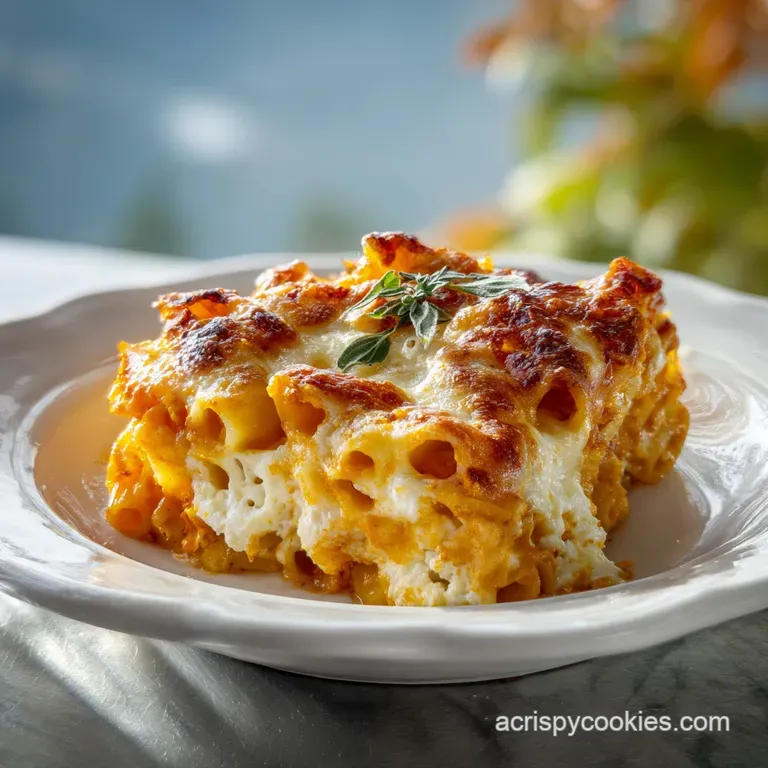
- Time: Active 20 mins, Passive 40 mins, Total 1 hour
- Flavor/Texture Hook: Molten mozzarella topping over velvety, herbed ricotta and savory sausage
- Perfect for: Sunday family dinners, high protein meal prep, or beginner friendly crowd-pleasing
- An Investigative Look at this Iconic Pasta Masterpiece
- The Flavor Chemistry Behind a Perfect Sunday Sauce
- Component Analysis of the Essential Baked Elements
- The Alchemy of Selecting the Right Ingredients
- Essential Tools for the Perfect Pasta Bake
- Executing the Flavor Detective Method Step-by-Step
- Solving the Most Common Pasta Bake Pitfalls
- Adjusting the Scale for Any Crowd
- Debunking the Myths of the Pasta Bake
- Preservation Secrets and Zero Waste Tips
- The Perfect Sidekicks for Your Pasta
- Very High in Sodium
- Recipe FAQs
- 📝 Recipe Card
An Investigative Look at this Iconic Pasta Masterpiece
When we talk about this dish, we aren't just talking about a pasta bake; we're talking about a structured architectural feat of Italian American comfort. The ziti acts as a vessel, its hollow center designed specifically to trap pockets of meat sauce and melted cheese.
Unlike lasagna, which requires tedious layering, this recipe offers a more rustic, integrated experience where the flavors meld in a single, cohesive bite. It's the ultimate "flavor detective" project because the quality of your ingredients specifically the fat content of your ricotta and the acidity of your tomatoes dictates the final outcome.
I've found that using a mix of ground Italian sausage and lean ground beef provides the best flavor landscape. The sausage brings those earthy fennel notes and a bit of heat, while the beef adds a grounded, savory depth that meat lovers crave.
If you've ever felt like your home cooked pasta lacked that "restaurant punch," it's usually because the sauce lacked enough fat or seasoning. We're fixing that by building a base with garlic, oregano, and high-quality marinara that reduces slightly in the oven, intensifying everything it touches.
The Flavor Chemistry Behind a Perfect Sunday Sauce
The Starch Capture: Par boiling the pasta in highly salted water leaves the center slightly firm, allowing it to absorb the excess moisture from the sauce during the baking phase without losing its structural integrity.
The Protein Emulsion: Mixing an egg and heavy cream into the ricotta creates a stable emulsion that prevents the cheese from weeping or becoming grainy under high oven heat.
Maillard Optimization: The combination of Parmesan, Pecorino Romano, and Mozzarella on top undergoes a chemical reaction that creates a savory, browned crust which adds a complex, toasty aroma.
Fat Soluble Flavor: Searing the meat first releases fat that carries the aromatics of the garlic and oregano throughout the entire 48 oz of sauce.
| Cook Method | Time | Texture | Best For |
|---|---|---|---|
| Stovetop Only | 15 mins | Saucy & loose | Quick weeknight hunger |
| Traditional Oven | 40 mins | Crispy edges, molten core | Weekend family gatherings |
| Slow Cooker | 4 hours | Soft & unified | Set it and forget it days |
The choice between stovetop and oven really comes down to how much you value those "shatter crisp" edges of pasta that poke out from the cheese. While the stovetop is faster, you miss out on the textural contrast that the oven provides. If you find yourself craving a faster cheese fix, you might actually enjoy the process in my Stovetop Mac and recipe, which focuses on that same creamy emulsion principle but in a fraction of the time.
Component Analysis of the Essential Baked Elements
| Ingredient | Science Role | Pro Secret |
|---|---|---|
| Whole Milk Ricotta | Provides moisture and "cushion" | Always use full fat; low-fat yields a watery, gritty mess. |
| Ground Italian Sausage | Adds fat soluble spices and fat | Brown it until it's almost crispy to unlock deep umami. |
| Heavy Cream | Stabilizes the cheese mixture | Prevents the egg from curdling and keeps the ricotta silky. |
| Ziti/Penne Rigate | Structural foundation | The "rigate" (ridges) are essential for sauce adhesion. |
When selecting your pasta, don't just grab the first blue box you see. Look for "bronze cut" pasta if you can find it. It has a rougher surface area that acts like Velcro for the sauce. Also, ensure your mozzarella is the low moisture variety.
Fresh mozzarella (the kind packed in water) is beautiful on pizza but will turn your baked ziti into a literal soup. We want that classic "cheese pull" that only low moisture shreds can provide.
The Alchemy of Selecting the Right Ingredients
To recreate that famous Italian deli taste, every element needs to be intentional. We aren't just throwing things in a bowl; we're building layers of flavor.
- 1 lb Ziti or Penne Rigate pasta: Why this? The ridges and hollow centers are non negotiable for trapping the hearty meat sauce.
- Substitute: Rigatoni (similar shape, slightly larger).
- 1 lb Ground Italian Sausage: Why this? Provides fennel and spice notes you can't get from plain beef.
- Substitute: Ground turkey sausage with an extra pinch of fennel seeds.
- 1 lb Lean Ground Beef (85/15): Why this? Adds "meaty" bulk without making the dish excessively greasy.
- Substitute: Ground veal for a softer, more delicate flavor profile.
- 48 oz Marinara Sauce: Why this? Large volume is needed to keep the pasta hydrated during the 40 minute bake.
- Substitute: 2 cans (28oz) crushed tomatoes seasoned with basil and salt.
- 3 cloves Garlic, minced: Why this? Fresh garlic provides a sharp, aromatic punch that jarred garlic lacks.
- Substitute: 1 tsp garlic powder (though fresh is vastly superior).
- 1 tsp Dried Oregano: Why this? Adds an earthy, floral note that defines classic "red sauce" joints.
- Substitute: Dried marjoram for a slightly sweeter herb profile.
- 15 oz Whole Milk Ricotta Cheese: Why this? Creates the creamy, white layers that contrast the acidic tomato sauce.
- Substitute: Small curd cottage cheese pulsed in a blender until smooth.
- 1 Large Egg, lightly beaten: Why this? Acts as a binder to keep the ricotta layers from sliding out.
- Substitute: 2 tbsp of cornstarch mixed with the cream (for egg free).
- 1/4 cup Heavy Cream: Why this? Softens the ricotta and adds a luxurious, velvety mouthfeel.
- Substitute: Whole milk (will be slightly less rich).
- 1 cup Freshly Grated Parmesan Cheese, divided: Why this? Adds a salty, nutty bite and aids in browning.
- Substitute: Grana Padano for a similar hard cheese funk.
- 3 cups Shredded Low Moisture Mozzarella Cheese: Why this? Essential for the golden, stretchy topping we all love.
- Substitute: Provolone (mild) for a more buttery melt.
- 1/2 cup Pecorino Romano cheese: Why this? Sharper and saltier than Parmesan; provides an assertive finish.
- Substitute: More Parmesan if you find Pecorino too pungent.
Essential Tools for the Perfect Pasta Bake
You don't need a professional kitchen, but a few specific tools make this much easier. A large 9x13 inch ceramic or glass baking dish is the standard for a reason it provides enough surface area for that glorious cheese crust while keeping the layers thick enough to retain heat.
I also highly recommend using a heavy bottomed Dutch oven (like a Le Creuset or Lodge) for browning the meat. The heat retention ensures you get a proper sear rather than just "graying" the meat in its own juices.
Finally, grab a microplane or fine grater. Please, I am begging you, don't buy the pre shredded Parmesan in the green shaker can. It contains cellulose (wood pulp) to prevent clumping, which means it won't melt properly into your ricotta.
Grating your own Parmesan and Pecorino takes two minutes but changes the flavor profile from "cafeteria food" to "gourmet."
Executing the Flavor Detective Method step-by-step
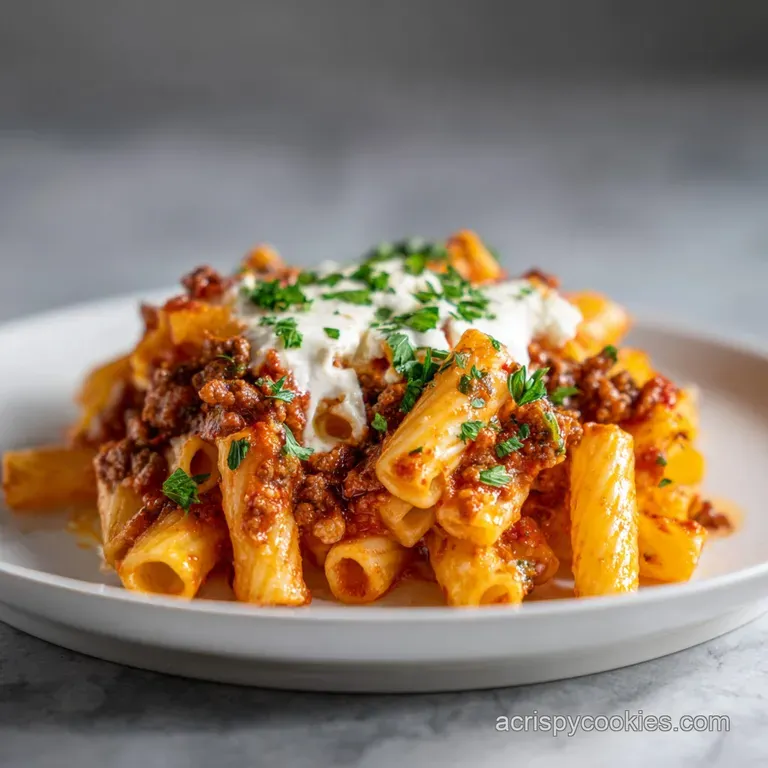
- Boil the pasta. Cook the ziti in a massive pot of salted water for exactly 2 minutes less than the package "al dente" instructions. Note: This prevents the pasta from becoming mushy during the oven phase.
- Sear the meat. In your Dutch oven, brown the Italian sausage and ground beef over medium high heat until you see charred, crispy bits forming on the bottom.
- Sauté the aromatics. Add the minced garlic and oregano to the meat. Cook for 60 seconds until the scent of toasted garlic fills the room.
- Simmer the sauce. Pour in the 48 oz of marinara. Turn the heat to low and let it bubble gently for 10 minutes to marry the flavors.
- Prepare the ricotta cream. In a medium bowl, whisk the ricotta, egg, heavy cream, half of the Parmesan, and parsley until the mixture is velvety and pale green.
- Combine pasta and sauce. Drain the ziti and toss it directly into the pot with the meat sauce. Stir well to ensure every tube is filled with sauce.
- Layer the foundation. Spread half of the pasta mixture into your 9x13 baking dish.
- Add the cheese core. Dollop the ricotta mixture over the pasta, then sprinkle with 1 cup of the mozzarella. Use a spoon to swirl it slightly into the sauce.
- Finish the layering. Pour the remaining pasta over the top, then cover with the rest of the mozzarella, Parmesan, and Pecorino Romano.
- Bake and brown. Place in a 375°F (190°C) oven for 30 minutes covered with foil, then 10 minutes uncovered until the cheese is bubbling and sporting golden brown spots.
Chef's Tip: Freeze your block of mozzarella for 10 minutes before grating. It makes the cheese firmer and prevents it from turning into a smashed mess on your grater. Also, adding a tiny pinch of nutmeg to the ricotta mixture helps accentuate the creaminess of the dairy.
Solving the Most Common Pasta Bake Pitfalls
One of the biggest complaints I hear about this dish is that it's "too dry" the next day. This happens because the pasta continues to absorb moisture even after it leaves the oven. If you don't start with a sauce that looks almost "too wet," you'll end up with a brick of noodles by lunchtime tomorrow.
The Mystery of the Grainy Ricotta
If your ricotta looks like wet sand after baking, it's usually because you used a low-fat version or skipped the egg/cream stabilizer. Heat causes the proteins in low-fat dairy to tighten and push out water, leading to that gritty texture.
Stick to whole milk ricotta; the extra fat acts as a lubricant for the protein strands.
The Soggy Noodle Situation
If your pasta is falling apart, you likely cooked it all the way to "tender" in the boiling water. Remember, the pasta is going to sit in a hot, acidic sauce for 40 minutes in the oven. It needs that raw, "crunchy" center when it goes into the pan to survive the second cook.
| Problem | Root Cause | Solution |
|---|---|---|
| Watery base | Fresh mozzarella or un drained pasta | Use low moisture mozzarella; drain pasta thoroughly. |
| Burned top/Cold center | Oven rack too high | Bake on the middle rack; use foil for the first 30 mins. |
| Lack of flavor | Under salted pasta water | Use 1 tbsp salt per gallon of water; it's your only chance to season the pasta itself. |
Common Mistakes Checklist:
- ✓ Never rinse your pasta; you need that surface starch to help the sauce stick.
- ✓ Don't skip the "rest" period; let the dish sit for 10 minutes after baking so the layers set.
- ✓ Avoid jarred garlic; the preservatives add a bitter aftertaste to the delicate ricotta.
- ✓ Ensure you use a large enough pot for the pasta so it doesn't clump together.
- ✓ Always brown the meat thoroughly; "gray" meat lacks the depth of Maillard seared meat.
Adjusting the Scale for Any Crowd
If you're cooking for two, you can easily halve this recipe. Use an 8x8 inch square pan and reduce the baking time by about 10 minutes. For the egg, beat it in a small bowl first and then use only half of it. The remaining ingredients scale linearly quite well.
When doubling the recipe for a party, don't just double the salt and spices. Use 1.5x the oregano and salt initially, then taste your sauce. Spices can become overwhelming when doubled perfectly. You'll likely need two 9x13 pans. If you're looking for a different vibe for a party, you could also serve this alongside a Baked Spinach Artichoke recipe for the ultimate comfort food spread.
Debunking the Myths of the Pasta Bake
One common myth is that you need to add oil to your pasta water to keep the ziti from sticking. This is actually a mistake! The oil creates a slick coating on the noodles that prevents your beautiful meat sauce from adhering. Just use a large pot and stir occasionally; the movement of the boiling water is all you need.
Another myth is that "fresh is always better" for the cheese. While fresh ricotta is amazing, fresh mozzarella (the balls in water) is actually the enemy of a structured baked ziti. The water content is too high, leading to a "puddle" at the bottom of your dish.
Stick to the low moisture block mozzarella for that iconic restaurant style melt.
Preservation Secrets and Zero Waste Tips
Storage: This dish actually tastes better the next day as the flavors continue to meld. Keep it in an airtight container in the fridge for up to 4 days. When reheating, add a splash of water or extra marinara to the bowl before microwaving to restore the moisture.
Freezing: You can freeze this dish before or after baking. If freezing before, wrap the unbaked dish tightly in plastic wrap and then foil. It will stay good for 3 months. To bake from frozen, add 20 minutes to the covered baking time.
Zero Waste: Don't throw away those Parmesan rinds! Toss them into the meat sauce while it simmers to extract every bit of salty, umami flavor. Just remember to fish them out before you assemble the layers. Also, any leftover ricotta can be used to make a quick Chocolate Ricotta Brick recipe for dessert, ensuring nothing goes to waste.
The Perfect Sidekicks for Your Pasta
To balance out the richness of the cheese and meat, I always serve this with something bright and acidic. A simple arugula salad with a lemon shallot vinaigrette is my go to. The peppery bite of the greens cuts through the velvety ricotta beautifully.
And, of course, a thick slice of garlic bread is mandatory for mopping up any leftover sauce on the plate.
If you're looking to round out a full Italian feast, consider starting with a light antipasto platter. The vinegary olives and roasted peppers prepare your palate for the heavy, satisfying main course.
Whatever you choose, make sure you have plenty of fresh basil on hand to sprinkle over the ziti right before serving the aroma of fresh herbs hitting the hot cheese is the final "flavor detective" secret to a truly professional presentation.
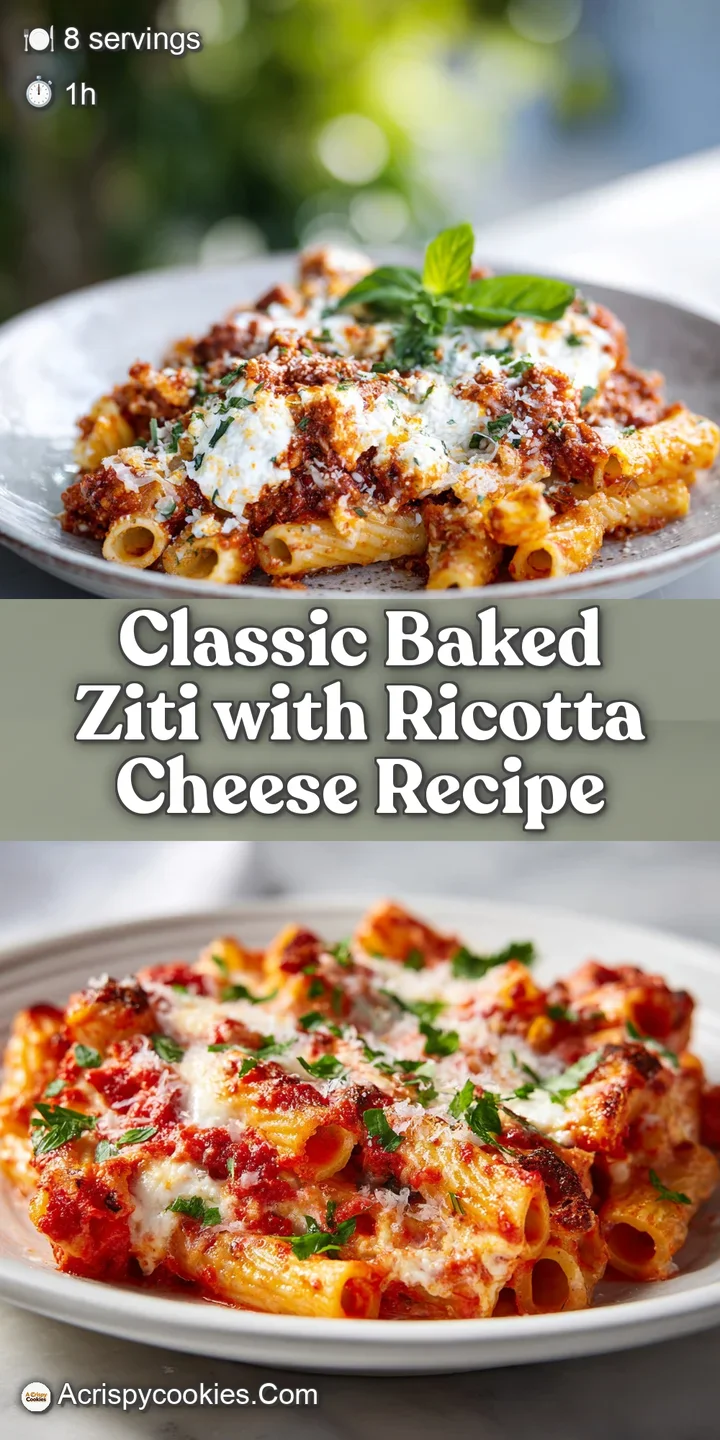
Very High in Sodium
1420 mg 1420 mg of sodium per serving (62% 62% of daily value)
The American Heart Association recommends limiting sodium intake to no more than 2,300mg per day for most adults. Limiting to 1,500 mg is even better for heart health.
Tips to Reduce Sodium in Your Baked Ziti
-
Choose Low-Sodium Sausage-25%
Italian sausage is a significant source of sodium. Opt for low-sodium Italian sausage or use sweet Italian sausage and add your own spices. This can reduce sodium significantly.
-
Low-Sodium Marinara-20%
Marinara sauce can be high in sodium. Select a low-sodium marinara sauce or make your own using fresh or no-salt added canned tomatoes, herbs, and spices.
-
Reduce Salty Cheese-15%
Parmesan and Pecorino Romano are high in sodium. Reduce the amount of Parmesan and Pecorino Romano cheese by half and substitute with low-moisture part skim mozzarella. Or eliminate it altogether, and use a smaller amount of freshly grated parmesan as a garnish.
-
Skip Added Salt-10%
Taste the dish before adding any salt. With sausage, cheese, and marinara, you may not need any additional salt. If needed, use a small pinch at the very end.
-
Boost Flavor with Herbs
Enhance the flavor of your baked ziti with fresh herbs and spices such as basil, oregano, parsley, garlic powder, and black pepper. These additions can add depth and complexity without increasing sodium.
Recipe FAQs
Do you add egg to ricotta for ziti?
Yes, always add egg and heavy cream. The egg acts as a binder, setting up the ricotta structure so it doesn't ooze out as a liquid when baked. The cream ensures the final texture is velvety, not grainy.
What's the secret to a flavorful ziti?
Sear the sausage and beef until deeply browned bits form on the bottom of the pan. This process develops complex savory notes through the Maillard reaction that simple simmering cannot achieve. If you enjoyed mastering that flavor depth here, see how the same principle applies to Buffalo Chicken Pizza Recipe crust.
Does baked ziti go in the oven, covered or uncovered?
Bake covered for the first 30 minutes, then uncovered. Covering prevents the pasta from drying out while the internal temperature rises, and uncovering ensures the top cheese layer gets that essential golden brown, bubbly crust.
Is ricotta good in pasta bake?
Yes, ricotta provides necessary moisture and creamy structure. When stabilized with an egg and heavy cream, it creates a rich, white layer that contrasts beautifully with the acidity of the tomato sauce.
How to prevent my baked ziti from being dry or mushy?
Par boil the pasta 2 minutes shy of the package al dente time. This ensures the noodles absorb the sauce fully during the 40-minute bake without becoming completely soft and collapsing upon serving.
Should I use fresh mozzarella for the topping?
No, use low moisture, pre-shredded or freshly shredded low moisture mozzarella. Fresh mozzarella, which is packed in water, releases too much liquid during baking, turning the top layer soupy instead of golden and stretchy.
Is it true I must use a wooden spoon to mix the ricotta filling?
False. Whisking with a metal whisk is better for the ricotta filling. Whisking thoroughly incorporates the egg and cream, creating a stable emulsion that prevents separation. If you enjoy learning precise kitchen techniques, applying this emulsification principle is key to achieving the silky texture found in our Maggiano's Butter Cake recipe frosting.
Baked Ziti With Ricotta
Ingredients:
Instructions:
Nutrition Facts:
| Calories | 858 kcal |
|---|---|
| Protein | 51g |
| Fat | 46g |
| Carbs | 59g |
| Fiber | 5g |
| Sugar | 9g |
| Sodium | 1420mg |
