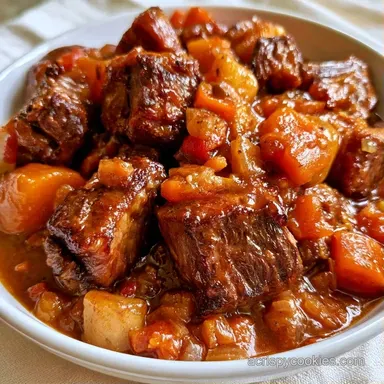
Braised Short Ribs with Savory Onions

- Time: 25 min active + 3 hours cooking
- Flavor & Texture: Rich and savory with meat that slides off the bone
- Perfect for: Slow Sunday dinners or impressive hosting
Braised Short Ribs
The sound of meat hitting a hot pan and the smell of tomato paste turning brick-red are the first signs of a great meal. This dish is all about the contrast between the deep, salty sear of the beef and the bright, acidic lift of the braising liquid.
It turns a tough, fatty cut of meat into something that feels like a luxury.
When I'm craving braised short ribs, I look for that specific rich brown crust on the exterior. That brown layer provides the depth that makes the final sauce taste like it simmered for days rather than hours. It's the kind of meal that fills the whole house with a warm, savory aroma.
You can expect the beef to be incredibly tender, almost buttery, while the sauce stays glossy and concentrated. It isn't a fast meal, but the result is a rich, comforting plate that feels like restaurant quality.
Why This Meat Gets Tender
Collagen Melt: Low heat over several hours breaks down tough connective tissues into gelatin. This process gives the beef its signature "fall-apart" texture.
The Deep Sear: Browning the meat at high heat creates new flavor compounds. This adds a savory complexity that you simply can't get from simmering alone.
Acid Balance: The grape juice provides a necessary tartness. This cuts through the heavy fat of the short ribs so the dish doesn't feel overly greasy.
| Method | Time | Texture | Best For |
|---|---|---|---|
| Dutch Oven | 3 hours | Fall-apart, rich | Sunday dinner |
| Beef short ribs pressure cooker | 45 mins | Tender, less depth | Weeknight meal |
The Dutch oven is the classic choice for a reason. It distributes heat evenly and allows for a better sear than most pressure cookers.
The Building Blocks
| Ingredient | What It Does | Best Swap |
|---|---|---|
| Bone-in Short Ribs | Main structure and flavor | Chuck roast (approximation, use less liquid) |
| Grape Juice | Acidity and sweetness | Pomegranate juice (approximation) |
| Tomato Paste | Umami and deep color | Tomato puree (use more and reduce longer) |
| Cold Butter | Glossy finish | Halal beef tallow (for a richer taste) |
For the Beef
- 4 lbs bone-in beef short ribs Why this? Bone-in adds more flavor and prevents overcooking
- 2 tbsp vegetable oil
- 1 tsp kosher salt
- 1 tsp freshly ground black pepper
For the Braising Liquid
- 1 large onion, diced
- 2 medium carrots, diced
- 2 stalks celery, diced
- 4 cloves garlic, minced
- 2 tbsp tomato paste Why this? Creates a deep red color and savory base
- 1 cup grape juice Why this? Adds brightness and cuts through the fat
- 2 cups low-sodium beef broth
- 1 tbsp fresh rosemary, chopped
- 1 tbsp fresh thyme, chopped
- 2 bay leaves
For the Finishing Touch
- 1 tbsp cold butter Why this? Emulsifies the sauce for a smooth look
- 1 tbsp lemon juice
Essential Kitchen Tools
A large Dutch oven is the most important tool here. You need something heavy, like cast iron, that can go from the stovetop to the oven without a problem. A sturdy set of tongs helps you flip the ribs without tearing the meat, and a fine-mesh strainer is needed for the final sauce.
Step-by-step Instructions
Prepare the meat to begin these braised short ribs. Because moisture hinders a great sear, pat the 4 lbs bone-in beef short ribs completely dry using paper towels. Season them well with 1 tsp kosher salt and 1 tsp freshly ground black pepper.
Achieving the Dark golden Sear
Heat 2 tbsp vegetable oil in your Dutch oven over medium-high heat. Brown the ribs in small groups to ensure there is plenty of room in the pan. Cook for about 3 minutes per side until the meat is a chestnut brown brown. Transfer the ribs to a plate and set them aside.
Chef Note: If the meat clings to the pan, wait another minute. It will release on its own once the crust has developed.

Developing the Aromatic Base
Lower the heat to medium. Add the diced onion, carrots, and celery to the rendered beef fat and sauté for 5–7 minutes until the vegetables soften. Stir in the minced garlic and 2 tbsp tomato paste, cooking for another 2 minutes until the paste turns brick-red and smells toasted.
Executing the Slow Braise
Pour in 1 cup grape juice, using a wooden spoon to deglaze the pot and scrape up the browned bits. Stir in 2 cups low-sodium beef broth, 1 tbsp chopped rosemary, 1 tbsp chopped thyme, and 2 bay leaves.
Return the browned ribs to the pot, ensuring they are partially submerged in the liquid. Cover with a tight lid and transfer to a preheated 325°F (160°C) oven for 3 hours. The ribs are finished when the meat offers zero resistance when pierced with a fork.

Refining the Velvety Sauce
Carefully move the tender ribs to a platter. Strain the braising liquid into a saucepan and simmer it over medium-high heat for 10 minutes until the liquid reduces by one-third.
Remove the pan from the heat. Whisk in 1 tbsp cold butter and 1 tbsp lemon juice to create a glossy finish. Pour the sauce over the ribs and serve immediately.

When It Does Not Turn Out
If the meat is still tough, it simply hasn't spent enough time in the heat. Every cow is different, and some connective tissues take longer to break down. Don't panic, just put them back in the oven.
If your sauce is too thin, it needs more time on the stove. You want the liquid to coat the back of a spoon before you whisk in the butter.
Preventing Meat Toughness
Meat that resists a fork needs more time. Add another 30 to 60 minutes of braising. This isn't overcooking, as the liquid prevents the beef from drying out.
Fixing a Thin Gravy
A watery sauce lacks concentration. Simmer the liquid for an extra 5–10 minutes before adding the butter.
Avoiding the Burn
If the bottom of the pot smells scorched, it means the heat was too high during the sauté phase. Deglaze immediately with the grape juice to lift the burnt bits.
| Problem | Fix |
|---|---|
| Tough Meat | Braise for another 30-60 mins |
| Watery Sauce | Simmer longer before adding butter |
| Burnt Bottom | Deglaze with juice immediately |
Freezing and Reheating Guide
Store the ribs and sauce together in a sealed container in the refrigerator for up to 4 days. Honestly, the flavor often improves on day two as the herbs settle into the meat.
This dish freezes well. Keep the ribs submerged in the sauce and freeze for up to 3 months. Thaw them overnight in the fridge before you plan to eat them.
To reheat, avoid the microwave, which can make the beef rubbery. Instead, place them in a covered baking dish and warm them in a 325°F (160°C) oven, or simmer them gently on the stovetop over low heat, until the thickest part reaches 165°F (74°C) on a thermometer.
Make It Your Own
You can easily adapt this into a braised short ribs Slow Cooker Recipe. After searing the meat and sautéing the vegetables, transfer everything to the slow cooker. Cook on low for 8 hours. You will still need to reduce the sauce in a saucepan at the end for that glossy finish.
If you prefer a different flavor profile, try making Balsamic rosemary braised short ribs. Replace half of the grape juice with a high-quality balsamic vinegar. This adds a deeper, tangier note to the beef.
For those who love a punch of garlic, try Garlic-forward braised short ribs by doubling the minced garlic and adding three smashed cloves to the braising liquid.
When tweaking these braised short ribs, keep the total liquid amount the same to ensure the meat stays submerged.
Serving Suggestions

These ribs are rich, so they need a side that provides a contrast. A pile of garlic mashed potatoes or a creamy polenta works well to soak up the extra sauce. I like serving them with a side of steamed broccolini or a crisp arugula salad with a lemon vinaigrette to cut through the fat.
For a more refined presentation, remove the bone before serving and place the meat on a bed of puree, drizzling the reduced sauce over the top.
Kitchen Truths
It is a common misconception that searing meat "seals in" the juices. Moisture is lost regardless of whether you brown the surface; we sear primarily to develop a rich brown color and rich flavor.
Similarly, many believe that a perfectly sealed pot is the only way to keep the meat from drying out. While a lid is useful, the braising liquid provides the actual protection. The ribs will stay moist as long as they remain partially submerged.
In terms of safety, the USDA recommends a minimum internal temperature of 145°F for beef. However, braising requires the temperature to climb much higher to break down the collagen. The best indicator of doneness in this case is when the meat is "fork-tender."
Sodium Notice
1075 mg of sodium per serving (47% of daily value)
To support cardiovascular wellness, the AHA suggests that most adults keep their daily sodium intake below 2,300 mg.
Ways to Lower Sodium
-
Cut Back on Salt
Try halving the kosher salt or skipping it entirely, as the beef and broth already provide a savory base.
-
Use Better Broth
Replace low-sodium beef broth with homemade unsalted stock or water infused with aromatics to significantly drop the salt content.
-
Alternative Tomato Paste
Opt for no-salt-added tomato paste or a small amount of fresh tomato puree instead of standard canned paste.
-
Boost Fresh Herbs
Increase the amount of fresh thyme and rosemary to build a more complex flavor profile without adding more salt.
-
Finish with Citrus
Stir in a splash of fresh lemon juice at the very end; the acidity helps the palate perceive more saltiness.
Common Questions
How long does it take to do braised short ribs?
The total time is 205 minutes.
Tip: Most of the process is passive cooking time in the oven.
Can you make a short rib ragu with this?
Yes, by shredding the cooked meat and simmering it with the reduced sauce.
Tip: This version works best as a hearty topping for pasta.
What do short ribs taste like?
They have a rich, beefy flavor with savory notes and a touch of acidity from the grape juice.
Tip: Searing the meat first is essential for creating a deep golden brown flavor.
Which sides pair well with braised short ribs?
A creamy starch or steamed vegetables complement the rich sauce.
Tip: Use a side that can soak up the extra braising liquid.
Could you describe how these ribs are prepared?
Pat the meat dry and sear it in oil before braising at 325°F for 3 hours.
Tip: Ensure the ribs are partially submerged in the liquid to maintain tenderness.
Would a pressure cooker work for this recipe?
Yes, this alternative method significantly reduces the overall cooking time.
Tip: Still sear the ribs in a pan first to maximize the flavor profile.
Tender Braised Short Ribs