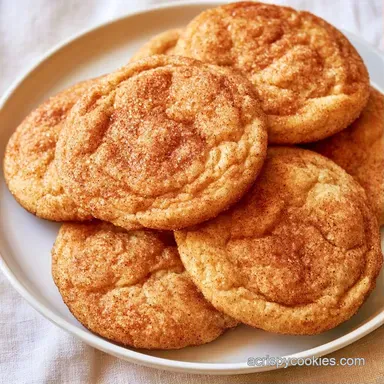
Chewy Snickerdoodle Cookies with Cinnamon Sugar

- Duration: 10 min active + about 25-30 min baking in batches
- Taste & Feel: Tangy, pillowy centers with a sandy cinnamon crust
- Best for: Afternoon snacks or festive holiday platters
Irresistibly Chewy Snickerdoodle Cookies Recipe
While many believe cream of tartar is simply for flavor, it actually helps keep sugar from crystallizing. This ensures the cookies have a signature bendy chew rather than a sandy, gritty texture.
These treats feature a unique crinkle and a tender center that sets them apart from ordinary sugar cookies. You'll taste warm cinnamon first, followed by a tangy, pillowy interior.
This recipe for irresistibly chewy snickerdoodles skips the lengthy chilling process. You can have them ready to enjoy in about 20 minutes.
The Trick Behind the Texture
- Tarter Acid: This interacts with the baking soda to produce a light, airy rise and provides the cookies' characteristic tang.
- Under-Baking: Removing the cookies while the middles appear moist ensures they remain soft after they cool.
| Method | Bake Time | Texture | Best For |
|---|---|---|---|
| Standard | 8-10 min | Soft & pillowy | Quick cravings |
| Chilled (15m) | 8-10 min | Thicker & denser | Prevent spreading |
Gathering Your Essentials
The butter needs to be softened, but not melted. If it's too runny, the cookies will flatten into pancakes. The cream of tartar is the key for that specific snickerdoodle profile.
- 1 cup (225g) unsalted butter, softened
- 1½ cups (300g) granulated sugar Why this? Provides sweetness and creates the crisp edges
- 1 large egg (50g)
- 2 tsp (10ml) vanilla extract
- 2¾ cups (345g) all-purpose flour
- 2 tsp (6g) cream of tartar Why this? Prevents sugar crystallization for a chewy texture
- 1 tsp (5g) baking soda
- ½ tsp (3g) salt
- ¼ cup (50g) granulated sugar (for coating)
- 2 tbsp (15g) ground cinnamon
Recipe Specs
- Yield: 36 cookies
- Prep Time: 10 min active + 34 min cooking
- Cook Time: 10 minutes
- Total Time: 20 minutes
- Oven Temp: 350°F (180°C)
Needed Equipment
- Electric mixer (hand-held or stand)
- Large mixing bowl
- Baking sheets
- Parchment paper
- Small shallow bowl for the coating
Key Baking Steps
Phase 1: Prep the Base
Preheat the oven to 350°F (180°C). Using medium-high speed, cream together 225g of softened butter and 300g of granulated sugar until the mixture is light and fluffy. Beat in 50g of egg and 10ml of vanilla extract until the batter is smooth.

Phase 2: Mix the Dry Ingredients
In the same bowl, whisk 345g of all-purpose flour, 6g of cream of tartar, 5g of baking soda, and 3g of salt. Mix on low speed only until the flour is fully incorporated. Note: Overmixing at this stage makes the cookies tough.

Phase 3: Coat and Bake
In a small shallow bowl, combine 50g of granulated sugar and 15g of ground cinnamon. Scoop rounded tablespoons of dough and shape them into 1-inch spheres. Roll each piece in the cinnamon-sugar mixture until heavily coated.
Place the dough on baking sheets lined with parchment. Bake at 350°F (180°C) for 8-10 minutes until the outer edges are firm while the centers remain slightly soft. Allow the cookies to cool on the pan to let the centers firm up.

If Something Goes Wrong
If your cookies flatten out, the butter may have been too soft. This occurs when the butter becomes greasy rather than just pliable. To fix this, place the rolled dough balls in the fridge for 15 minutes before baking.
Avoid over-baking by resisting the urge to wait for the centers to look "done." These cookies rely on carryover heat; if they seem fully cooked before leaving the oven, they will be hard after cooling.
To prevent a gritty texture, make sure to cream the butter and sugar long enough. The sugar must be thoroughly integrated into the fat for a smooth crumb.
| Problem | Root Cause | Solution |
|---|---|---|
| Flat cookies | Butter too soft | Chill dough balls 15 mins |
| Hard, dry centers | Over-baked | Remove while centers look wet |
| Sandy texture | Under-creamed butter | Mix butter and sugar until pale |
Storage and Freshness
Keep these in a sealed jar on the counter for up to 5 days. If you want to keep them extra soft, put a slice of white bread in the container. The cookies will absorb the moisture from the bread.
You can freeze baked cookies for up to 3 months. Alternatively, freeze the raw dough balls before you roll them in cinnamon sugar. To refresh a cold cookie, pop it in the microwave for 5-8 seconds to get that bendy texture back.
Great Pairings

These are rich and spiced, so they go well with a cold glass of milk or a hot cup of black coffee. For a more festive spread, serve them alongside fresh sliced pears or Granny Smith apple wedges.
Creative Flavor Twists
For a brighter taste, add a teaspoon of orange zest to the dough. If you want a deeper flavor, a pinch of ground cloves in the cinnamon coating adds a nice warmth. For another cozy option, try these Cinnamon Sugar Apple Cookies.
If you don't have everything on hand, you can use these approximations.
| Original Ingredient | Substitute | Why It Works |
|---|---|---|
| Unsalted Butter | Salted Butter (omit added salt) | Similar fat content |
| Granulated Sugar | Coconut Sugar | Adds a caramel note, but changes color |
This irresistibly chewy snickerdoodle cookies recipe is all about balance. The tang of the tarter, the warmth of the cinnamon, and the soft center create a classic treat that hits all the right notes.
Before You Start Cooking
What is the secret to soft snickerdoodles?
Underbake the centers. Remove them from the oven when the edges are set but the middle looks slightly underdone, then let them firm up on the pan.
Why put cream of tartar in snickerdoodle cookies?
It adds a distinct tang. This ingredient also reacts with the baking soda to ensure a soft, chewy texture.
How to store snickerdoodles to keep them soft?
Place them in a sealed jar on the counter. To maintain extra softness, add a slice of white bread to the container for the cookies to absorb the moisture.
How to freeze the dough for later?
Freeze the raw dough balls before rolling them in cinnamon sugar. This preserves the coating's texture until you are ready to bake.
Is it true that snickerdoodles are just cinnamon sugar cookies?
Actually, no. The addition of cream of tartar creates a unique tang and a chewier consistency. For a variation with less sugar, try these applesauce oatmeal cookies.
Tangy Chewy Snickerdoodle Cookies