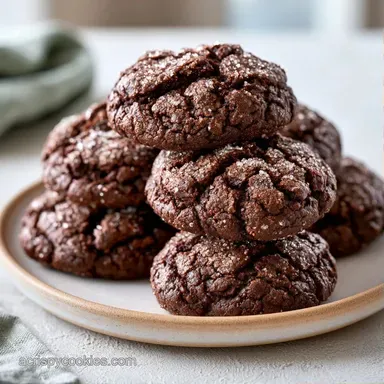
Crackly Top Brownie Cookies with Dutch Cocoa
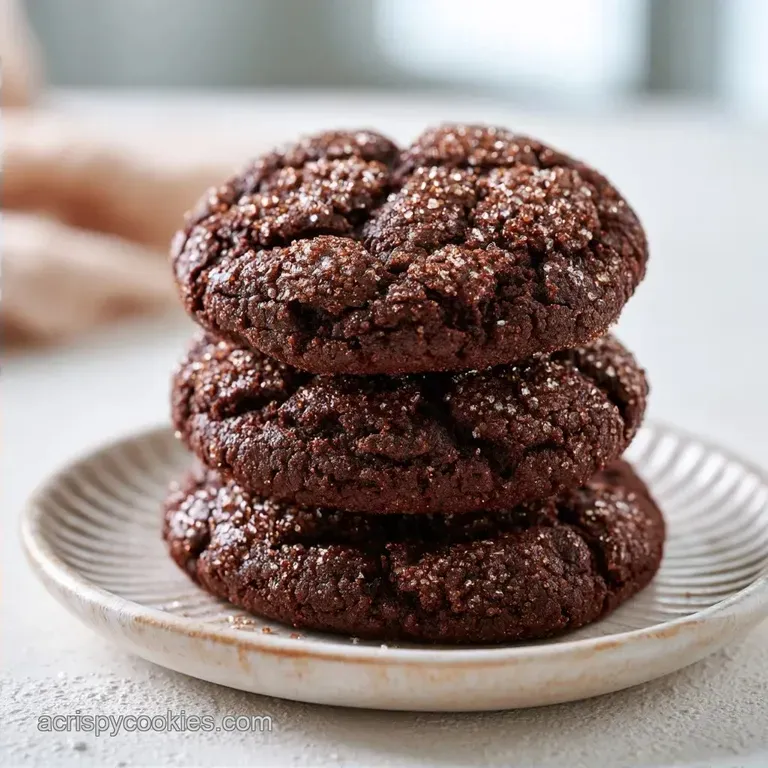
- Time: 10 min active + 12 min bake
- Flavor/Texture Hook: Thin, glossy crust with a dense, chocolatey core
- Perfect for: Late night cravings or a small dessert platter
- Nailing Your Crackly Top Brownie Cookies
- Timing and Yield Details
- What Makes These Work
- Tools For The Job
- The Step By Step Process
- Fixing Common Cookie Issues
- Troubleshooting Common Issues
- Variations To Try Now
- Scaling the Batch
- Cookie Myths
- Storage and Waste Tips
- Ways To Serve These
- Recipe FAQs
- 📝 Recipe Card
Ever notice how some chocolate cookies look like matte pebbles while others have that shiny, shattered glass crust? It's a specific kind of tension between the sugar and the fat that creates those beautiful ridges. When you bite into one, you get that audible snap before hitting the soft, fudgy middle.
I spent a lot of time investigating why some batches came out flat and others stayed plump. It turns out the aeration of the eggs is where the magic happens. If you don't beat them enough, you just get a standard chocolate cookie, not a brownie hybrid.
These Crackly Top Brownie Cookies are designed to hit that exact contrast. We're aiming for a high gloss finish and a texture that feels almost like a truffle. Right then, let's get into how to actually make this happen in your kitchen.
Nailing Your Crackly Top Brownie Cookies
The biggest hurdle here is getting the top to crack. Most people just stir the batter, but that's a mistake. You need to use a mixer to whip the sugar and eggs into a thick, pale ribbon.
This process traps air and dissolves the sugar, which eventually migrates to the surface during baking to form that thin, shiny layer.
Another part of the puzzle is the oven temperature. Starting high and then dropping the heat forces the cookies to set quickly on the edges while the center stays fudgy. This temperature shift is what prevents them from spreading into flat puddles.
To get the best results, make sure your eggs are at room temperature. Cold eggs won't hold as much air during the whipping stage, and your batter won't get that glossy sheen. It's a small detail, but it changes the whole structure.
Timing and Yield Details
This recipe is designed for a small batch of 14 cookies. It's a quick process once you have the ingredients laid out, but don't rush the mixing phase. The 5-7 minutes of beating the eggs is non negotiable if you want that specific look.
The total time is about 32 minutes, including the 10 minutes of prep and 12 minutes in the oven. Since they bake quickly, you'll want to have your cooling rack ready to go so they don't overbake on the hot pan.
| Feature | Fresh From Scratch | Box Mix Shortcut |
|---|---|---|
| Texture | Fudgy center, thin crust | Cakey and uniform |
| Flavor | Deep, earthy cocoa | Artificial vanilla notes |
| Control | Precise sugar/salt balance | Fixed, high sugar ratios |
What Makes These Work
The interaction between the sugar and the eggs creates a meringue like structure on the surface. This layer dries out faster than the rest of the cookie, causing it to crack as the center expands.
The Temp Drop: The initial high heat sets the structure, while the lower heat finishes the interior without drying it out.
Dutch Process Cocoa: This cocoa is treated with alkali, which removes the acidity and results in a darker color and smoother flavor.
| Ingredient | What It Does | Best Swap |
|---|---|---|
| Dutch Cocoa | Deep color, earthy flavor | Natural cocoa (adds acidity) |
| Granulated Sugar | Creates the shiny crackle | Brown sugar (makes it chewier) |
| Unsalted Butter | Provides richness and fat | Coconut oil (adds nutty notes) |
Tools For The Job
You'll need a large mixing bowl and a hand mixer or stand mixer. A whisk won't be enough to get the eggs to the pale, thick stage required for this recipe.
A fine mesh sieve is also a must. Cocoa powder is notorious for clumps, and finding a pocket of dry cocoa in a finished cookie is a real letdown. Use parchment paper on your sheets to ensure the bottoms don't stick.
The step by step Process
The Aeration Stage
Preheat your oven to 375°F (190°C) and line your baking sheets with parchment paper. In a large bowl, combine the melted butter and granulated sugar. Add the eggs and vanilla extract.
Using a mixer on medium high, beat the mixture for 5–7 minutes until the batter is pale, creamy, thick, and glossy. This is the most important part for the texture.
Folding The Dry Mix
Sift the cocoa powder, flour, baking powder, and salt directly into the wet ingredients. Gently fold the mixture together using a spatula until no more streaks of white flour are visible. Do not over mix, or you'll knock out all that air you just whipped in.
The Precision Bake
Scoop 2 tablespoons of batter per cookie onto the sheets, spacing them 2 inches apart. Bake at 375°F (190°C) for exactly 2 minutes. Quickly lower the oven temperature to 350°F (175°C) without removing the cookies.
Continue baking until the edges are set and the tops are crackly, about 10 more minutes. Transfer them to a wire cooling rack.
Chef's Note: If you have a digital thermometer, the internal temp of the cookie should be around 190°F when they are fudgy but set.
Fixing Common Cookie Issues
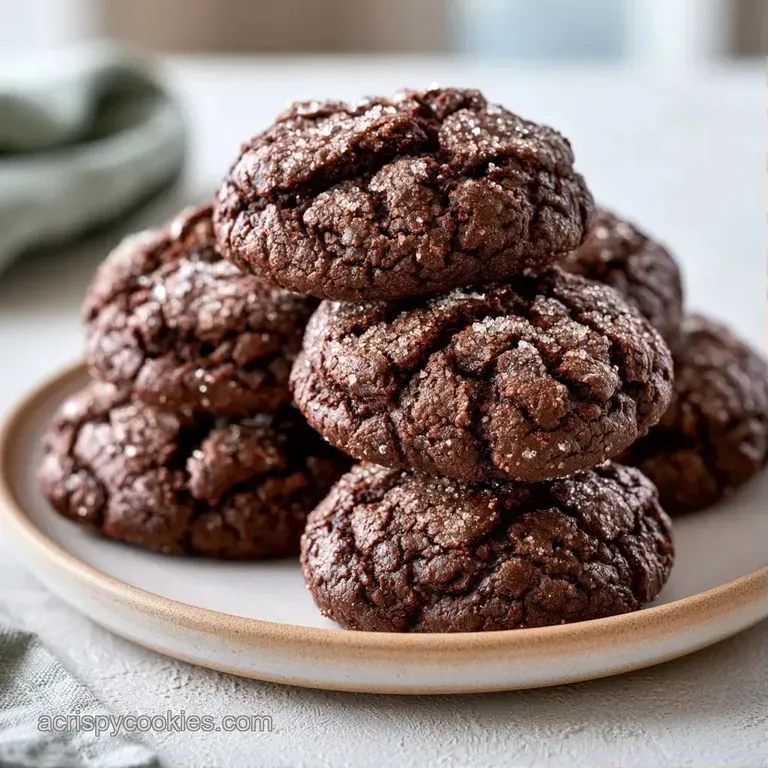
When things go wrong with Crackly Top Brownie Cookies, it's usually a temperature or mixing issue. If your tops are matte, you likely didn't beat the eggs and sugar long enough to dissolve the crystals.
If they spread too much, your butter might have been too hot when you added the eggs, or your oven wasn't fully preheated. The 2 minute blast at 375°F is meant to "lock" the edges in place.
For a different approach to a similar base, you might enjoy these chocolate chip brownie cookies, which handle the spread a bit differently due to the added chips.
Troubleshooting Common Issues
| Issue | Solution |
|---|---|
| Why are my cookie tops matte | This happens when the sugar doesn't fully dissolve or the eggs aren't whipped enough. The sugar needs to be incorporated into the egg proteins to create that glossy film. |
| Why did my cookies spread | Too much heat or over mixing the flour can cause this. Over mixing develops gluten, but it can also break the air bubbles you created during the whipping stage. |
| Why are my cookies cakey | You might be using natural cocoa powder instead of Dutch process, or you've left them in the oven too long. Take them out while the centers still look slightly underbaked. |
Variations To Try Now
If you want a different flavor profile, try adding a pinch of espresso powder to the dry ingredients. It doesn't make the cookies taste like coffee, but it makes the chocolate taste more intense.
For those who love a bit of salt, sprinkle a few flakes of Maldon sea salt on top immediately after they come out of the oven. The salt cuts through the richness of the cocoa.
If you want something with more texture, try these fudgy brownie cookies for a slightly different chew. You can also stir in 1/2 cup of chopped walnuts or pecans during the folding stage for a nutty crunch.
Decision Shortcut: If you want them extra fudgy → underbake by 1 minute. If you want more "snap" → increase sugar by 2 tablespoons. If you want a deeper color → use dark cocoa powder.
Scaling the Batch
To make a half batch, use 1 egg and 1/4 cup of butter. Since you can't easily halve an egg, beat one egg in a small bowl and use about 2 tablespoons of it. Reduce the baking time by about 20% since the oven has less mass to heat.
For a double or triple batch, work in batches. Don't try to whip 6 eggs and 3 cups of sugar in a small bowl, or you won't get the necessary aeration. If you're baking multiple sheets at once, rotate them halfway through the 350°F phase to ensure even browning.
When doubling the recipe, be careful with the baking powder. Keep it at 1.5x rather than 2x to prevent the cookies from puffing up too much and losing that dense brownie feel.
Cookie Myths
Some people think you need to chill the dough for hours to get a good crackle. That's not true for this recipe. Because we rely on the aeration of eggs rather than cold fat, chilling the dough can actually make it harder to get that specific glossy top.
Another myth is that sifting the flour is optional. While it's true for some cookies, with cocoa powder, it's mandatory. Cocoa clumps don't dissolve during the short 12 minute bake, leaving you with bitter, powdery spots.
Storage and Waste Tips
Store these cookies in an airtight container at room temperature for up to 4 days. To keep them from sticking together, place a piece of parchment paper between the layers.
For long-term storage, freeze them for up to 3 months. Flash freeze them on a tray for 1 hour before moving them to a freezer bag. When you're ready to eat, just pop one in the microwave for 10 seconds to bring back that fudgy center.
To avoid waste, if you have a tiny bit of batter left that isn't enough for a full cookie, just dollop it into a greased muffin tin. It makes a single serve brownie bite that's a great treat for the cook.
Ways To Serve These
These are rich, so they pair well with something acidic or bitter. A cold glass of almond milk or a shot of espresso balances the sweetness.
If you're serving them for a party, try plating them with a dollop of whipped cream and some fresh raspberries. The tartness of the berries cuts through the dense chocolate. You can also warm them slightly and serve them with a scoop of vanilla bean ice cream for a quick version of a brownie sundae.
Recipe FAQs
Why don't my brownies have a crust on top?
Beat the eggs and sugar for 5–7 minutes. The sugar must fully dissolve into the egg proteins to create the glossy, crackly film characteristic of this recipe.
How to keep brownies soft and chewy?
Store them in an airtight container at room temperature. Place parchment paper between layers to prevent sticking and maintain moisture for up to 4 days.
Do you bake brownies on the top or bottom rack?
Use the center rack. This ensures even heat distribution so the bottoms don't burn while the crackly top is still forming.
Are brownies supposed to be crunchy or chewy?
They should be a balance of both. The edges and top should be crisp and crackly, while the center remains dense and fudgy.
How to prevent brownies from drying out and getting too hard?
Follow the precise two-stage baking temperature. Bake at 375°F for 2 minutes, then lower to 350°F to ensure the center stays moist without undercooking the edges.
Why did my brownie cookies spread too much?
Avoid over-mixing the flour. Over-mixing breaks the air bubbles created during the whipping stage; if you enjoyed controlling cookie spread here, the same fat ratio logic applies to our fudgy cookies.
Why are my brownie cookies cakey instead of fudgy?
Use Dutch-process cocoa powder. Natural cocoa powder can alter the texture, and leaving the cookies in the oven too long will result in a cakey consistency.
Crackly Top Brownie Cookies: Fudgy