Crispy Thin Chocolate Chip Cookies
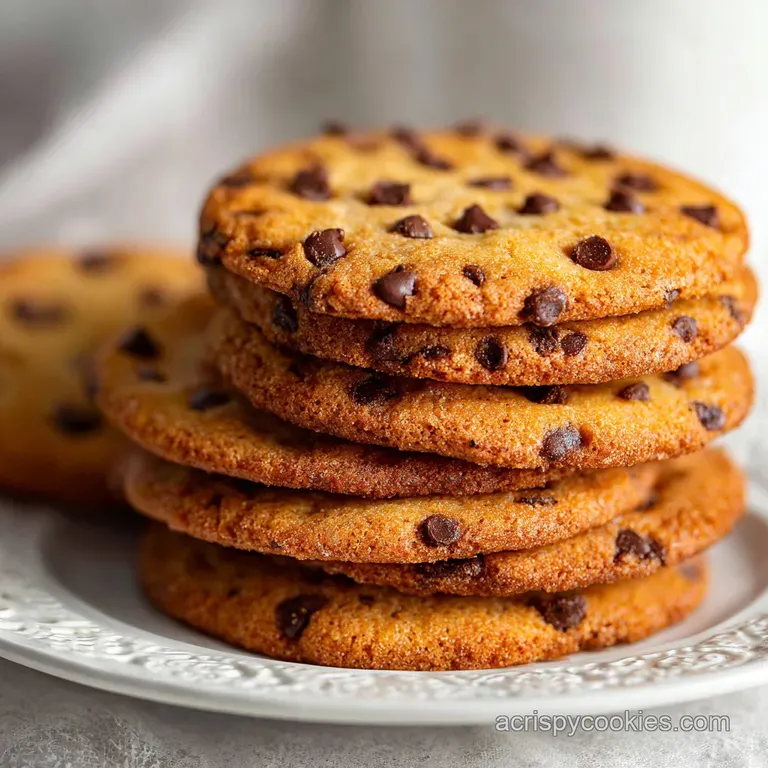
- Time: Active 15 minutes, Passive 16 minutes, Total 31 minutes
- Flavor/Texture Hook: Toasted butter notes with a signature brittle shatter
- Perfect for: Hostess gifts, cookie tin shipping, or anyone who hates cakey cookies
- Achieve Perfect crispy thin chocolate chip cookies
- The Science of the Snap
- Component Analysis for Cookies
- Essential Gear for Thin Baking
- Step-by-Step Baking Process
- Fix Texture and Spread Flaws
- Creative Flavor and Texture Swaps
- Keeping Your Cookies Fresh
- Serving Ideas and Pairings
- Recipe FAQs
- 📝 Recipe Card
Achieve Perfect crispy thin chocolate chip cookies
You know that specific sound when you snap a piece of high-quality tempered chocolate? That is the exact auditory goal here. I spent years thinking my oven was broken because my cookies always came out puffy and soft. It turns out, I was just following recipes designed for soft batch lovers.
One afternoon, after accidentally over melting my butter and running low on brown sugar, I pulled a tray of thin, golden brown discs out of the oven. The edges were lacy, the centers were translucent, and they shattered like glass when I bit into them. It was a happy accident that changed my baking logic forever.
We are going for a cookie that is the polar opposite of a muffin. We want something that mimics the texture of a tuile but keeps the soul of a classic chocolate treat. To get there, we have to rethink the chemistry of the dough. We aren't looking for lift or air. We are looking for spread and dehydration. If you want a different experience, like a massive, doughy mountain of sugar, you might prefer my Levain Bakery Chocolate recipe. But if you want a cookie that literally talks back with a loud crunch, stay right here.
This recipe relies on the science of evaporation. By using melted butter and a specific ratio of granulated sugar, we encourage the dough to move outward rather than upward. The result is a beautifully thin profile that browns evenly from edge to center. You won't find any soft, doughy middles here.
Every square millimeter of these treats is dedicated to the crunch. Trust me, once you hear that first snap, there's no going back to "chewy."
The Science of the Snap
High Ratio Evaporation: Using a higher percentage of granulated sugar compared to flour draws moisture out of the dough during the bake, resulting in a brittle, crystalline structure.
Protein Realignment: Melted butter breaks down the initial gluten bond formation, allowing the dough to spread thinly before the heat sets the structure into a crisp lattice.
| Method | Bake Time | Finished Texture | Best Use Case |
|---|---|---|---|
| Fast Bake (375°F) | 10 mins | Crispy edges, soft center | Immediate snacking |
| Classic (350°F) | 16 mins | Uniformly brittle and snap like | Cookie tins and gifting |
| Low & Slow (300°F) | 25 mins | Toffee like and very dark | Gourmet dessert pairings |
Precision is the difference between a soggy disc and a masterpiece. When we talk about these cookies, we are managing the water content of every single ingredient. Unlike recipes that hide moisture in cold butter cubes, we are exposing the fat and sugar to the heat immediately.
This causes the sugar to liquefy and the edges to caramelize before the center even has a chance to think about rising. It is a controlled collapse that results in the most satisfying texture imaginable.
Component Analysis for Cookies
| Ingredient | Science Role | Pro Secret |
|---|---|---|
| Melted Butter | Fat Lubrication | Melt it until it just turns liquid, but don't let it bubble or brown yet. |
| Granulated Sugar | Crystalline Structure | This sugar stays stable at high heat, providing the "glassy" crunch we need. |
| Baking Soda | Maillard Reaction | It raises the pH of the dough, which speeds up browning and adds toasted flavor. |
| Mini Chips | Weight Management | Standard chips are too heavy and can tear the thin dough; mini chips distribute perfectly. |
You'll need a few specific items to get this right. We are using 1 cup (225g) of unsalted butter, which provides the fat base. For the sugars, the 1 cup (200g) of granulated sugar is our heavy lifter for the crunch, while the 0.5 cup (100g) of light brown sugar adds just enough depth without making things too soft.
Don't skip the 1 tablespoon (13g) of pure vanilla extract - it actually helps with the aroma as the sugars caramelize.
The dry base is simple: 1.5 cups (185g) of all purpose flour, 1 teaspoon (5g) of baking soda, and 1 teaspoon (6g) of fine sea salt. Finally, the 1.5 cups (255g) of mini semi sweet chocolate chips ensure you get chocolate in every single bite without weighing down the delicate structure of the cookie. If you're out of the mood for the oven and want something faster, try this No Bake Chocolate recipe.
Chef's Tip: Freeze your mini chocolate chips for 15 minutes before folding them in. This prevents them from melting into the warm dough, keeping the color of your cookies clean and the chocolate bits distinct.
Essential Gear for Thin Baking
You don't need a lab, but a few tools are non negotiable for success. First, heavy duty aluminum baking sheets are superior to dark non stick pans. Dark pans absorb too much heat and will scorch the bottom of your cookies before the top is done. A silicone baking mat or high-quality parchment paper is also a must.
Because these cookies are so thin and sugar heavy, they will bond to an ungreased pan like superglue.
A kitchen scale is your best friend here. While I've provided cup measurements, weighing your flour (185g) ensures you don't accidentally pack the cup and end up with cakey cookies. A small cookie scoop (about 1 tablespoon capacity) helps keep the portions identical.
This is vital because if one cookie is larger than the others, it will stay soft while the smaller ones burn. Consistent sizing equals consistent crunch.
step-by-step Baking Process
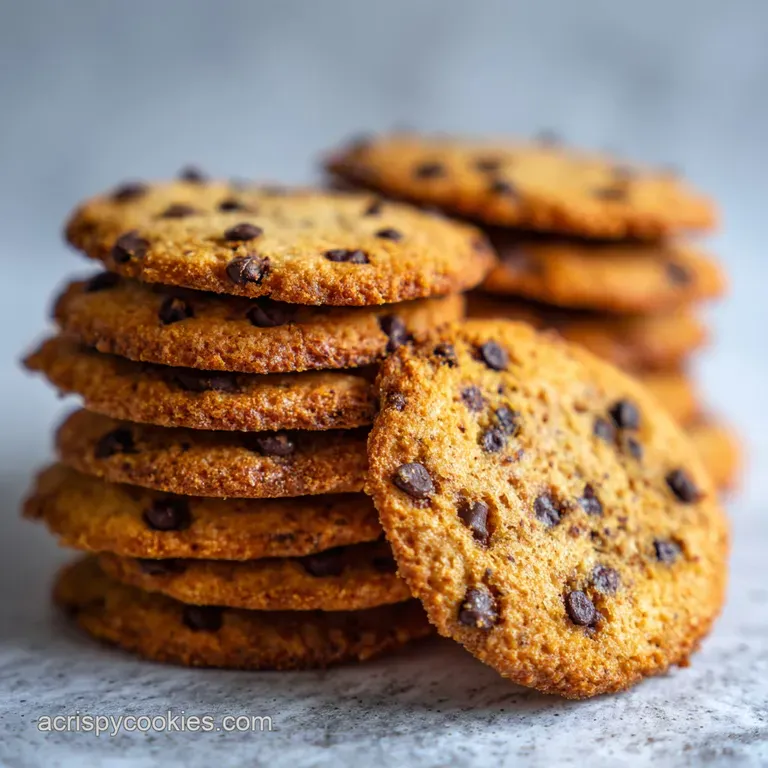
- Melt the butter. Heat the 1 cup of butter until liquid, then let it cool for 5 minutes so it doesn't scramble the egg.
- Cream the sugars. Whisk the granulated and brown sugars into the butter until the mixture looks like wet sand. Note: This ensures the sugar begins to dissolve into the fat.
- Add the liquids. Incorporate the room temperature egg and vanilla extract until the batter is glossy and smooth.
- Sift the dry. Whisk together the flour, baking soda, and salt in a separate bowl.
- Combine gently. Fold the dry ingredients into the wet until no white streaks remain. Note: Over mixing here creates too much gluten, making the cookies tough.
- Fold the chips. Stir in the 1.5 cups of mini chocolate chips by hand.
- Scoop the dough. Place rounded tablespoons of dough 2 inches apart on the prepared sheets.
- Bake the trays. Heat at 350°F for 16 minutes until the edges are dark amber.
- Cool on pan. Let the cookies sit on the hot tray for 5 minutes until they firm up and shatter.
The cooling process is where the magic happens. When they first come out, they will look terrifyingly soft. You might think you've failed. Don't touch them! As the sugar cools, it hardens into that signature brittle texture. If you move them too early, they will bend and lose their structural integrity.
Give them the time they need to set on the tray.
Fix Texture and Spread Flaws
1. Middle stays soft
If your cookies are crispy on the edges but bendy in the middle, your oven temperature might be slightly too high, or your flour measurement was a bit heavy. The outside is setting before the moisture in the center can escape. Try lowering the temp by 15 degrees and baking for two minutes longer next time.
2. Cookies didn't spread enough
This usually happens if the butter wasn't fully melted or if the dough was too cold. Thin cookies need the fat to be in a liquid state to help the dough flow across the pan. Also, check your baking soda. If it's old, it won't help the cookies brown and spread properly.
| Problem | Root Cause | Solution |
|---|---|---|
| Burnt edges, raw middle | Oven too hot | Lower temp to 325°F and increase time. |
| Greasy puddle | Butter was too hot | Let melted butter cool to room temp before mixing. |
| Thick and cakey | Too much flour | Use a scale to measure exactly 185g of flour. |
Common Mistakes Checklist - ✓ Don't use cold eggs; they will cause the melted butter to seize up and clump. - ✓ Avoid over creaming the butter and sugar; we don't want to incorporate air. - ✓ Never grease the baking sheet with spray; use parchment to prevent sliding.
- ✓ Ensure the baking soda is fresh by testing a pinch in vinegar before starting. - ✓ Don't crowd the pan; these cookies spread significantly more than standard ones.
Creative Flavor and Texture Swaps
The beauty of this base is how well it handles additions. If you want a "Martha Stewart" vibe, swap half the chocolate chips for finely chopped toasted walnuts. The oil from the nuts actually helps the spread.
For a Salted Toffee twist, add a teaspoon of espresso powder to the dry ingredients and top the warm cookies with flaky Maldon sea salt. The coffee notes deepen the caramel flavor of the burnt sugar.
You can also play with the sugar ratios. If you want a cookie that is even more brittle almost like a lace cookie increase the granulated sugar by 2 tablespoons and decrease the brown sugar by the same amount. This will result in a translucent cookie that has an incredible snap.
Just be careful, as they become very fragile and harder to handle.
Keeping Your Cookies Fresh
These cookies are the gold standard for longevity because they have so little moisture. Store them in an airtight glass jar at room temperature for up to 2 weeks. Avoid plastic containers if possible, as plastic can sometimes trap residual humidity and turn your crispy cookies soft.
If they do lose their snap, just pop them in a 300°F oven for 3 minutes to redry the sugars.
For zero waste, don't throw away the broken bits at the bottom of the jar. Those tiny, chocolate heavy shards are incredible when folded into vanilla bean ice cream or sprinkled over a morning bowl of yogurt. You can also pulse the crumbs in a food blender to create a crunchy "soil" for a deconstructed cheesecake base.
They freeze beautifully for up to 3 months just make sure to layer them with parchment so they don't fuse together.
Serving Ideas and Pairings
Crispy thin chocolate chip cookies are meant to be heard. I love serving these on a flat wooden board alongside a selection of sharp cheeses or a cold glass of whole milk. Because they are so light, they don't feel as heavy as a standard cookie, making them the perfect "just one more" dessert for a dinner party.
They also hold up remarkably well when dipped in hot coffee, absorbing the liquid without immediately disintegrating.
If you are feeling fancy, sandwich two of them together with a thin layer of salted caramel or a velvety ganache. Since the cookies are already thin, the sandwich won't be too bulky to bite into. Just remember to assembly them right before serving so the filling doesn't soften the crunch.
However you choose to enjoy them, listen for that snap it's the sound of a job well done.
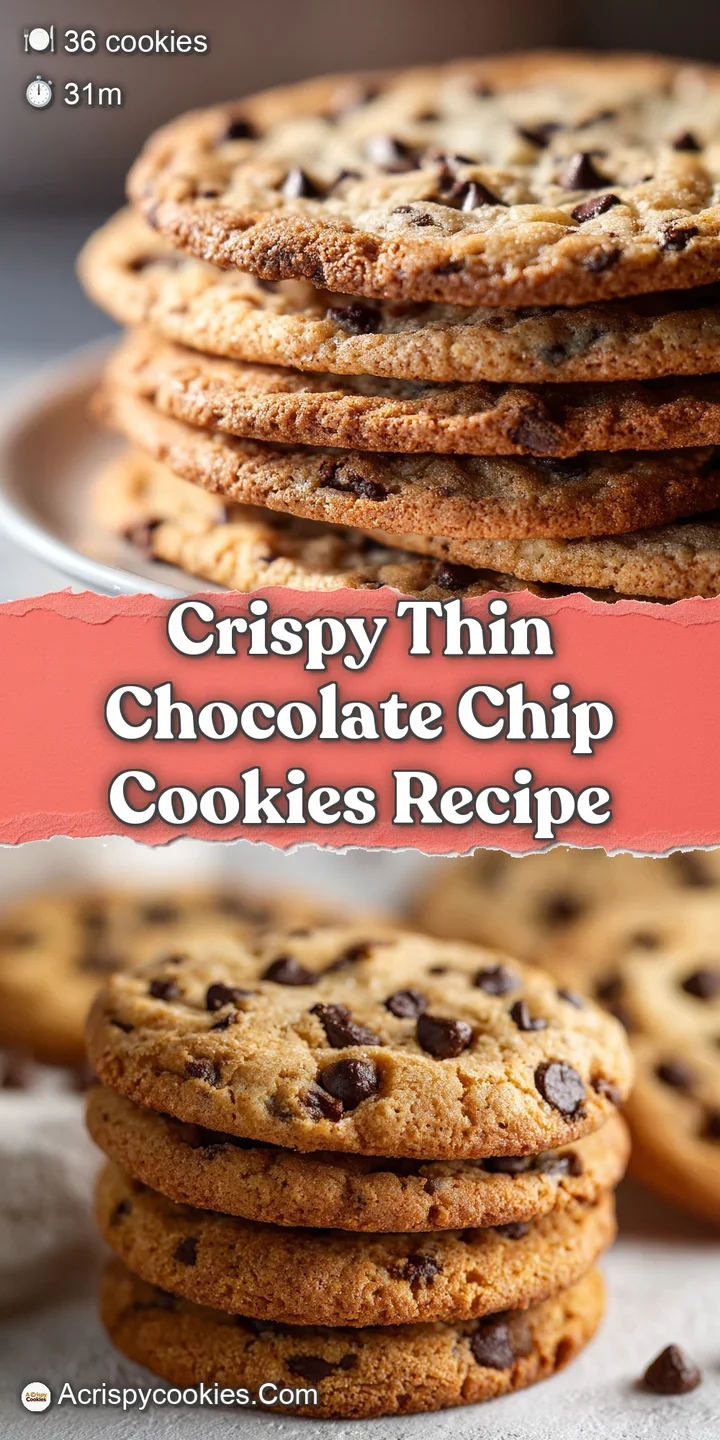
Recipe FAQs
What makes cookies thin and crispy?
Higher ratio of granulated sugar to brown sugar. This promotes moisture evaporation and crystallization during baking, resulting in a flatter, brittle structure instead of a soft, cakey lift.
How to make very crispy cookies?
Use melted butter instead of softened butter. Melted butter inhibits gluten formation, encouraging the dough to spread widely before the structure sets, which creates that desired thinness.
What makes a cookie crispy vs chewy?
The moisture content and sugar type dictate texture. Crispy cookies rely on high heat and high ratios of dry ingredients, whereas chewy cookies rely on higher moisture content, often achieved using brown sugar.
What ingredient contributes most to a crisp cookie?
Granulated white sugar is the primary contributor to crispness. It caramelizes easily and maintains its structure as it cools, forming the brittle, glassy texture we are aiming for here.
Is it true that chilling the dough prevents crispiness?
Yes, chilling the dough generally leads to thicker, chewier cookies. Chilling solidifies the fat, which slows the spread during baking, resulting in a puffier, softer final product.
Should I use parchment paper or silicone mats for thin cookies?
Use parchment paper or a silicone mat, but never skip the barrier. Because these cookies are sugar heavy, they will bond instantly to an unlined metal sheet, resulting in scorched bottoms.
How should I adjust the bake time if my oven runs cold?
Bake longer at the same temperature until the edges are deeply golden brown. This controlled heat exposure ensures maximum moisture loss, which is necessary for the final snap. If you are interested in balancing flavors, see how acid helps set structure in our Lemon Bar with recipe guide.
Crispy Thin Chocolate Cookies
Ingredients:
Instructions:
Nutrition Facts:
| Calories | 134 kcal |
|---|---|
| Protein | 1.0 g |
| Fat | 7.4 g |
| Carbs | 16.5 g |
| Fiber | 0.6 g |
| Sugar | 11.9 g |
| Sodium | 98 mg |
