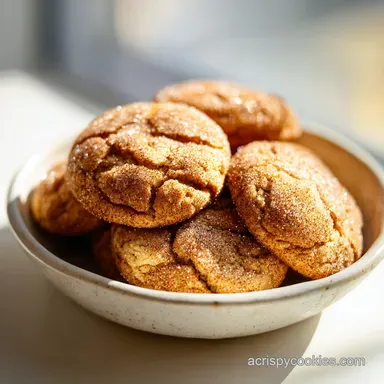
Snickerdoodle Cookies: Soft and Tangy
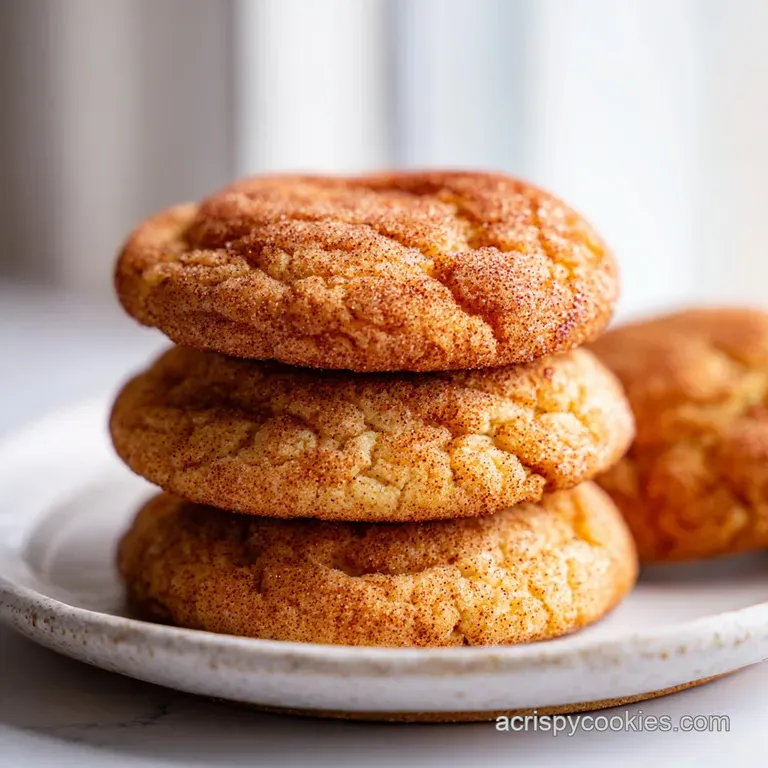
- Time: 10 min active + 10 min cook = Total 20 mins
- Flavor/Texture Hook: Tangy cinnamon warmth with a shatter crisp edge
- Perfect for: Last minute bake sales or cozy winter nights
- The Best Snickerdoodle Cookies Guide
- Pro Techniques for Better Texture
- Analyzing Every Single Ingredient
- Essential Recipe Specifications
- Making These Step by Step
- Solving Common Baking Problems
- Creative Flavor Twists
- Adjusting the Batch Size
- Debunking Baking Myths
- Storage and Waste Guidelines
- Best Ways to Serve
- Recipe FAQs
- 📝 Recipe Card
That warm, woody aroma of cinnamon hitting the oven heat is enough to trigger memories of every holiday bake I've ever done. I remember one specific winter where I tried to "simplify" this recipe by swapping out the cream of tartar for extra baking powder. The result?
Flat, sugary disks that tasted like plain sugar cookies with cinnamon dust. They lacked that signature "zing" and the characteristic crackled top that makes these so addictive.
It was a humbling moment in my kitchen, but it taught me that some ingredients aren't just suggestions- they're the soul of the dish. When you get the ratio right, these Snickerdoodle Cookies aren't just sweet; they have a sophisticated contrast between the spicy cinnamon and a subtle, bright acidity.
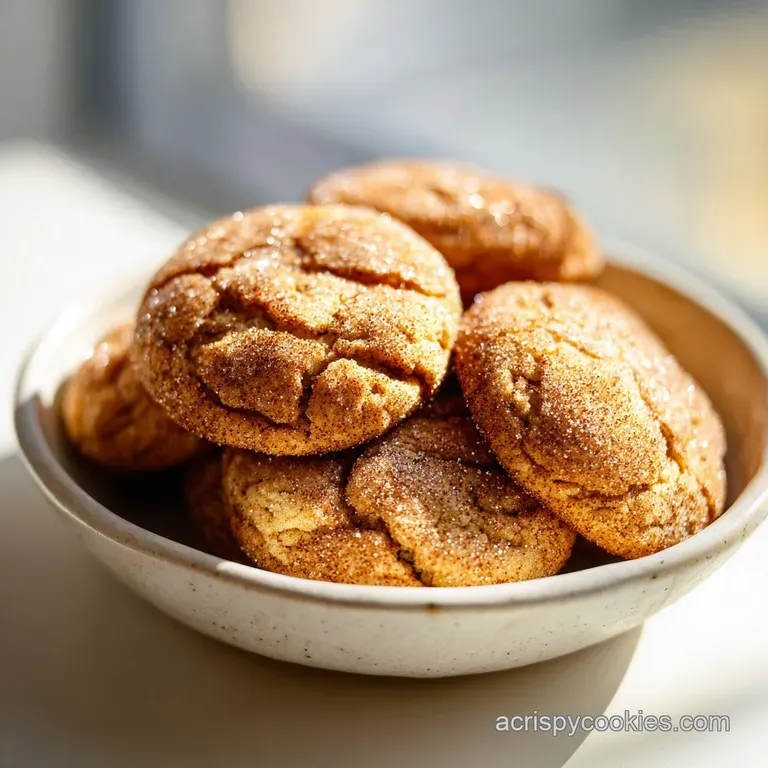
You can expect a cookie that is soft and pillowy in the middle but has those distinct, golden crinkles on top. Trust me on this, once you see that specific texture, you'll never go back to the "shortcut" versions. Let's crack on with the details.
The Best Snickerdoodle Cookies Guide
To get that restaurant quality finish at home, we need to focus on the contrast. We want a sugar coating that almost crystallizes on the outside while the inside stays tender. This is why I'm obsessive about the "double roll" technique, which creates a thick, cinnamon heavy crust that shatters slightly when you bite into it.
If you're looking for other classics, my Chocolate Chip Cookies recipe uses a different fat ratio for chewiness, but for these, we want a lighter, more airy structure. The goal is a cookie that feels like a cloud dusted in spice.
Pro Techniques for Better Texture
I've spent way too much time analyzing why some batches are cakey and others are flat. It usually comes down to how the leavening agents interact.
- The Acid Base Snap: Cream of tartar provides acidity that prevents the sugar from over spreading and gives that classic tang.
- Air Incorporation: Beating the butter and sugar for exactly 2 minutes creates tiny air pockets that the baking soda then expands.
- The Surface Tension: Rolling the dough in cinnamon sugar twice creates a barrier that traps steam, forcing the top to crack.
- Temperature Control: Using softened butter (not melted) ensures the cookie holds its shape long enough to rise.
Right then, let's look at how the "fast" way differs from the "classic" way I'm teaching you here.
| Feature | Fast Method (Melted Butter) | Classic Method (Creamed) | Impact |
|---|---|---|---|
| Texture | Chewier, denser | Soft, pillowy | Airiness |
| Appearance | Smooth top | Crackly surface | Visual Appeal |
| Flavor | More buttery | Tangy and bright | Taste Profile |
Analyzing Every Single Ingredient
I like to think of myself as a flavor detective. In this recipe, the cream of tartar is the hero. According to King Arthur Baking, this ingredient is essentially a stabilized form of tartaric acid, which is what gives these Snickerdoodle Cookies their specific "twang."
| Ingredient | Science Role | Pro Secret |
|---|---|---|
| Cream of Tartar | Acidic stabilizer | Prevents sugar crystallization for a softer bite |
| Baking Soda | Primary lift | Reacts with the acid to create a rapid rise |
| Unsalted Butter | Fat/Structure | Use European style for a richer, velvety mouthfeel |
| Cinnamon | Aromatic top note | Freshly ground cinnamon has a much punchier scent |
Essential Recipe Specifications
First, let's get the gear ready. You don't need a professional bakery, but a few specific tools make the process a breeze. A hand mixer is great, but a stand mixer such as KitchenAid works just as well for the creaming stage.
You'll also need parchment paper- don't even bother with greasing the pan, as parchment prevents the bottoms from browning too quickly.
For the Dough
- 1/2 cup unsalted butter, softened Why this? Provides the base fat for a tender crumb
- 3/4 cup granulated sugar Why this? Essential for the sweetness and structure
- 1 large egg Why this? Acts as the binder and adds moisture
- 2 3/4 cups all purpose flour Why this? Standard protein level for a soft cookie
- 2 tsp cream of tartar Why this? The key to the signature tang and lift
- 1 tsp baking soda Why this? Works with the acid to make them fluffy
- 1/2 tsp salt Why this? Balances the sugar and enhances cinnamon
For the Cinnamon Sugar Coating
- 1/4 cup granulated sugar Why this? Creates the outer crust
- 2 tbsp ground cinnamon Why this? Provides the iconic warmth
Now, if you're missing something, don't panic. Here is how to swap things out without ruining the batch.
| Original Ingredient | Substitute | Why It Works |
|---|---|---|
| Cream of Tartar | 1/2 tsp Lemon Juice + 1/2 tsp Baking Powder | Mimics acidity. Note: Lacks the specific "tang" |
| All Purpose Flour | 1:1 gluten-free Blend | Similar structure. Note: May be slightly grittier |
| Unsalted Butter | Coconut Oil (Solid) | Same fat content. Note: Adds a subtle coconut flavor |
Making These step by step
Let's get into it. I've broken this down into phases so you can organize your workspace.
Phase 1: Creating the Creamy Base
- Beat the softened butter and 3/4 cup granulated sugar in a large bowl. Use a hand mixer on medium high for about 2 minutes until the mixture is pale and fluffy. Note: This aeration is what prevents the cookies from being too dense.
- Add the egg and beat on medium until the batter is smooth and fully incorporated.
Phase 2: Folding the Dry Ingredients
- In the same bowl, whisk together the flour, cream of tartar, baking soda, and salt.
- Mix on low speed just until the white streaks of flour disappear. Note: Stop immediately; over mixing develops gluten, which makes the Snickerdoodle Cookies tough.
Phase 3: The Double Roll and Bake
- Preheat your oven to 350°F (175°C) and line your baking sheets with parchment paper.
- Scoop about 1 tablespoon of dough and roll it into a 1 inch ball between your palms.
- Roll the dough ball in the cinnamon sugar mixture, then roll it a second time until it has a thick, concentrated coating.
- Place the balls 2 inches apart on the sheet to allow for spreading.
- Bake for 8-10 minutes until the edges are set and slightly golden, but the centers still look soft.
Chef's Tip: To get an even more professional look, gently press the center of the cookie with the back of a spoon immediately after taking them out of the oven. This flattens them slightly and emphasizes the cracks.
Solving Common Baking Problems
Even the best of us hit a snag. Usually, it's a temperature issue. If your kitchen is too hot, the butter softens too much, and you lose that structure.
Why Your Cookies Spread Too Much
This usually happens if the butter was too warm or the oven wasn't fully preheated. When the fat melts before the structure sets, the cookie flattens.
Why the Dough is Sticky
If the dough clings to your hands, you might have under measured the flour or the egg was exceptionally large. A quick chill in the fridge for 15 minutes usually fixes this.
Missing the Crackle Look
The "crack" happens when the top sets faster than the inside. If your oven is too low, they'll rise slowly and stay smooth.
| Problem | Root Cause | Solution |
|---|---|---|
| Flat Cookies | Butter too soft | Chill dough for 20 mins |
| No Tangy Taste | Low quality cream of tartar | Use a fresh tin |
| Burnt Bottoms | Oven rack too low | Move rack to the center position |
Pro Checklist for Success:
- ✓ Butter is "cool room temperature" (indents but doesn't ooze)
- ✓ Flour is spooned and leveled, not scooped directly from the bag
- ✓ Oven is fully preheated to 350°F
- ✓ Double roll technique applied to every single ball
Creative Flavor Twists
Once you've nailed the base, you can start playing. I love these as a base for other flavors. For example, if you want something fruitier, you can try adding a pinch of nutmeg to the cinnamon mix. If you're craving something different entirely, you might enjoy my Soft Oatmeal Cookies for a more textured treat.
Maple Variations
Replace 2 tablespoons of the granulated sugar in the dough with maple sugar. It adds a deep, autumnal richness that pairs beautifully with the cinnamon.
Zesty Citrus
Add the zest of one lemon to the flour mixture. The citrus brightens the cinnamon and complements the tartness of the cream of tartar.
Espresso Infusion
Add 1 teaspoon of instant espresso powder to the butter. The bitterness of the coffee cuts through the sugar, making these Snickerdoodle Cookies taste like a high end bakery item.
Adjusting the Batch Size
Scaling cookies is trickier than scaling soup because the chemistry is precise.
Scaling Down (Half Batch): Use 1/4 cup butter and 3/8 cup sugar. Since you can't easily halve an egg, beat one egg in a small bowl and use exactly 2 tablespoons of it. Reduce bake time by about 1-2 minutes since there's less mass in the oven.
Scaling Up (Double Batch): When doubling these Snickerdoodle Cookies, don't double the salt or cinnamon exactly- go to about 1.5x. Too much cinnamon can actually make the dough taste slightly metallic. Work in batches so your mixer doesn't overheat.
| Batch Size | Butter | Flour | Bake Time Adj. |
|---|---|---|---|
| Single | 1/2 cup | 2 3/4 cups | Standard |
| Half | 1/4 cup | 1 3/8 cups | - 2 mins |
| Double | 1 cup | 5 1/2 cups | + 1-2 mins |
Debunking Baking Myths
I've seen some weird advice online, and it's time to set the record straight.
Myth: You must chill the dough for 24 hours. While chilling can deepen flavor, these specific Snickerdoodle Cookies are designed for immediate baking. The cream of tartar handles the spread, so you don't need a long wait.
Myth: Cream of tartar is just for meringue. Actually, it's a powerhouse for cookies. It provides the acidity needed for that specific chemical reaction with baking soda that creates the "puff" and the tang.
Storage and Waste Guidelines
To keep these velvety, you have to be smart about how you store them.
Storage: Keep baked cookies in an airtight container at room temperature for up to 5 days. If you want them to stay extra soft, toss a small piece of white bread into the container; the cookies will absorb the moisture from the bread.
Freezing: The best way to freeze is to freeze the raw dough balls. Place them on a tray first so they don't merge into one giant cinnamon blob, then transfer to a freezer bag. They'll last 3 months. Bake from frozen, just add 2 minutes to the cook time.
Zero Waste: If you have leftover cinnamon sugar coating, don't throw it away. Use it to toast pecans or sprinkle over morning oatmeal for a quick flavor boost.
Best Ways to Serve
These are a treat on their own, but if you're serving them for a party, try a contrast of temperatures. Serve them warm from the oven with a cold glass of almond milk or a sharp espresso.
For a more decadent experience, you can split a warm cookie and add a small dollop of mascarpone cheese in the middle. The creamy, slightly salty cheese balances the cinnamon sugar perfectly. Honestly, don't even bother with low-fat alternatives here; the richness is where the magic happens.
These Snickerdoodle Cookies are all about that comforting, buttery indulgence.
Recipe FAQs
What is the secret to soft snickerdoodles?
Avoid over-baking. Pull the cookies from the oven after 8–10 minutes when edges are set but centers remain soft.
Why put cream of tartar in snickerdoodle cookies?
It creates the signature tangy flavor. It also prevents sugar from crystallizing, which ensures a chewy, velvety texture.
Why is a cookie called a snickerdoodle?
The origin is debated. Some believe it derives from the German "schneckennudeln," while others think it is simply a playful name for a cinnamon-sugar treat.
What cookies can a diabetic eat?
Choose sugar-free or low-glycemic options. For a treat that avoids the sugar spike, these sugar free no bake cookies are a great alternative.
How to store snickerdoodles to keep them soft?
Place them in an airtight container at room temperature. Adding a small piece of white bread to the container helps the cookies absorb moisture for up to 5 days.
How to freeze the dough for later?
Freeze raw dough balls on a tray before transferring them to a freezer bag. Bake them directly from frozen, adding 2 minutes to the cook time.
Is it true that snickerdoodles are just cinnamon sugar cookies?
No, this is a common misconception. The cream of tartar provides a distinct acidity and chew that differentiates them from standard cinnamon cookies.
Snickerdoodle Cookies in 20 Minutes